














TL;DR
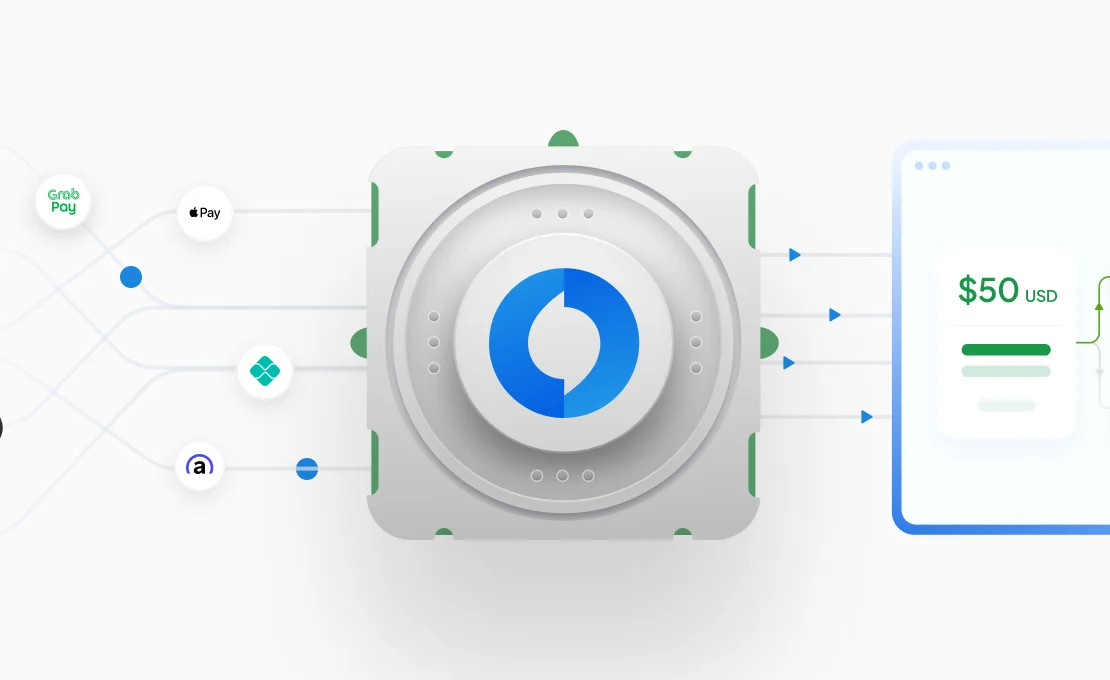
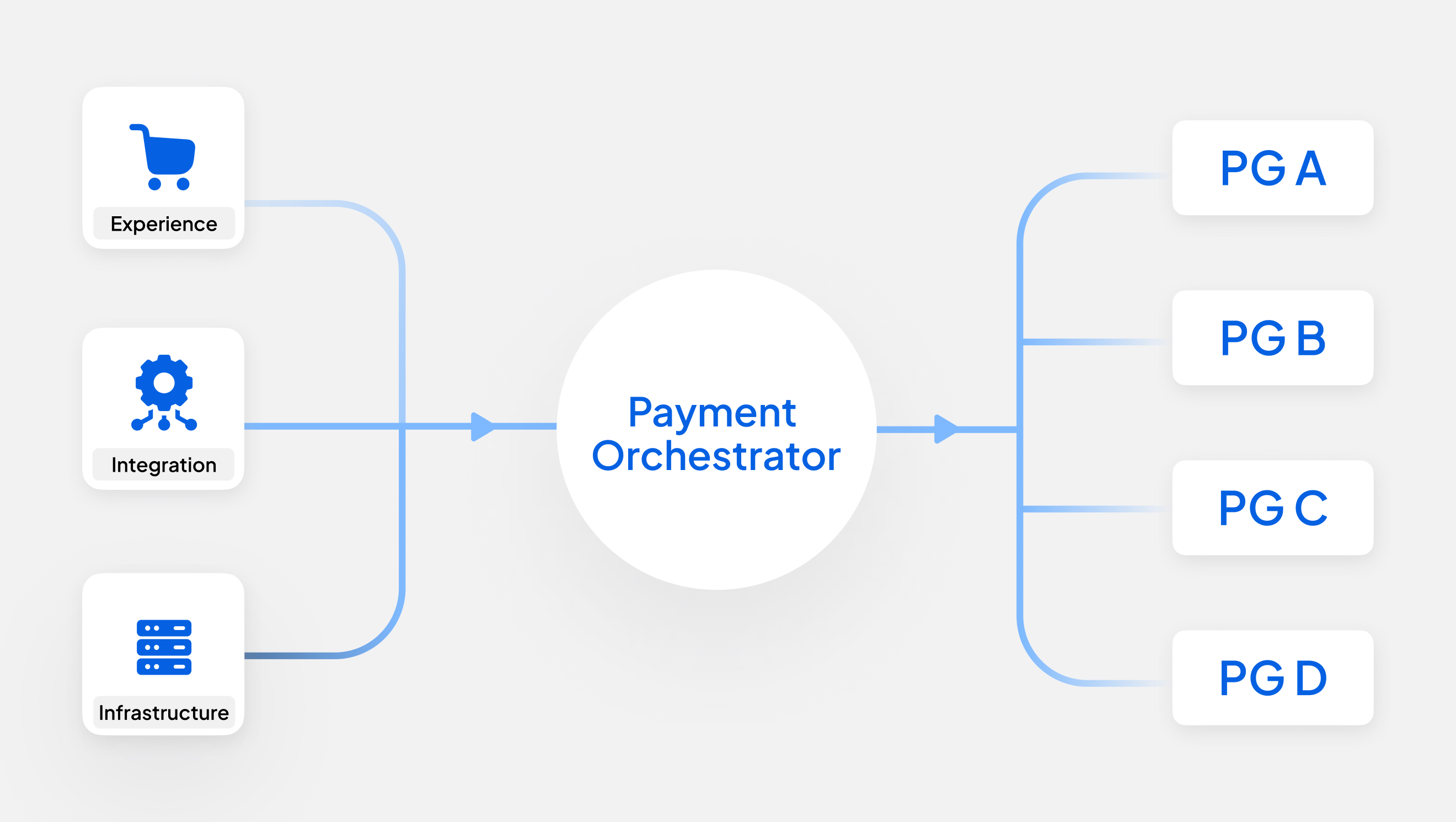
A leading all-in-one commerce platform had a robust payment infrastructure already in place – using VGS for secure card tokenization alongside Adyen and NMI for processing. However, they lacked a routing layer to intelligently distribute traffic across these processors. Juspay Hyperswitch solved this by integrating via Server-to-Server (S2S) calls directly through the platform’s existing VGS reverse-proxy setup. This allowed the company to instantly layer volume-based routing on top of their processors without altering a single line of their VGS SDK, card data flow, or existing processor integrations.
| What the Platform Needed | What Hyperswitch Delivered |
| Add a routing layer on top of existing Adyen and NMI processor integrations | Volume-based routing across Adyen and NMI via S2S integration, with no changes to the existing processor setup |
| Preserve existing VGS vault and card data flow intact | Hyperswitch integrated via S2S calls through the VGS reverse-proxy; card data handling and VGS SDK unchanged |
| Wallet flows with decryption handled outside Hyperswitch | Pass-through mode: VGS SDK handles wallet token decryption, Hyperswitch receives decrypted data and routes to PSP |
Impact
- Enabled volume-based routing over existing processors with zero disruption
- Architectural flexibility for least-cost routing & success rate-based routing
- Preserved existing third-party vault and compliance architecture
Products Used
- Hyperswitch
This all-in-one commerce platform is built specifically for agencies and growth-focused businesses on WordPress. Through its proprietary embedded payments solution, it provides merchants with enterprise-grade payment capabilities, including accelerated checkouts and instant payouts, sitting natively within their hosting stack.
The platform already had a highly functional payment infrastructure in place. They utilized VGS to handle secure card tokenization and vault storage, alongside processor integrations with Adyen and NMI. What they did not have was a routing layer. To scale efficiently, the company needed the ability to dynamically distribute and optimize payment traffic across their existing processors based on volume, cost, and performance.
The ultimate engineering challenge? They needed to inject this complex routing capability without ripping and replacing their existing stack. They required a solution that wouldn't disrupt how their card data flows, how their VGS vault is configured, or how their processors are integrated. Juspay Hyperswitch was brought in to act as an intelligent traffic controller, seamlessly sliding into their existing architecture without causing any downstream disruption.
Adding Orchestration Without Disrupting the VGS Stack
The platform’s payment flow was already secure and functional: customers enter card details into a VGS-secured UI, ensuring sensitive data never touches the merchant server. VGS returns a token, and the merchant server calls Hyperswitch through a VGS reverse-proxy URL. VGS intercepts that request, securely injects the real card data, and forwards it to Hyperswitch.
Hyperswitch simply receives this enriched request and routes it to either Adyen or NMI. Because this is a pure Server-to-Server (S2S) flow, there was no need for SDK changes, re-tokenization, or compliance re-work. Their existing stack continued without interruption, with Hyperswitch's routing added cleanly on top.
Features used: SaaS Orchestration with Third-Party Vault
Future-Ready Routing Engine Built to Scale
The company’s immediate need was volume-based routing – distributing transaction volume across Adyen and NMI to manage cost, capacity, and fallback. Hyperswitch’s routing layer is built as a standalone module, so as their needs evolve, it can be extended without any changes to the underlying integration:
- Volume-based routing: live today. Traffic is split across PSPs by configured percentage, with automatic failover if a PSP is unavailable.
- Rule-based routing: condition-driven routing built from over 40 transaction attributes such as payment method, currency, amount, card type, issuer country, merchant category, customer segment, and more. Rules evaluate in priority order and route to the matching PSP or profile.
- Success rate based routing: ML-driven success rate optimisation that learns from authorisation outcomes across PSPs and dynamically adjusts routing to maximise approval rates.
- Least-cost routing: route eligible debit card transactions via PSPs that support processing via local debit networks such as Star, Pulse, NYCE and more.
Routing is a configuration layer in Hyperswitch, not a code change. The platform can move from volume distribution to any combination of these models as their PSP mix and transaction profile evolves. The module is also available independently for businesses that want routing without adopting the full orchestration stack.
Features used: Rule-Based Routing, Intelligent Routing
Wallet Flows with External Decryption Pass-Through
Apple Pay and Google Pay tokens must be decrypted for a payment to succeed, and where that decryption happens impacts PCI scope and operational ownership. The engineering team had already elected to use the VGS SDK to handle wallet token decryption. Hyperswitch easily adapted to this architectural choice using its "Pass-Through" model. VGS decrypts the token and passes the raw data to Hyperswitch, which simply acts as the orchestration layer to route it to the processor.
More broadly, Hyperswitch supports three decryption models for wallet payments:
- Hyperswitch decryption: Hyperswitch holds the merchant’s Apple Pay certificate or Google Pay credentials and handles decryption before forwarding to the PSP.
- PSP decryption: the encrypted wallet token is passed directly to the PSP, which decrypts using its own credentials. Hyperswitch acts as a routing and orchestration pass-through only.
- Merchant or third-party decryption: the merchant’s backend or an external provider like VGS decrypts the token and passes the result to Hyperswitch for routing and processing.
Features used: Wallet Flows
Result: A Non-Disruptive Routing Layer
By integrating Juspay Hyperswitch via a VGS reverse-proxy, the company successfully upgraded its payments infrastructure:
- Zero-Disruption Deployment: The platform added powerful orchestration capabilities without touching a single line of their VGS SDK or altering their Adyen and NMI integrations.
- Optimized Traffic Distribution: The platform is now live with volume-based routing, ensuring reliable load balancing and automatic failover across their processors.
- Architectural Flexibility: By utilizing Hyperswitch's modular design, the platform future-proofed their payments stack to support least-cost routing, success rate based routing, rule-based routing, or any combination of these models.
- Preserved Compliance Architecture: the company retained total control over their PCI scope and wallet decryption preferences while gaining an enterprise-grade routing engine.
Looking Ahead
By seamlessly onboarding Juspay Hyperswitch as an intelligent routing layer, the all-in-one platform has successfully modernized its payment architecture without sacrificing its prior engineering investments. With a flexible orchestration engine now sitting at the heart of their native payments offering, the platform is perfectly poised to introduce machine-learning and rule-based routing, empowering their merchants with maximized authorization rates and optimized payment costs as they scale.