














Overview
If you're running a business in Europe or working with European customers, you've probably come across the term "SEPA payments." Maybe you're wondering what makes them different from regular bank transfers, or why so many businesses prefer them.
SEPA has changed how money moves across Europe. Before it existed, sending payments between countries in the eurozone was expensive and slow. Today, businesses can transfer funds across 41 countries as easily as making a domestic payment. This guide walks you through everything you need to know about SEPA payments, from how they work to why your business should consider using them.
What Is SEPA Payments?
SEPA stands for Single Euro Payments Area. It's a payment system that allows businesses and individuals to make euro transactions across participating countries using a single bank account. Think of it as Europe's unified payment network.
Here's what makes SEPA special: you don't need separate bank accounts in different countries anymore. A business in Spain can pay a supplier in Germany using the same process they'd use for a local payment.
SEPA covers three main types of transactions:
SEPA Credit Transfer (SCT): This is your standard bank transfer. You send money from your account to someone else's account. It's perfect for one-time payments like invoicing or paying suppliers.
SEPA Instant Credit Transfer (SCT Inst): Need money to arrive within seconds? That's where instant transfers come in. The funds reach the recipient's account in less than 10 seconds, any time of day, even on weekends.
SEPA Direct Debit (SDD): This works the opposite way. Instead of you sending money, you authorise another business to collect payments from your account. It's commonly used for recurring payments like subscriptions or utility bills.
The European Payments Council created SEPA in 2008 to break down financial barriers within Europe. Before this, cross-border euro payments were treated differently from domestic ones, with higher fees and longer processing times. SEPA changed that completely.
How Does SEPA Work?
Understanding how SEPA works isn't complicated once you break it down. Let's walk through the process step by step.
The Basic Flow
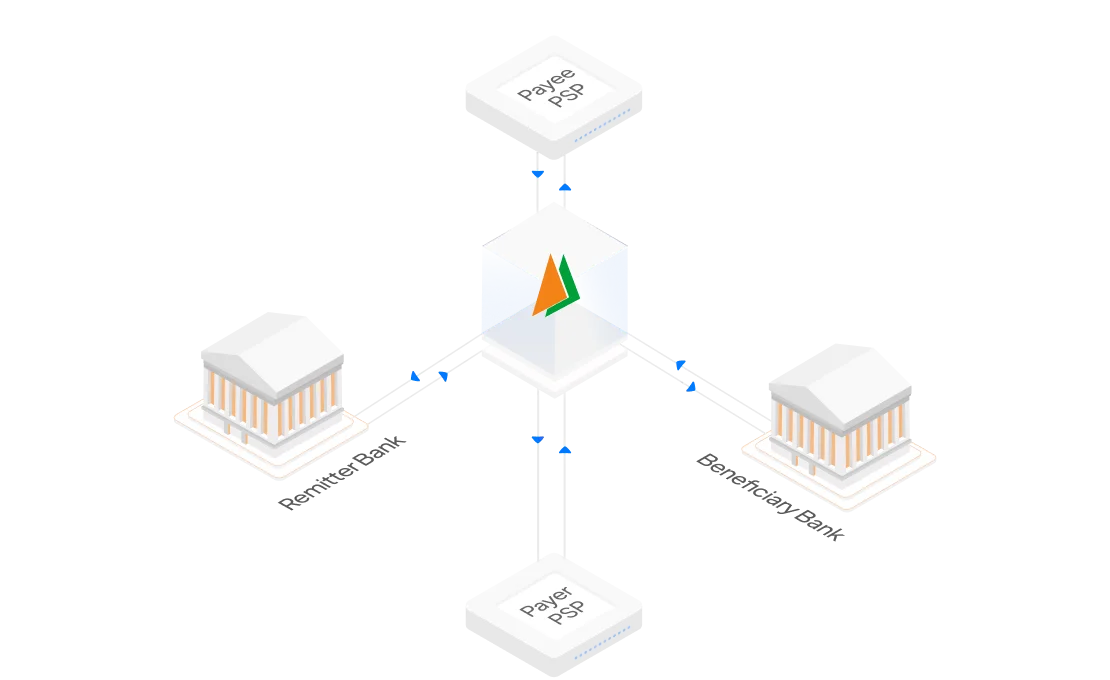
When you make a SEPA payment, here's what happens behind the scenes:
- Initiation: You (the payer) instruct your bank to send money to a recipient. This can be done through online banking, your accounting software, or even a payment service provider.
- Authentication: To ensure secure transfers, banks verify that your account has sufficient funds while validating the recipient's IBAN and BIC to direct the payment accurately. Under the Verification of Payee (VoP) system mandatory as of October 9, 2025, this process now includes a real-time name-to-IBAN cross-check designed to flag fraud or typos before the transaction is finalized. While the bank provides these security warnings for any discrepancies, the sender ultimately retains the financial risk and responsibility if they choose to proceed despite a "no match" notification.
- Processing: Your bank forwards the payment instruction through the SEPA network. The transaction follows standardised formats, which is why it works seamlessly across all participating countries.
- Settlement: The funds are debited from your account and credited to the recipient's account. For standard SEPA transfers, this typically takes one business day. For instant transfers, it happens in under 10 seconds.
- Confirmation: Both you and the recipient receive confirmation that the payment has been completed.
What You Need for a SEPA Payment
To make a SEPA payment, you'll need:
- IBAN: This is a unique identifier for the recipient's bank account. It can be up to 34 characters long and includes the country code, check digits, and the account details.
- BIC/SWIFT code: While not always mandatory for SEPA payments within the eurozone, some banks still require it. It identifies the recipient's bank.
- Recipient's name: Must match the name on their bank account.
- Payment amount: Obviously, you need to specify how much you're sending.
- Payment reference: Optional but helpful for tracking transactions for both the recipient and sender.
SEPA Direct Debit: A Closer Look
SEPA Direct Debit is built for businesses that collect recurring payments.
Before you can collect money from a customer's account, they must sign a mandate. This is a written authorisation that gives you permission to debit their account. The mandate includes details like when payments will be collected, how much, and how often.
There are two types of SEPA Direct Debit:
- SEPA Core Direct Debit: Used for consumer transactions (B2C). Customers can request a refund within 8 weeks of the debit, no questions asked.
- SEPA B2B Direct Debit: Designed for business-to-business transactions. Refunds aren't automatic, and the customer's bank checks the mandate before processing each payment.
The beauty of SEPA Direct Debit is its predictability. Once you've set it up, payments happen automatically on the agreed schedule. This reduces late payments and makes cash flows more predictable.
List of SEPA Countries
SEPA isn't just for eurozone countries. It actually covers 36 countries across Europe, including some that don't use the euro as their currency.
SEPA Member Countries
As of 2026, the SEPA network includes several new members and the transition of Bulgaria into the Eurozone. Here is the categorized list with the regions organized horizontally:
SEPA Participating Countries (2026)
EU Eurozone (20): Austria, Belgium, Croatia, Cyprus, Estonia, Finland, France, Germany, Greece, Ireland, Italy, Latvia, Lithuania, Luxembourg, Malta, Netherlands, Portugal, Slovakia, Slovenia, Spain
EU Non-Euro (7): Bulgaria, Czech Republic, Denmark, Hungary, Poland, Romania, Sweden
EEA Members (3): Iceland, Liechtenstein, Norway
Non-EU/EEA (11): Albania, Andorra, Moldova, Monaco, Montenegro, North Macedonia, San Marino, Serbia, Switzerland, United Kingdom, Vatican City
Important Notes About SEPA Participation
Currency matters: Even though SEPA covers 41 countries, transactions are processed in euros. If you're in Ireland and paying a supplier in Sweden (which uses Swedish kronor), Euro’s will be debited from your account and transferred to the recipient’s bank, then converted to kronor before final settlement.
UK and Brexit: The United Kingdom remains part of SEPA despite leaving the European Union. British businesses can still send and receive SEPA payments just like before Brexit - however many EU banks now charge a "Non-EEA SEPA Fee" to receive funds from the UK, and UK banks may deduct fees from incoming Euro transfers.
Overseas territories: Some European overseas territories aren't covered by SEPA. For example, French Guiana and Martinique (French territories) aren't part of the SEPA zone. Always check before assuming SEPA will work.
Banking requirements: Not every bank in these countries offers SEPA services. The country might be part of SEPA, but you'll need to confirm with your specific bank that they support SEPA transfers.
How to Setup SEPA Payments
Setting up SEPA payments for your business is straightforward. The exact process depends on whether you're sending payments or collecting them, but here's what you need to know.
Setting Up SEPA Credit Transfers (Sending Payments)
Step 1: Verify Your Bank Offers SEPA
Most banks in SEPA countries offer SEPA transfers, but it's worth confirming. Log into your business banking portal or contact your bank directly. Ask about their SEPA fees and processing times while you're at it.
Step 2: Gather Recipient Information
You'll need the recipient's IBAN at minimum. For payments outside your country, you might also need their BIC code. Make sure you have the exact name on their account too – mismatches can cause delays or rejections.
Step 3: Choose Your Payment Method
Most businesses use one of these options:
- Online banking: Good for occasional payments. You manually enter the details each time.
- Bulk upload: If you're paying multiple suppliers, you can upload a CSV or XML file with all the payment details. This saves time.
- Accounting software integration: Tools like Xero, QuickBooks, or SAP can connect directly to your bank and initiate SEPA payments automatically.
- Payment service provider: Companies like Stripe, Adyen, or Mollie can handle SEPA payments for you. This is especially useful if you're dealing with international payments regularly.
Step 4: Make Your First Payment
Enter the payment details carefully. Double-check the IBAN – one wrong digit and your money could go to the wrong account or get rejected. Add a clear payment reference so the recipient knows what the payment is for.
For standard SEPA transfers, the money usually arrives within one business day. If you need it faster, opt for SEPA Instant, though not all banks support it yet.
Setting Up SEPA Direct Debit (Collecting Payments)
This involves some additional steps because you're pulling money from customer accounts.
Step 1: Obtain a Creditor Identifier
Before you can collect SEPA Direct Debit payments, you need a Creditor Identifier (CI). This is a unique code that identifies your business. Each country has its own process for issuing these. In Germany, for example, you get it from the Bundesbank. In France, it comes from the Banque de France.
Contact your bank or national central bank to find out how to apply. The process usually takes a few weeks.
Step 2: Create Mandate Forms
You need written authorisation from each customer before you can debit their account. The mandate must include:
- Your Creditor Identifier
- The customer's name and address
- The customer's IBAN and BIC
- The type of payment (one-off or recurring)
- The date and customer's signature
You can create digital mandates too. Many businesses embed these in their online checkout or send them via email for e-signature.
Step 3: Store Mandates Securely
You're required to keep these mandates for at least 14 months after the last collection. If a customer disputes a payment, you'll need to provide proof of authorisation. Store them digitally in a secure system that's easy to search.
Step 4: Set Up Your Payment Collection System
You'll need software that can generate SEPA Direct Debit files (in XML format) and send them to your bank. Options include:
- Payment service providers: They handle the technical complexity. You just tell them when to collect and how much.
- Banking software: Many business banking platforms include SEPA Direct Debit features.
- Custom integration: For high-volume businesses, building a custom system that connects to your bank's API might make sense.
Step 5: Submit Collection Instructions
SEPA Direct Debit has specific timing rules. You need to notify your bank:
- 5 business days before the first collection on a new mandate
- 2 business days before recurring collections
- 1 business day for B2B Direct Debits
Miss these deadlines and the payment won't go through on your desired date.
Working with Payment Service Providers
If you're a growing business, working with a payment service provider (PSP) often makes more sense than handling everything directly with your bank. Here's why:
PSPs like Stripe, GoCardless, or Mollie handle the technical details. They manage mandates, generate the right file formats, deal with failed payments, and provide dashboards where you can track everything. They also typically charge a small percentage per transaction, which can be more cost-effective than bank fees for high-volume businesses.
The setup process with a PSP is usually faster too. You create an account, verify your business, and you're ready to start collecting payments within days.
Benefits of SEPA Account (For Both SEPA Businesses & Non-SEPA Businesses)
SEPA offers significant advantages, whether your business is based in a SEPA country or you're operating from outside the zone.
Benefits for SEPA-Based Businesses
Lower Transaction Costs
Before SEPA, cross-border payments within Europe could cost €25 or more per transaction. Now, most banks charge the same fee for SEPA transfers within the Eurozone as they do for domestic payments – often less than a euro or even free for certain account types.
Faster Payments
Standard SEPA Credit Transfers settle within one business day. That's faster than many domestic payment systems were before SEPA existed.
SEPA Instant takes this further – payments arrive in under 10 seconds. This is transforming how businesses operate. Imagine you need to pay a contractor urgently, or a supplier demands payment before shipping. SEPA Instant makes these scenarios manageable without resorting to expensive wire transfers.
Simplified Cash Flow Management
When you know exactly when payments will arrive (one business day for standard, seconds for instant), planning becomes easier. You can time supplier payments to match when customer payments hit your account. This reduces the need for expensive overdrafts or credit lines.
One Account for All of Europe
Before SEPA, many businesses needed local bank accounts in each country they operated in. A French company selling in Germany and Spain might have needed three separate accounts. That meant three sets of banking fees, three accounts to reconcile, and three relationships to manage.
With SEPA, you can operate across 41 countries with a single euro account. This dramatically simplifies your financial operations.
Predictable Payment Collection with Direct Debit
For subscription businesses or any company with recurring revenue, SEPA Direct Debit is valuable. Once you've set up a mandate, payments happen automatically. You don't need to chase invoices or worry about customers forgetting to pay.
A software company charging €50/month for 1,000 customers would need to process 1,000 payments monthly. With SEPA Direct Debit, this happens automatically.
Benefits for Non-SEPA Businesses
Access to European Customers
If you're based outside Europe but sell to European customers, offering SEPA payments can increase your conversion rates. European consumers and businesses trust SEPA – it's familiar, secure, and cost-effective for them.
A US-based SaaS company serving European clients might lose potential customers if they only accept credit cards or international wire transfers. Adding SEPA Direct Debit as a payment option makes it easier for European businesses to pay you.
Lower Costs Than International Wire Transfers
International wires can cost $25-50 per transaction. SEPA transfers from a European account cost a fraction of that. If you're receiving regular payments from Europe, the savings are substantial.
Here's a practical example: An Australian consulting firm invoices European clients €50,000 per month. If those clients pay via international wire, each transfer might cost them $40, and the Australian company might pay another $20 to receive it. That's $60 per payment. With 20 clients, that's $1,200/month in transfer fees alone. By opening a European account and using SEPA, total fees can drop to under €100/month.
Competitive Advantage
Offering payment methods your competitors don't can be a differentiator. If your competitor forces European customers to pay via expensive international transfers while you offer convenient SEPA payments, customers will prefer working with you.
Faster Payment Receipt
International wire transfers can take 3-5 business days. SEPA transfers take one day maximum (or seconds with Instant SEPA). Faster payment receipt means better cash flow and less time waiting for funds to clear.
Professional Presence in Europe
Having a European IBAN suggests you're serious about the European market. It shows you understand local payment preferences and you're committed to making transactions easy for European customers.
Universal Benefits
Enhanced Security
SEPA operates under strict European regulations. Banks must verify IBANs, and there are standardised security protocols. For Direct Debit, customers have refund rights, which actually increases trust and reduces disputes.
Transparency
SEPA payments include detailed remittance information. You can see exactly who paid you, when, and what the payment was for. This makes reconciliation much easier than vague wire transfer descriptions.
Regulatory Compliance
SEPA is built into European financial regulations. Using it means you're automatically compliant with EU payment standards. This matters increasingly as regulators crack down on non-compliant payment methods.
Scalability
Whether you're processing 10 payments per month or 10,000, SEPA scales easily. The per-transaction cost doesn't increase significantly with volume, unlike many other payment methods where higher volumes trigger higher percentage fees.
Conclusion
SEPA has fundamentally changed how businesses move money across Europe. What used to require multiple bank accounts, high fees, and days of waiting now happens seamlessly with a single account and minimal cost.
For businesses based in SEPA countries, the benefits are clear: lower costs, faster payments, and simplified operations. You can manage pan-European payment activities from one account without worrying about different systems or expensive cross-border fees.
For businesses outside the SEPA zone, offering SEPA payments opens doors to European customers who prefer familiar, cost-effective payment methods. The competitive advantage and cost savings often justify the effort of setting up European banking relationships.
Whether you're sending regular payments to European suppliers, collecting recurring subscription fees from EU customers, or simply want to streamline your European operations, SEPA provides the infrastructure to do it efficiently.
The key is getting started. Check with your bank about SEPA capabilities, gather the information you need (IBANs, Creditor Identifiers), and choose the right setup for your business volume and needs. For smaller businesses, working with a payment service provider often makes sense. For larger operations, direct bank integration might be more cost-effective.
SEPA isn't just about cheaper payments – it's about removing friction from business operations. When money moves quickly and predictably at low cost, you can focus on growing your business rather than managing payment logistics.