













Enterprise leaders managing international transactions understand the challenges of cross-border payments. High fees, slow processing times, and multiple intermediaries eat into margins. The linkage between India's UPI (Unified Payments Interface) and Europe's TIPS (TARGET Instant Payment Settlement) is set to transform this landscape fundamentally.
What Is UPI-TIPS Linkage?
UPI is India's real-time payment system that processes over 10 billion transactions monthly. It's built for instant, low-cost digital payments with robust security protocols.
TIPS is the European Central Bank's instant payment settlement system. It processes euro transactions in real-time across European banks, serving as the backbone for instant payments in the Eurozone.
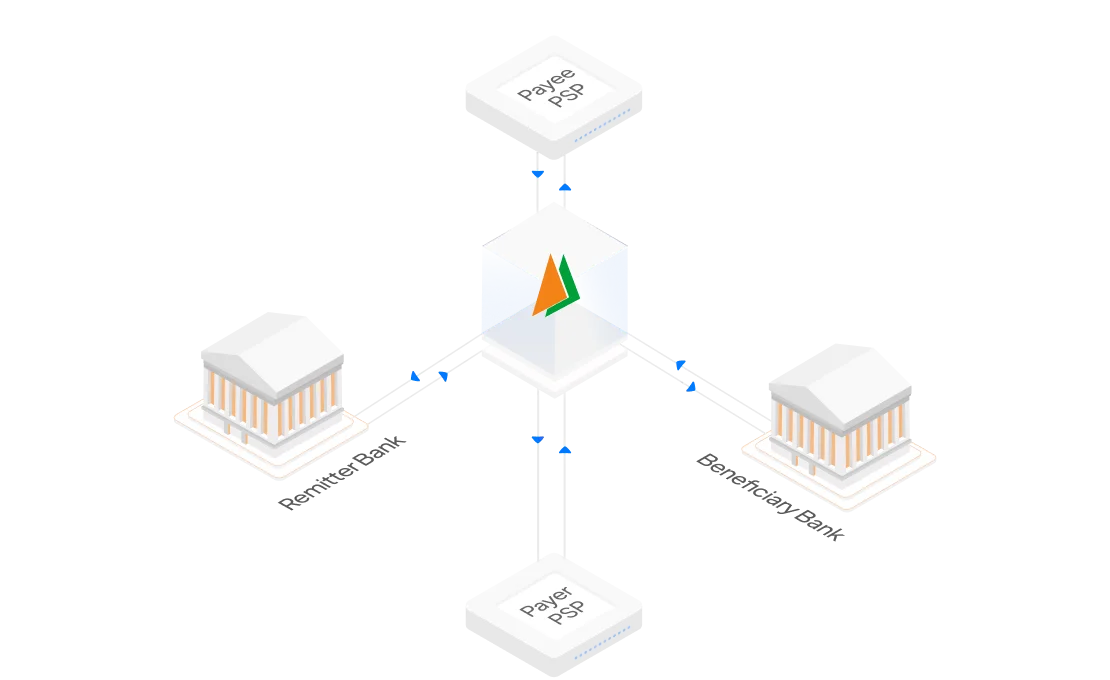
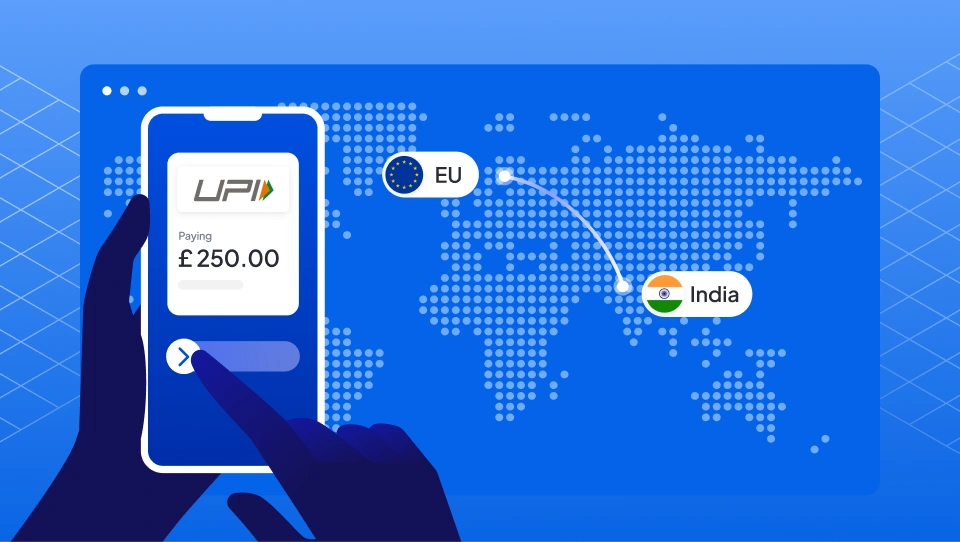
The UPI-TIPS linkage connects these two systems directly, creating an instant payment corridor between India and Europe. This has the potential to reduce reliance on correspondent banking networks and SWIFT messaging for certain India-Euro payment flows. that currently handle most international transactions.
Within Europe, TIPS operates alongside the SEPA Instant Credit Transfer (SCT Inst) scheme. Participation in TIPS does not automatically provide reach across all European banks, and adoption varies by country and institution. Enterprises should therefore view UPI-TIPS as an emerging corridor rather than universal coverage from day one.
Timeline: Current Status
On November 21, 2025, the Reserve Bank of India announced that it has entered the realization phase of an initiative to interlink UPI with TIPS. This followed the European Central Bank's Governing Council approval on November 20, 2025, to start the realization phase for linking the two systems.
The realization phase involves developing the necessary system linkages, settlement mechanisms, and risk-management frameworks to support instant payment flows between India and euro-area jurisdictions. According to the official announcements, RBI, NIPL and ECB are now working on technical integration, operational processes and testing frameworks.
However, no specific go-live date has been announced by either the RBI or ECB. Enterprises should monitor their banking partners closely for official launch announcements as the implementation progresses through 2026.
How Does This Linkage Work?
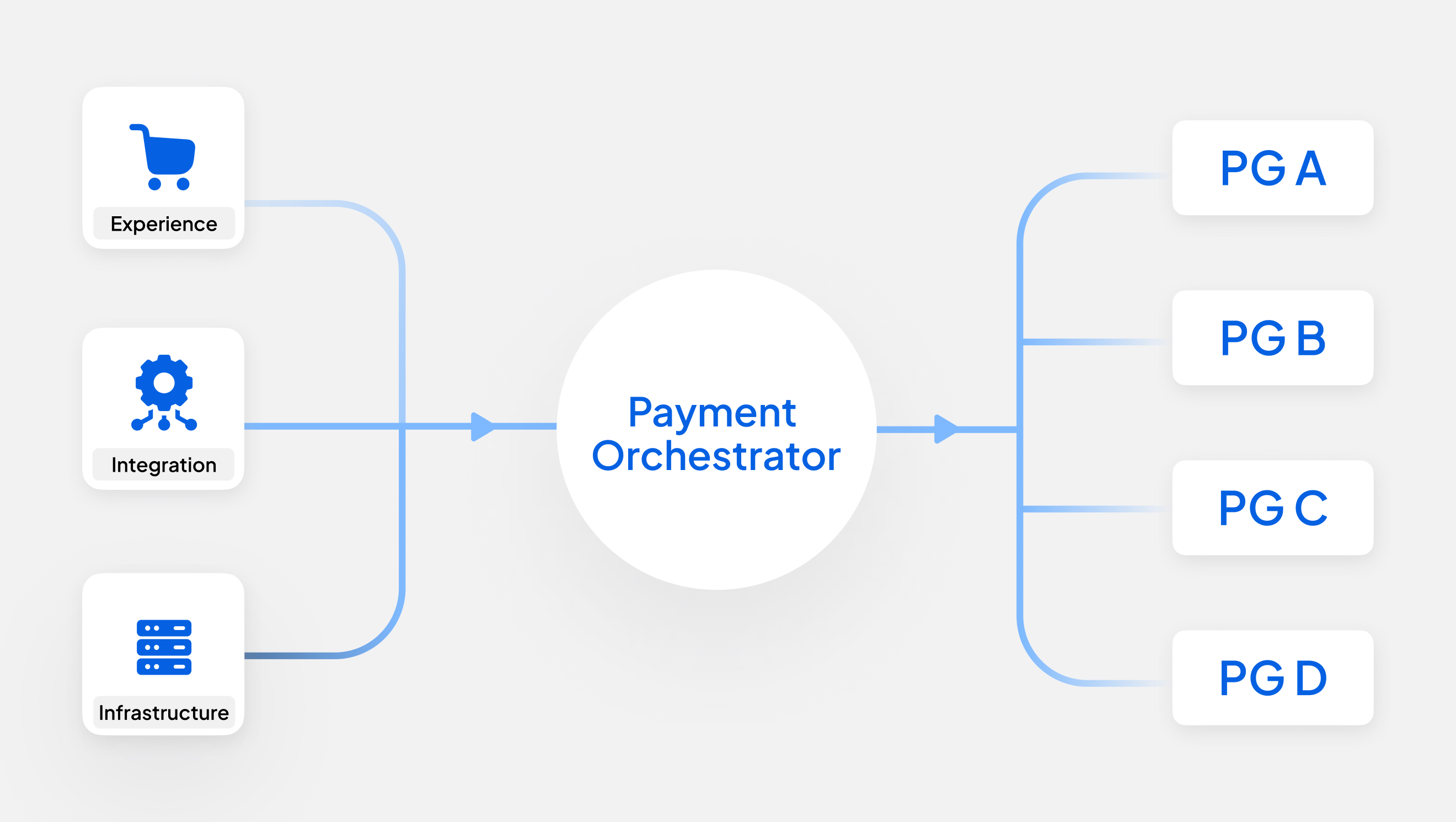
Traditional cross-border payments involve multiple intermediaries. Payments pass through the sender's bank, one or more correspondent banks, and finally reach the beneficiary's bank. Each step adds cost, time, and potential points of failure.
The UPI-TIPS linkage fundamentally changes this architecture:
Direct Integration: The two systems connect through a dedicated technical integration layer. Payment instructions flow directly from UPI to TIPS without intermediate correspondent banks.
Real-Time Settlement: Transactions settle within seconds rather than the typical 2-5 business days. This represents a shift from batch processing to real-time gross settlement.
Atomic Currency Conversion: The linkage handles INR to EUR conversion at the transaction point. Foreign exchange rates are locked at initiation, and conversion happens transparently within the linked infrastructure.
Single Initiation Point: Treasury teams initiate payments through the UPI interface. The cross-border routing, compliance checks, and settlement occur automatically through the linked systems.
Standardized Messaging: Both systems use ISO 20022 messaging standards, ensuring seamless interoperability and reduced reconciliation complexity.
Strategic Impact on Enterprise Operations
Cost Optimization at Scale
Cross-border payments between Europe and India can carry significant costs, often ranging from 3% to 7% when factoring in bank fees, correspondent charges, and foreign exchange margins. For enterprises processing significant volumes, this represents substantial annual expenditure.
UPI-TIPS linkage could reduce these costs to under 1%. For an enterprise processing €10 million annually in India-Europe payments, the fee differential between 5% and 0.5% translates to €450,000 in annual savings. This directly impacts bottom lines and improves margins on international operations.
Working Capital Efficiency
Payment float of 2-5 days ties up working capital that could be deployed elsewhere. For enterprises managing tight cash conversion cycles, this represents a hidden cost of international operations.
Instant settlement transforms working capital management. Finance teams gain precise control over cash positions, enabling better liquidity planning and potentially reducing the need for expensive credit lines. The ability to time payments exactly improves negotiating leverage with suppliers and optimizes cash deployment across operations.
Foreign Exchange Risk Management
Multi-day settlement windows expose enterprises to currency volatility. A payment initiated on Monday settles on Thursday, during which time exchange rates can move significantly. For large transactions, even small percentage movements translate to substantial losses or gains outside organizational control.
Instant settlement locks in foreign exchange rates at the transaction moment. This eliminates settlement-related FX risk and allows treasury teams to manage currency exposure through deliberate hedging strategies rather than absorbing involuntary volatility from payment processing delays.
Supply Chain Acceleration
Payment delays cascade through supply chains. European suppliers often wait for confirmed payment before releasing goods or initiating production. This adds days or weeks to procurement cycles and complicates just-in-time inventory management.
With instant payment confirmation, suppliers can act immediately. This compresses procurement cycles, reduces inventory holding costs, and improves the ability to respond to market demands. For manufacturing enterprises, this could enable tighter production scheduling and reduced working capital tied up in inventory.
Compliance and Reporting Simplification
Cross-border payments currently require extensive documentation across multiple systems. Each correspondent bank may have different requirements, creating compliance complexity and reconciliation challenges.
The UPI-TIPS linkage standardizes compliance processes. Teams submit documentation once through a unified interface. The linked systems handle regulatory requirements on both ends, reducing administrative overhead and minimizing errors. This is particularly valuable for enterprises managing high transaction volumes where manual compliance processes create bottlenecks.
Risk & regulatory considerations
Data Protection and GDPR: Payment data flowing between jurisdictions will require strict adherence to GDPR and European data-transfer rules. Enterprises should expect banks to implement additional safeguards and contractual controls.
AML and Sanctions Screening: Instant cross-border payments increase expectations for real-time AML and sanctions screening. Enterprises should anticipate enhanced KYC requirements and transaction monitoring.
FX Controls and Local Regulations: India maintains capital controls and reporting requirements for cross-border flows. These will continue to apply even if the payment rail becomes faster.
Coverage Limitations at Launch: Initial rollout will likely involve a subset of banks and corridors. Enterprises should plan for a hybrid environment during early adoption.
Who Should Prioritize This?
Manufacturing Enterprises: Companies with European supply chains for raw materials or components will see immediate benefits through faster procurement cycles and reduced costs.
Technology and Services: IT companies, consulting firms, and service providers billing European clients can improve cash collection and reduce receivables cycles.
Import-Export Operations: Businesses with regular bilateral trade flows between India and Europe stand to gain the most from cost reduction and operational efficiency.
Treasury-Intensive Operations: Enterprises managing complex treasury operations with significant cross-border flows will benefit from improved cash visibility and control.
Strategic Considerations for Implementation
Banking Partner Assessment: Organizations should evaluate which banking partners will support UPI-TIPS when it launches. Major Indian banks like SBI, HDFC, and ICICI are expected to be among the first to offer this capability. On the European side, adoption will depend on participation by TIPS-connected banks across the euro area. Most major euro-area banks already have access to TIPS via the SEPA Instant Credit Transfer scheme, but commercial availability of cross-border UPI–TIPS services will depend on individual banks choosing to enable the corridor, define pricing, and integrate the service into their corporate payment offerings. Decision-makers should assess whether their primary transaction banks are prioritizing this integration.
Volume Analysis: Finance teams should calculate current India-Europe payment volumes, associated costs, and working capital impact. Building a business case quantifying potential savings and operational improvements helps justify any system changes required for adoption.
Counterparty Coordination: Enterprises should engage with European suppliers and customers now. These partners will need banking relationships that support TIPS. Early coordination ensures smooth implementation when the system goes live.
Treasury System Integration: Organizations must assess how UPI-TIPS payments will integrate with existing treasury management systems, ERP platforms, and reconciliation processes. Planning necessary upgrades or modifications in advance prevents implementation delays.
Risk Management Framework: Treasury departments should update foreign exchange and payment risk policies to account for instant settlement capabilities. This may enable new hedging strategies or modify existing approaches.
Looking Forward
The UPI-TIPS linkage aligns with the G20's roadmap for faster, cheaper and more transparent international payments. Similar linkages are being explored with payment systems in Singapore, the UK, and the Middle East. Enterprises that develop expertise with instant cross-border payment systems now will be better positioned as this infrastructure expands globally.
For decision-makers managing India-Europe operations, the time to prepare is now. While the exact launch date remains unannounced, the realization phase is actively underway. Enterprises should finalize their implementation strategies and coordinate with banking partners to ensure they can capitalize on this infrastructure the moment it becomes available.
The organizations that move quickly will gain competitive advantages through lower costs, faster operations, and superior working capital management. Those that delay will find themselves at a disadvantage as competitors leverage more efficient payment infrastructure.