








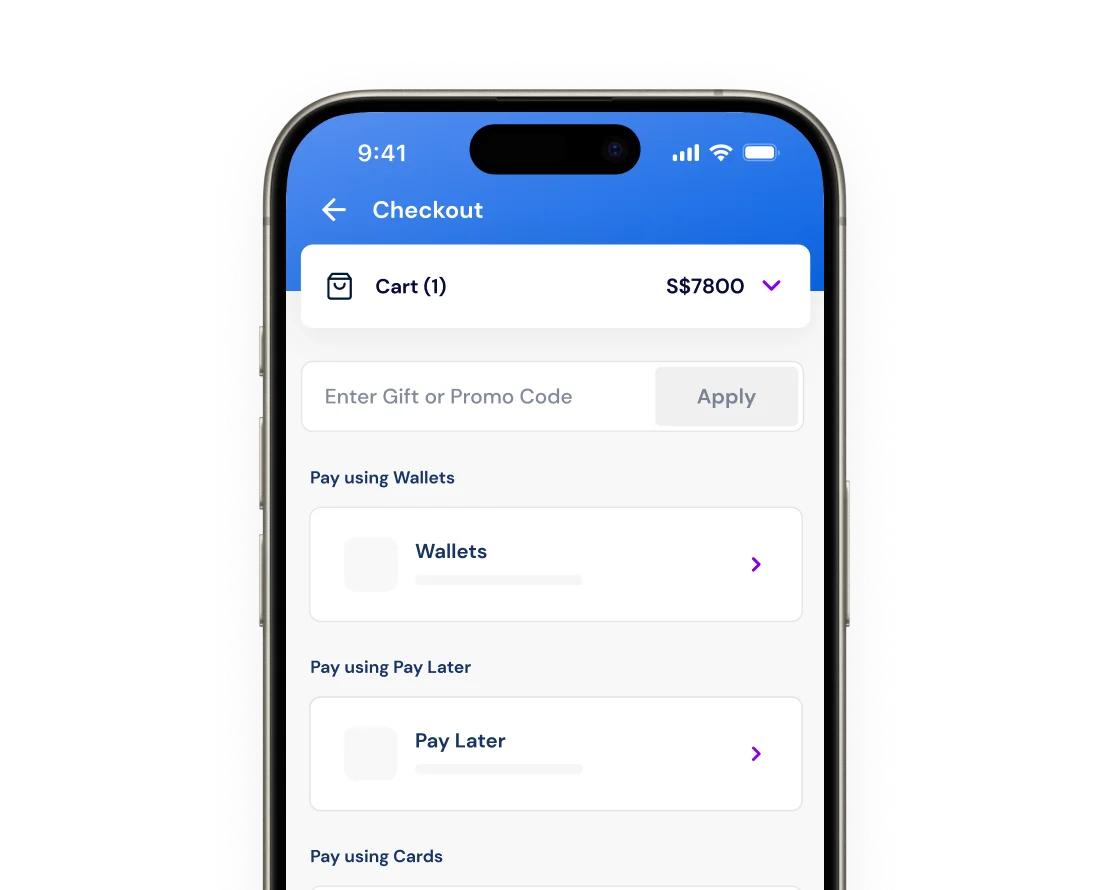
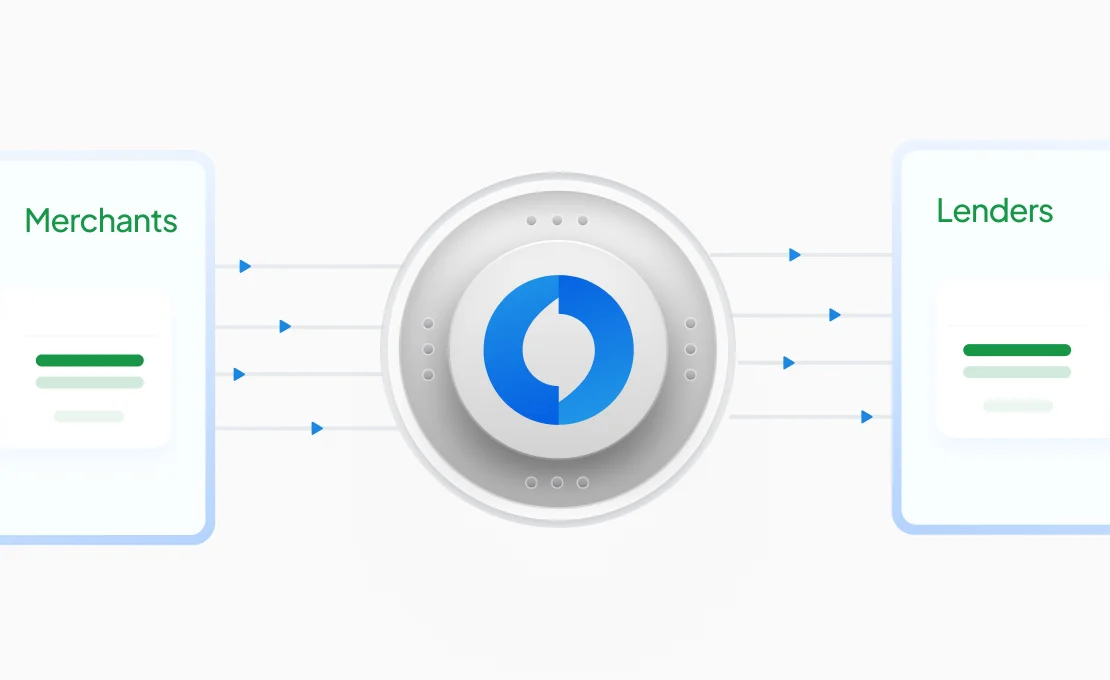
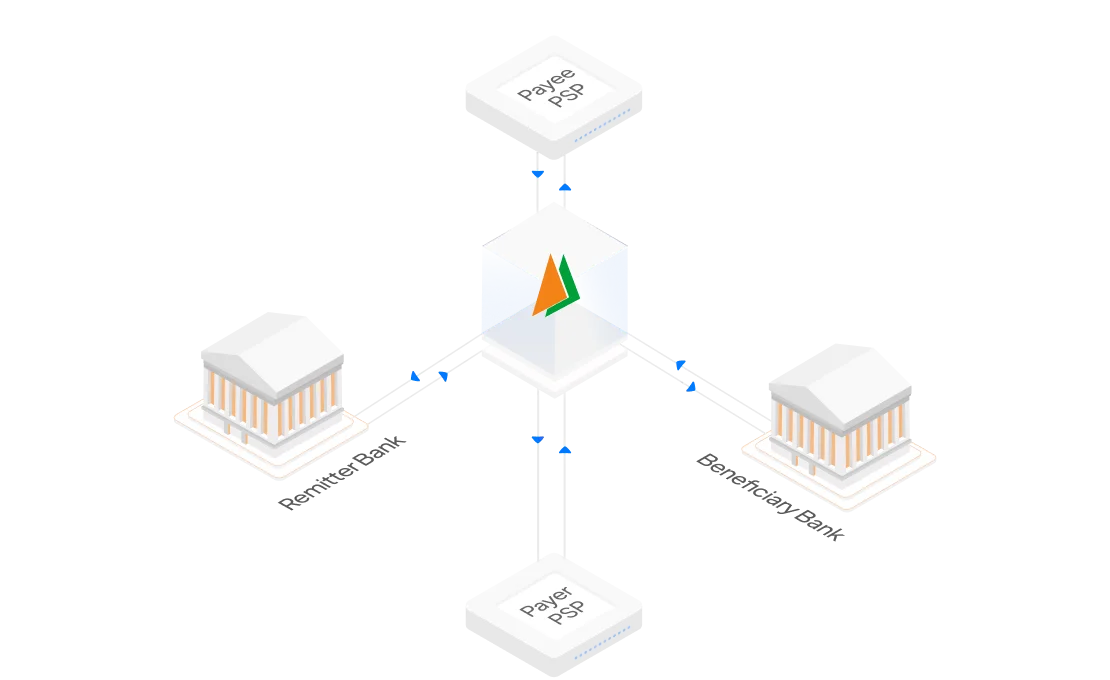



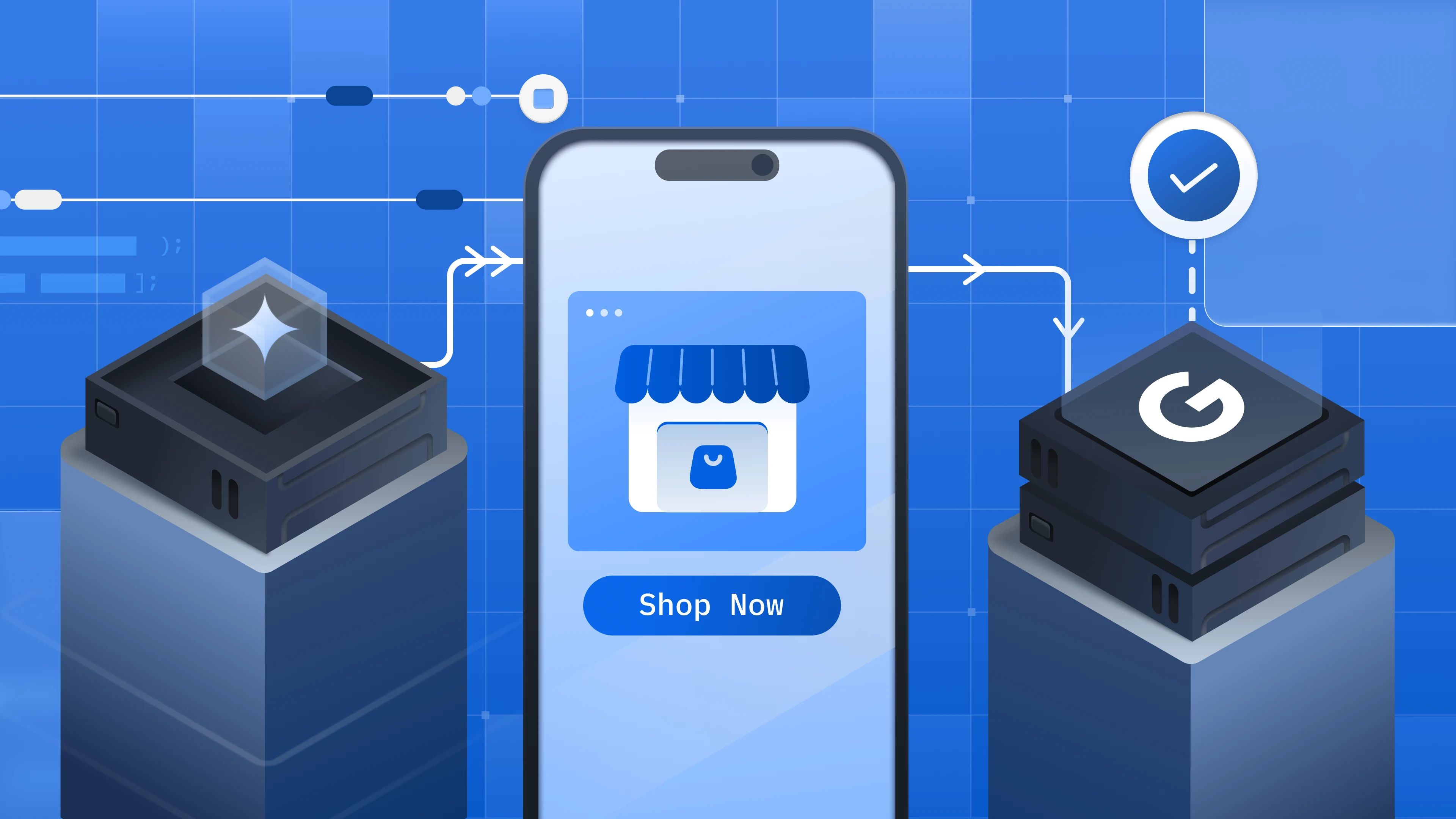
Google unveiled the Universal Commerce Protocol (UCP) at the National Retail Federation conference, an open standard that lets AI agents discover, compare, and purchase products across the web. Co-developed with Shopify, Walmart, Target, Wayfair, and Etsy, and backed by Visa, Mastercard, Adyen, American Express, and 20+ other partners, UCP is Google defining how commerce works when the buyer is a machine.
What UCP Actually Is
UCP standardizes how AI agents interact with merchants. Product discovery, availability checks, cart management, checkout, all designed for AI-to-merchant communication, not humans clicking through websites.
The key components:
- Standard shopping lifecycle: Three core capabilities: Checkout (cart to payment), Identity Linking (OAuth 2.0 account connections), and Order Management (real-time status via webhooks). The minimum foundation for agent commerce.
- Dynamic capability discovery: Merchants publish a profile at /.well-known/ucp that agents query to discover supported capabilities and payment configurations. No hardcoded integrations, agents learn what each merchant supports on the fly.
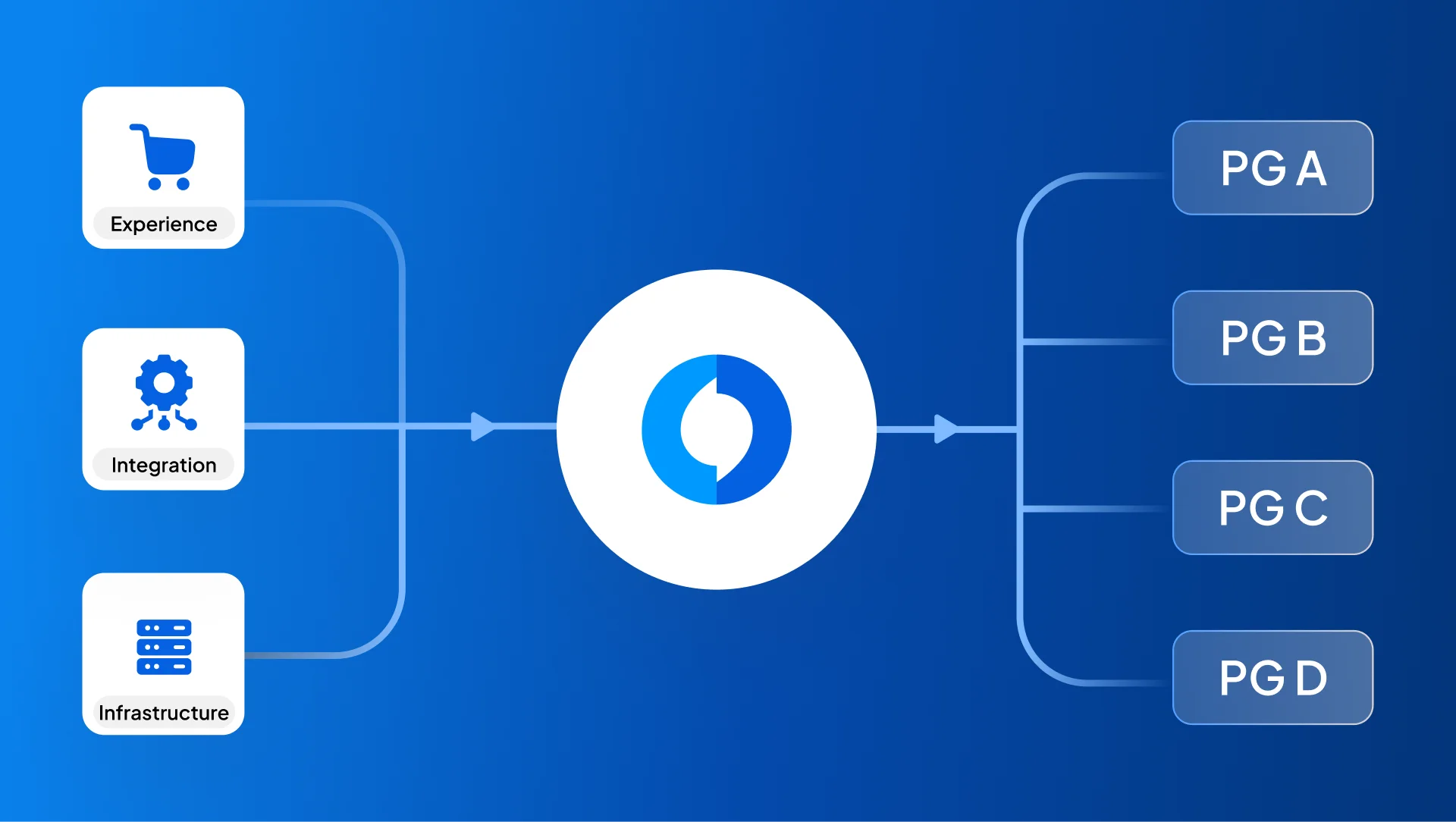
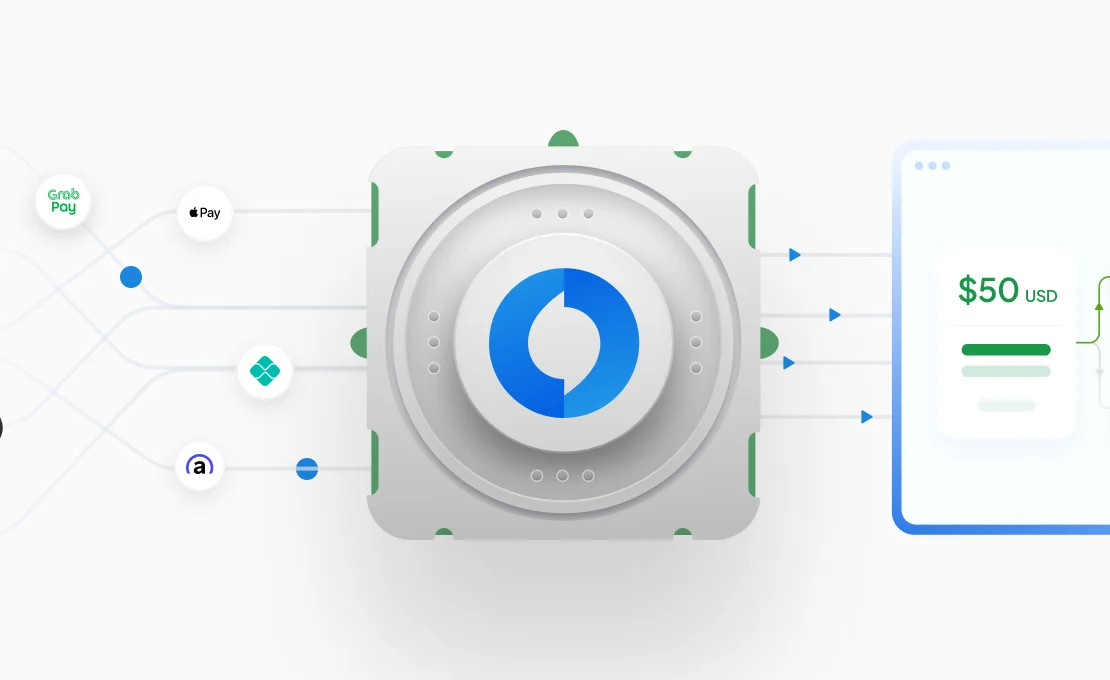
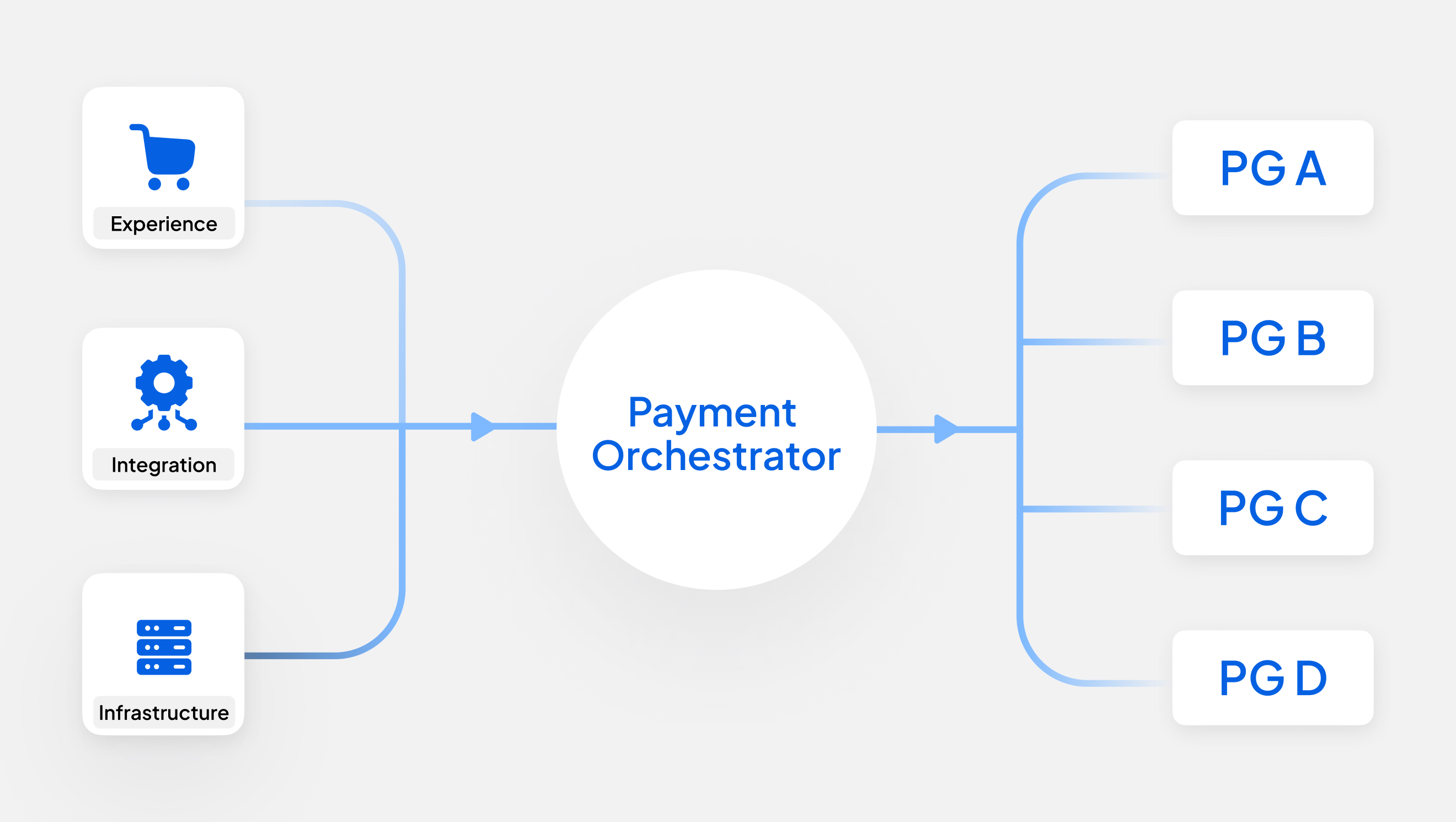
- Modular payment architecture: UCP separates payment instruments (cards, wallets) from payment handlers (specs for how instruments are processed). Google Pay or Stripe author handler specs, merchants configure them with credentials, platforms execute them. This three-way separation lets merchants use any processor while supporting any payment method. That's exactly what payment orchestration does.
- Extensions for complexity: Discounts, loyalty programs, subscriptions, gift cards, pre-authorized payments each adds operational complexity when you're dealing with dozens of AI agents at once.
- Cryptographic consent verification: Through Google's Agent Payments Protocol (AP2), every transaction includes proof that a human approved it. Regulators and merchants both want to know: did a real person authorize this purchase?
- Multi-protocol interoperability: UCP works with Agent2Agent (A2A), Model Context Protocol (MCP), and traditional REST APIs.
Google calls it an open standard. They're also setting the terms.
Why This Matters
Agent Commerce Is Real
McKinsey projects agentic commerce will reach $3-5 trillion globally by 2030. Morgan Stanley estimates AI agents could drive 10-20% of U.S. e-commerce by decade's end.
A travel agent books flights across dozens of sites. A procurement agent reorders supplies when inventory drops. A personal shopping agent finds deals matching stored preferences. Each needs to interact with merchants programmatically. Traditional checkout flows, designed for humans with browsers don't work.
Checkout Pages Become Optional
Today, your checkout page is where the transaction happens. You control the experience, the upsells, the conversion optimization.
With agent commerce, the checkout page might never load. The AI negotiates directly with your backend via API. Your checkout funnel? Bypassed.
Human purchases continue. But you need infrastructure that handles both: traditional web/mobile checkout for humans, API-first checkout for agents.
Protocol Fragmentation
Google isn't alone. OpenAI and Stripe launched the Agentic Commerce Protocol (ACP) in late 2025, powering "Instant Checkout" in ChatGPT. Microsoft announced a Commerce MCP Server for Dynamics 365 retailers, coming February 2026.
Shopify is supporting both UCP and ACP. They're hedging because retailers can't bet on one protocol.
Each protocol handles payments, consent verification, and extensions differently. Build tightly to one and you risk being locked out of others. Build flexible, protocol-agnostic infrastructure and you reach every AI shopping surface.
Payment Complexity Multiplies
When a human buys something, the payment path is predictable: card entry, processor authorization, maybe 3DS.
Agent commerce adds layers:
- Different payment handler requirements per protocol
- Pre-authorized spending limits that need enforcement
- Varying consent verification by platform
- Dispute handling when an agent makes a mistake
- Extension support (loyalty, discounts, subscriptions) that differs across protocols
UCP separates instruments from handlers because flexibility matters. Implementing that flexibility falls on you.
What You Need to Do
1. Evaluate API Readiness
UCP is API-first. If your checkout is coupled to your frontend, you're not ready.
Can a third party initiate a purchase via API without loading your website? Do you have programmatic endpoints for inventory, pricing, fulfillment? Can you process payments without user interaction at checkout?
2. Implement Capability Discovery
Publish what your system supports: checkout capabilities, payment handlers, endpoint schemas, extension support for discounts, loyalty, subscriptions.
3. Plan for Agent Identity and Spending Controls
How will you verify an AI agent is authorized to transact? OAuth 2.0 tokens on user authorization, spending limits in your payment processing, integration with AP2's consent verification. Your payment infrastructure needs to enforce these consistently.
4. Prepare for Multi-Protocol Reality
With UCP, ACP, and Microsoft competing, you need infrastructure that translates between protocols, routes different agent types appropriately, and adapts as standards evolve.
5. Keep Human Checkout Working
Both will coexist. Human buyers via traditional checkout, agents via API, hybrid flows where an agent initiates but a human approves.
Why This Is a Payment Orchestration Problem
UCP's architecture maps directly to what orchestration does:
- Separation of instruments from handlers: Core orchestration value prop. UCP assumes you can route any payment method to any processor.
- Handler configuration at merchant level: Providers author specs, merchants configure credentials, platforms execute. That's orchestration's operating model.
- Dynamic capability publishing: Your payment infrastructure exposes what it supports programmatically.
- Multi-protocol support: As protocols compete, you need a unified layer that adapts.
- Extension complexity: Loyalty, discounts, subscriptions each add requirements that vary by protocol and processor.
Solve this at the payment layer (not custom integrations per protocol) and you move faster as standards evolve.
How Hyperswitch Helps
Hyperswitch maps directly to UCP and agent commerce requirements:
- API-First: Every payment operation; authorization, capture, refund, disputes, available via API. Integrate with UCP agents via backend, process AI-initiated payments without checkout pages, support programmatic commerce alongside traditional checkout.
- Instrument/Handler Separation Built In: UCP's three-party model is how Hyperswitch already works. Configure processor credentials once; Hyperswitch handles execution. Route agent payments to low-latency processors, use different processors for different agent platforms, maintain fallbacks.
- Unified Control Layer: Spending limits, authorization rules, consent verification, enforced consistently across human and agent transactions at the orchestration layer.
- Protocol-Agnostic Foundation: Different platforms will adopt different protocols. Hyperswitch provides a unified layer that adapts to UCP, ACP, or emerging standards without replacing core infrastructure.
- Open Source, Extensible: UCP is new. Standards are evolving. Open-source architecture means you're not waiting for a vendor to add protocol support.
Bottom Line
Google's UCP signals where commerce is heading. AI agents will become a real transaction channel, not replacing human buyers, but adding a mode merchants must support.
Protocol fragmentation, UCP, ACP, Microsoft, reflects genuine competition. The merchants who thrive will have payment infrastructure flexible enough to support all of them.
That means API-first architecture. Instrument/handler separation. Multi-protocol flexibility. Unified systems for human and AI buyers.
Agent commerce is coming. Is your payment stack ready?