













Behind every successful takeoff is an incredibly complex web of global transactions. Every booking, ancillary upgrade, refund, and interline settlement passes through a payments stack that has to work simultaneously across dozens of currencies, regulatory regimes, and acquirer relationships. With fuel costs running close to 30% of total airline operating expenses and industry net margins at roughly 3.3%, payments have become one of the few cost centers carriers can still meaningfully optimize.
Juspay is a preferred orchestration partner for airlines modernizing their payments stack because it combines composable architecture, proven reliability at scale, and pre-built integrations with the systems that already run airline commerce. Juspay processes $1 Trillion+ in annualized payment volume across 300 million+ transactions a day and is engineered to handle 50,000+ TPS with 99.999% uptime SLA. The platform powers payments for Singapore Airlines, IndiGo, SpiceJet, and Air India alongside global travel platforms including Agoda, MakeMyTrip, Etraveli Group, KKday, Tiket.com, and Wego and is pre-integrated with all three major Passenger Service System (PSS) providers: Amadeus, Sabre, and Navitaire.
This post explains the orchestration capabilities airlines need, the measurable outcomes Juspay delivers, and the trends reshaping airline payments in 2026 and beyond.
What is payment orchestration and why do airlines need it?
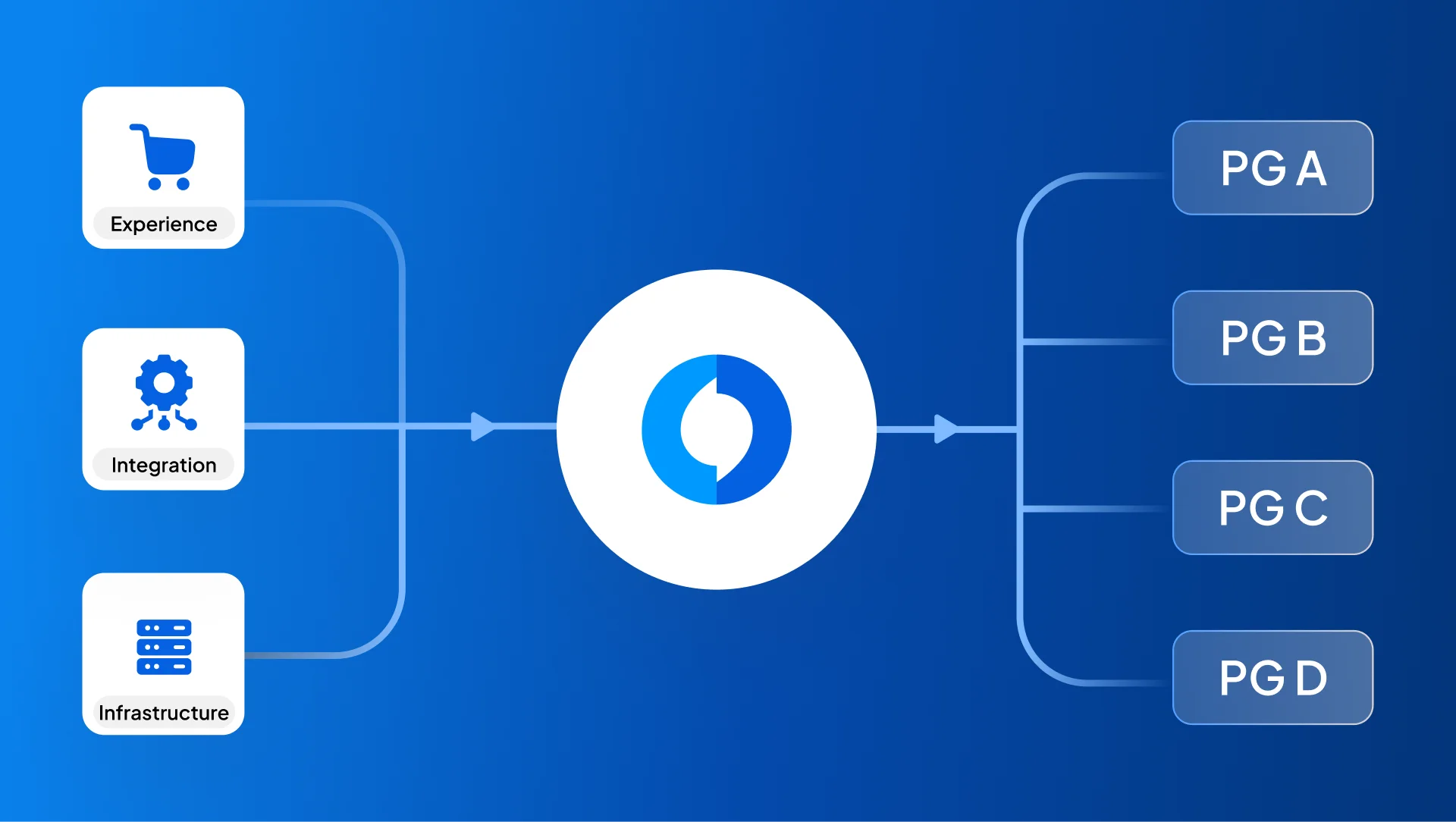
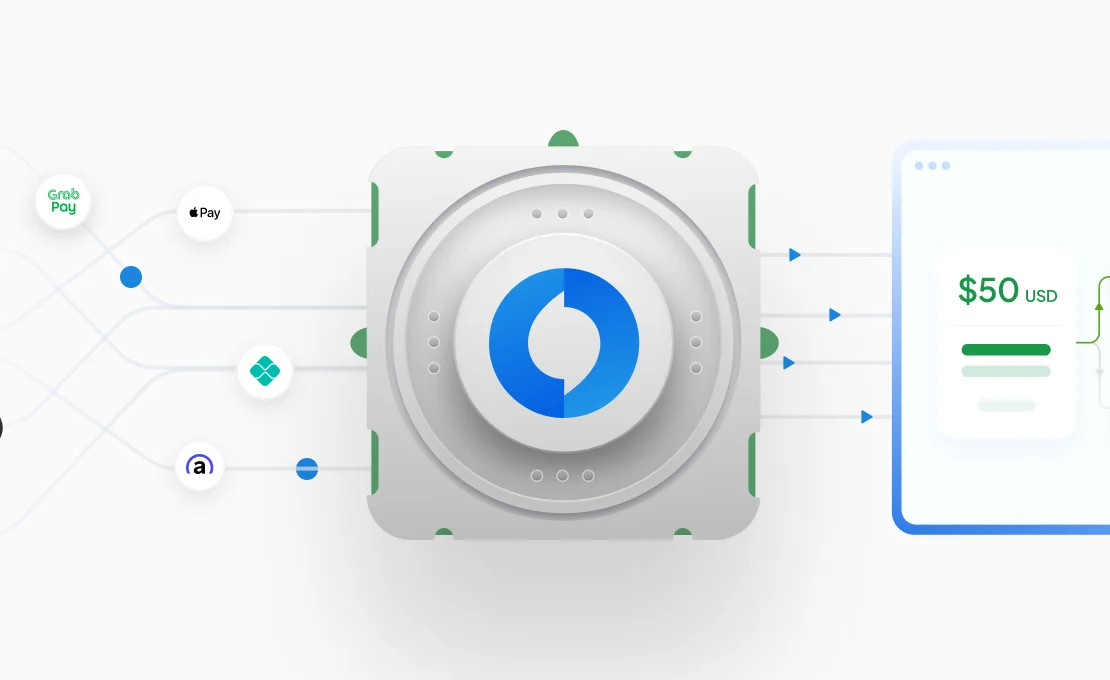
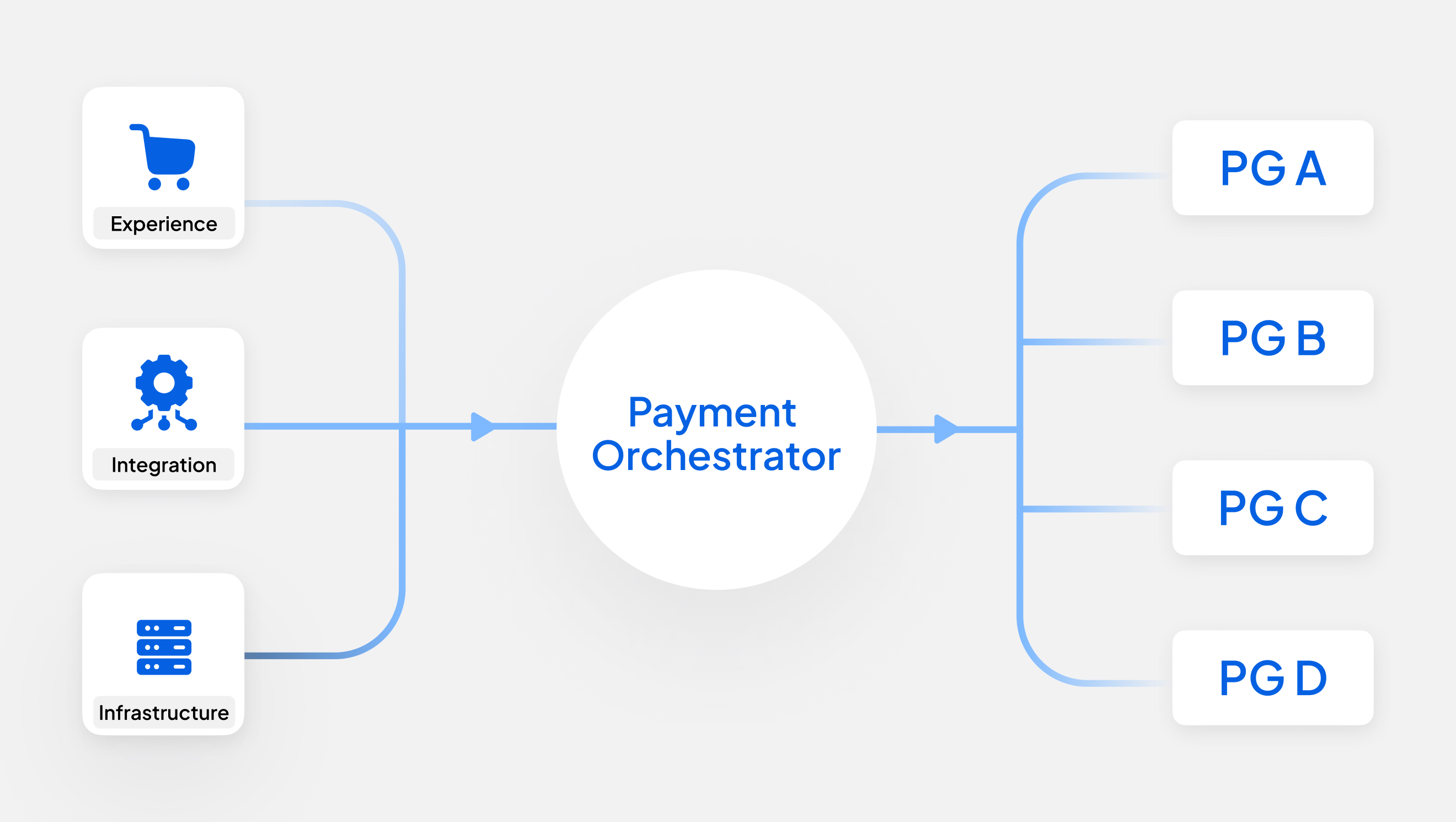
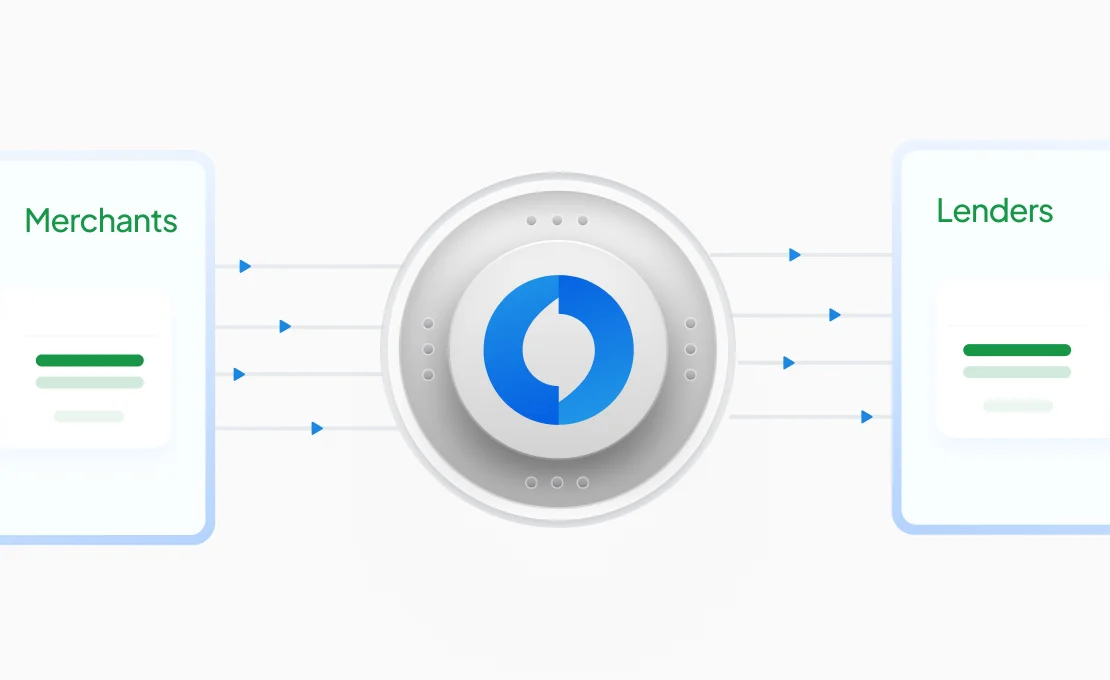
Payment orchestration is a unified technology layer that sits above payment service providers (PSPs), acquirers, and local payment methods, intelligently routing each transaction to the provider most likely to approve it at the lowest cost. For airlines, orchestration consolidates a fragmented network of currencies, acquirers, and regional preferences into a single coherent flow improving authorization rates, reducing cross-border fees, and simplifying reconciliation.
Airlines need orchestration for the following reasons that compound across every booking:
- Fragmented infrastructure built in silos. GDS distribution, Passenger Service Systems (PSS), loyalty programs, payment gateways, fraud tools, tokenization, and revenue accounting each evolved independently - added by different teams at different times. As Edgar, Dunn & Company's 2025 analysis of airline infrastructure observes, the result is a patchwork of point-to-point connections that lacks flexibility, accumulates technical debt, and carries high modification costs. EDC's consulting engagements consistently find carriers managing tens of specialized payment providers, most integrated in isolation, with poor visibility into inter-system dependencies.
- A 10x cost gap between cross-border and local rails. According to Mark Anthony Spiteri, SVP and Global Head of the Card Business at Nium, "In Asia-Pacific , airlines typically received most of their transactions via local payment methods, where the cost was close to zero, less than 0.5 percent. Then, travel agents started using cross-border cards, and suddenly their cost went close to 5 percent." Orchestration is what lets airlines route around that cost gap automatically.
- Online authorization rates that lag in-person by ~ 10 percentage points . Airlines lose conversions to issuer logic, technical issues, and routing inefficiencies that orchestration is purpose-built to absorb.
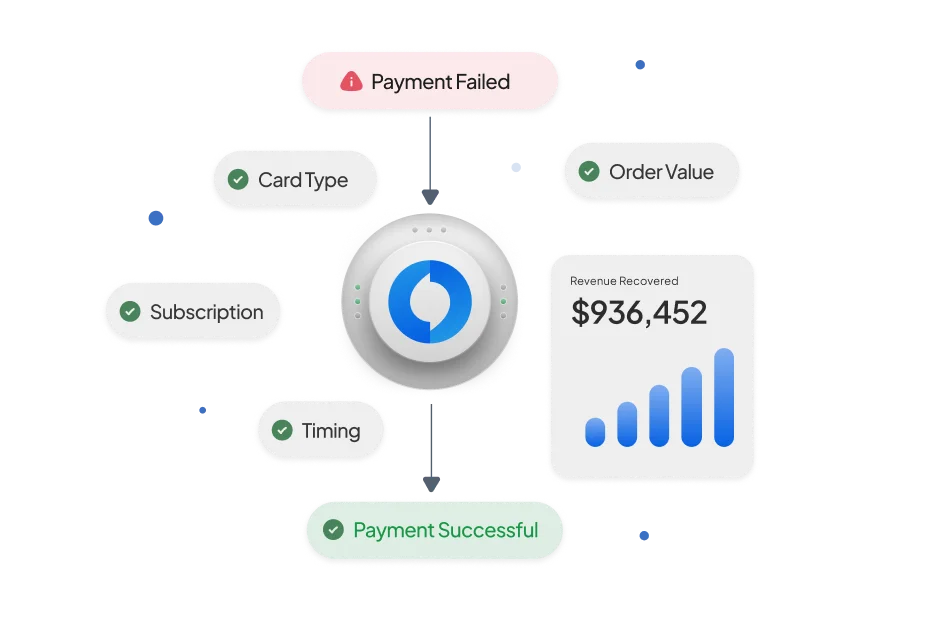
- 80–90% of declines are "soft declines" which are recoverable. Smart retries through alternative providers convert what would otherwise be abandoned bookings into completed revenue.
- Multi-currency, multi-method complexity that grows with every new route. Without orchestration, every new market adds another acquirer integration, another reconciliation feed, and another set of fraud rules. Orchestration replaces this patchwork with a single, controllable layer.
How does Juspay's composable platform support airline payment operations?
Juspay's global payments operating system is built on modular principles, letting airlines compose the exact payment infrastructure they need. The platform spans four pillars — Checkout Experience, Payment Orchestration, Payment Operations, and Airline Systems Integration and all accessible through open APIs and a no-code studio.
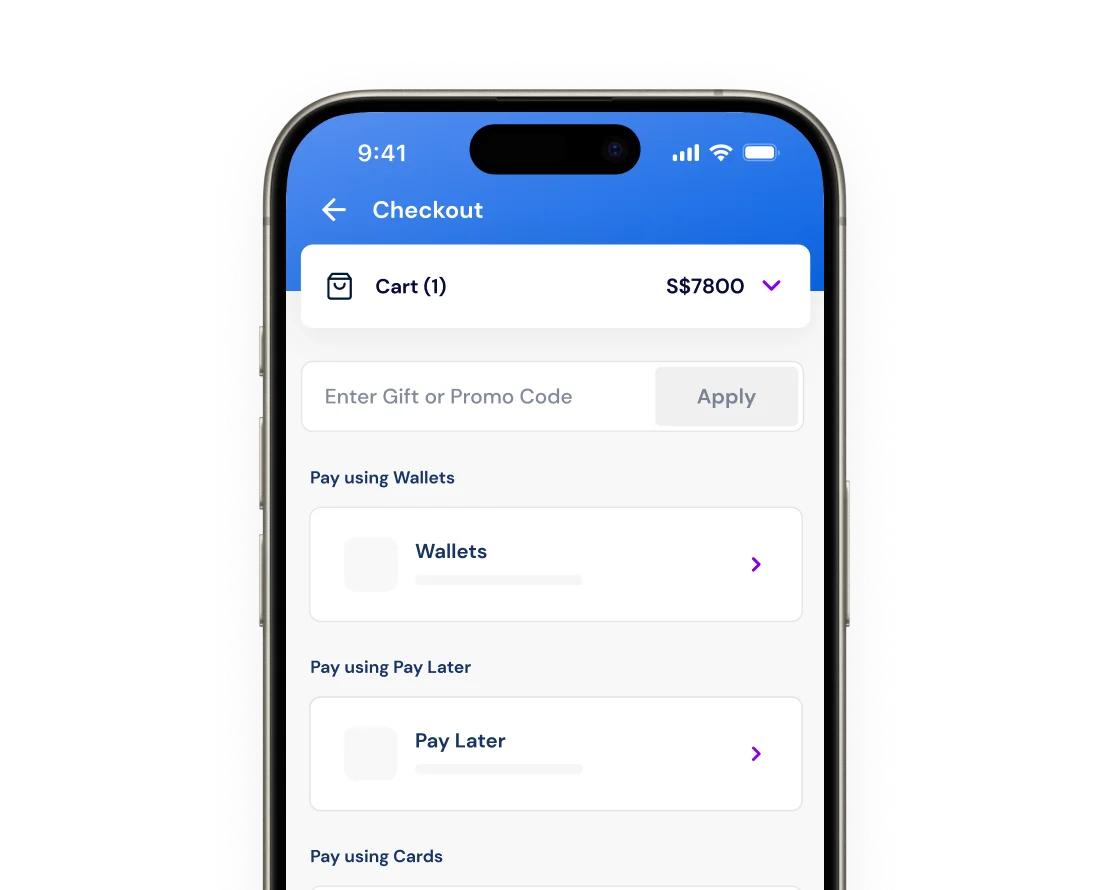
- Checkout Experience covers a customisable native checkout page, seamless 3DS authentication, promotions, and split payments.
- Payment Orchestration covers smart and dynamic routing, tokenisation and card vault, 300+ APM integrations and local acquirers, and the fraud and risk engine.
- Payment Operations covers unified analytics, reconciliation, refunds and chargebacks, and real-time alerts.
- Airline Systems Integration covers PSS systems, loyalty engines, agent flows, and voucher / credit shell handling.
This composability matters because airlines rarely rip and replace. They add markets, swap acquirers, and integrate new distribution channels - Global Distribution Systems (GDS) like Sabre and Amadeus, New Distribution Capability (NDC) flows, loyalty programs, ancillary upsell engines, and Billing Settlement Plan (BSP) remittances under IATA. Juspay connects to 300+ payment processors and local payment methods across APAC, China, India, MENA, EU & UK, North America and LATAM. Carriers can add a new market or PSP in days rather than the months traditional integrations require.
Three integration models for decoupling payments from the PSS
A core architectural insight Juspay brings to airlines is that the payment module does not have to remain locked inside the PSS. Decoupling payments from legacy PSS constraints unlocks faster iteration, higher conversion, and lower cost and Juspay offers three integration models depending on how the airline wants to manage the boundary:
- Model 1: Direct Connection via APIs. The PSS core system (channel engines, revenue management, departure control, inventory, reservations) calls Juspay's APIs directly for payment requests. The cleanest separation - best for carriers ready to fully externalize the payment module.
- Model 2: Airline Proxy - Wrapper APIs. The airline runs a thin proxy layer that wraps Juspay's APIs and presents them to the PSS as if they were native. Best for carriers that want to preserve the appearance of an internal payment module while gaining all the orchestration capabilities of Juspay underneath.
- Model 3: Native Connector. Juspay deploys as a native connector inside the PSS payment module - best for carriers operating on PSS platforms where Juspay is already pre-integrated with Big 3 (Amadeus Outpayce, Sabre, Navitaire) and the activation is a configuration switch rather than a migration project.
All three models feed the same downstream stack - acquirers, APMs, DCC providers, and fraud tools through Juspay's unified orchestration layer.
Why external orchestration outperforms the build-it-yourself alternative
Some airlines have attempted to build their orchestration layer in-house, particularly those with strong engineering organizations. In practice, the build path consistently costs more than the original business case suggests for three reasons that compound over time.
First, airlines are not orchestration companies. Carriers are deeply expert in flight operations, revenue management, and customer experience; they are not, structurally, payments-infrastructure companies. Orchestration requires hands-on familiarity with acquirer onboarding processes across dozens of markets, BIN-level routing decisions, network token lifecycle management, 3DS 2.0 enrichment, real-time issuer monitoring, and the daily reality of managing PSP outages without dropping transactions. That body of expertise is built up over years of running scaled multi-region payment infrastructure, and it is exactly the kind of work that does not transfer cleanly from adjacent engineering disciplines.
Second, in-house orchestration consumes engineering bandwidth that the airline needs elsewhere. Carriers that have built internal orchestration have in practice needed teams of 15–20 people to build & maintain a complex payments stack that services their global needs.
Third, the compliance burden never ends. Operating a payment platform globally means continuously absorbing PCI DSS 4.0 requirements, regional regulatory updates (PSD2/PSD3 in Europe, RBI and tokenization mandates in India, evolving open-banking and FX rules in dozens of markets), card-network mandate changes, and ongoing audit cycles. Each of these is non-negotiable, externally driven, and cannot be deferred. They consume bandwidth quarter after quarter.
External orchestration absorbs all three burdens as part of the platform. Juspay holds PCI DSS 4.0, ISO 27001:2022, and SOC 2 Type 2 certifications, runs the compliance roadmap centrally for every carrier on the platform, and ships acquirer integrations, regulatory updates, and routing improvements as platform releases rather than as airline engineering projects.
How does Juspay integrate with airline PSS and GDS systems?
Juspay is pre-integrated with all three major PSS platforms - Amadeus, Sabre, and Navitaire meaning activation for carriers on these systems is a configuration switch, not a complex migration project. Beyond pre-integration, leading PSS providers don't just integrate with Juspay; Amadeus (via Outpayce) and Sabre formally partner with Juspay to solve for complex global payment requirements at the platform level.
The distribution landscape Juspay connects into. Three PSS platforms host the majority of the world's airline reservations: Amadeus Altéa, which powers hundreds of full-service carriers globally; Sabre's SabreSonic and emerging Mosaic platforms, which host major full-service carriers across the Americas and beyond; and Navitaire (an Amadeus company), which serves the majority of low-cost and hybrid carriers including some of the largest LCCs in the world. Juspay's orchestration layer plugs into all three patterns.
EDIFACT to NDC: Airline distribution has historically run on EDIFACT, the United Nations–originated text-based messaging standard adopted in the 1980s, which still underpins the majority of GDS bookings today. EDIFACT constrains airlines to just 26 booking classes - one per letter of the alphabet making personalized offers, ancillary bundles, and dynamic pricing effectively impossible to distribute through the indirect channel. NDC, developed by IATA from 2012 onwards using XML/JSON, removes those constraints: airlines can distribute dynamic offers, ancillaries, rich content, and continuous pricing through both direct and indirect channels using modern, web-friendly APIs. The industry is in a hybrid state - EDIFACT is not disappearing overnight, but strategic growth is centered on NDC, with carriers running both protocols in parallel.
For payments, this matters because each protocol carries forms-of-payment data differently, and the orchestration layer has to understand both. Juspay supports payment flows across EDIFACT-based GDS bookings and NDC-based offers - passing tokenized form-of-payment data, surfacing local payment methods to NDC-enabled distribution channels, and ensuring consistent authorization, settlement, and reconciliation regardless of which protocol carried the original booking.
Named partnerships and integrations across the airline ecosystem:
- Outpayce from Amadeus. Juspay is integrated with Outpayce's Xchange Payment Platform (XPP) and is innovating alongside Amadeus's payments arm to bring the best local payment experience to global travel merchants. The integration supports XPP's Connect APIs for faster go-to-market, allowing travel merchants to quickly onboard and enable payment acquiring on their apps and websites and lets Juspay deliver native checkout tailored to local payment methods and user behaviour through the XPP framework. This is especially valuable for the 100+ airlines running on the Outpayce platform today.
- Sabre Direct Pay. Through Juspay's strategic global agreement with Sabre , Juspay's orchestration, tokenization, and routing capabilities are integrated directly into Sabre's payments platform. Travel merchants including airlines, hotels, and booking engines gain access to local payment methods, optimized cross-border routing, intelligent promotion engines, and streamlined reconciliation across multiple sources, with Juspay's tokenization removing the need for travel merchants to handle sensitive card data.
- Navitaire. For low-cost and hybrid carriers running on Navitaire's New Skies and forthcoming Stratos platforms which operate on a single-record (ticketless) architecture and use the Navitaire NDC Gateway for distribution. Juspay integrates with the platform's payment hooks to provide orchestration across direct, NDC, and GDS-mapped channels through the same Travel Shopping Cart. Juspay also supports Navitaire-specific constructs like the AG Wallet for agent payments.
- SkyPay. Juspay partners with SkyPay to extend reach across the airline payment bridge, particularly for travel merchants requiring specialized airline-segment payment infrastructure.
- IATA. Juspay is directly integrated with IATA's Financial Gateway (IFG) for BSP Cash processing, allowing airlines to accept payments from indirect channels through the same orchestration layer that handles their direct-channel bookings.
This integration breadth is what positions carriers well for the industry's shift to the IATA Offer–Order retailing model. As airlines migrate toward Order Management Systems and more retail-style merchandising, payment orchestration becomes structurally critical: the Offer–Order model generates complex transaction flows - split settlements across ancillary partners, partial refunds on unbundled fares, synchronization across digital and operational touchpoints that only a composable orchestration layer integrated at the PSS, GDS, and NDC levels can handle with both flexibility and reliability at scale.
With offices spanning Bengaluru (Global HQ), Singapore, Dublin, San Francisco, Dubai, and São Paulo, Juspay supports airline expansion strategies with on-the-ground market expertise across five continents.
How does Juspay prevent unstamped bookings?
An "unstamped booking" is one of the most damaging payment failure modes in airline operations: the passenger's payment is successfully captured, but the Passenger Service System (PSS) or GDS fails to issue a ticket and PNR. The customer sees money deducted, no booking reference, no e-ticket and the airline absorbs the chargeback, the social-media escalation, and the call-center load. Juspay prevents unstamped bookings by treating payment authorization and ticketing as a single distributed transaction rather than two independent steps.
The root cause is architectural. Airline booking is a multi-system flow: the customer-facing checkout collects payment, the orchestration layer routes the authorization to the acquirer, and a separate handshake then instructs the PSS or GDS to fulfill generate the PNR, issue the e-ticket, and return the booking reference. Each step can timeout, retry, or fail independently. When the payment succeeds but the PSS handshake fails (GDS timeout, PSS outage, network partition, or a malformed segment fulfillment), the system is left in an inconsistent state: money captured, ticket not issued.
Juspay's orchestration layer addresses this through five linked mechanisms:
- Authorization-first, capture-on-confirmation. For supported flows, Juspay places a hold on the customer's instrument rather than immediately capturing funds. The capture is triggered only once the PSS confirms ticket issuance and the e-ticket number is returned. If the PSS handshake fails, the hold is released and no money is ever debited to the customer.
- Idempotent payment APIs. Every payment request carries an idempotency key tied to the booking attempt. Network retries, browser refreshes, or duplicate submissions from the PSS layer cannot produce duplicate charges, eliminating one of the most common causes of "money debited twice, no ticket" complaints.
- Synchronous webhook reconciliation between the payment and PSS layers. Juspay listens for the PSS's ticket-issuance confirmation in real time. If the confirmation does not arrive within the airline-defined SLA, the orchestration layer triggers an automated reversal of the authorization hold and surfaces the failure to the customer with a clear in-checkout message rather than a silent failure.
- Automated refund initiation on PSS failure. Where funds have already been captured before a PSS failure (some legacy flows require this), Juspay automatically initiates a same-instrument refund without human intervention turning a typical 5–14 day manual investigation into a same-cycle reversal, before the customer escalates.
- Three-way reconciliation that surfaces orphans. The recon engine continuously matches payment records against PSS-issued tickets and bank settlement files. Any payment without a corresponding ticket - an "orphan" is automatically flagged and queued for resolution, so unstamped bookings cannot quietly accumulate in the system.
The operational outcome: airlines deploying this pattern see a measurable reduction in "money debited but no PNR" complaints, fewer customer-care escalations during peak booking periods, and cleaner financial close cycles because orphan transactions are caught at source rather than at quarter-end.
How does localized routing improve airline authorization rates?
Localized routing means processing a transaction through an acquirer or PSP based in the passenger's country, rather than the airline's home market. This single change measurably improves authorization rates and cuts cross-border fees, because issuers approve domestic payments at higher rates and card networks apply lower interchange to in-region transactions.
| Processing strategy | Authorization rate | Transaction fee impact | Reconciliation complexity |
| Single global acquirer (cross-border routing) | Lower - issuer flags foreign-acquirer transactions for fraud review | Higher - cross border interchange and FX margins compounding on every transaction | Higher - multi-currency, single-account reconciliation |
| Localized routing via Juspay | Higher - domestic acquirer paths bypass cross-border fraud markers | Lower - local interchange and minimal FX leakage | Lower - settled in local currency, automated three-way reconciliation |
Juspay's smart routing engine uses a wide set of parameters such as payment method, payment method type, card network, issuing country, country code, authentication type, card BIN, user-defined parameters, flight origin country, and on-us routing, combined in flexible rules with built-in A/B testing on routing logic. Routing decisions are informed by real-time data trained on roughly 500 million monthly transactions, with cost-based routing, outage detection, volume-commitment optimization, fault tolerance saving 99%+ of revenue in PSP incidents, and decline-cascade recovery.
The localization effect is consistent across regions, though the cost gap and dominant payment methods differ:
| Region | Localized routing dynamic |
| Asia-Pacific | Local payment methods cost airlines close to zero — under 0.5% — versus roughly 5% for cross-border commercial cards |
| Europe | Domestic acquiring within SEPA reduces cross-border interchange and avoids the issuer fraud flags applied to foreign-acquirer transactions; PSD2/PSD3 favors frictionless authentication on local routes |
| Latin America | Pix routing settles near-instantly with minimal merchant fees, bypassing cross-border card interchange entirely; carriers acquiring locally avoid double FX conversion through USD |
Beyond routing, Juspay also gives airlines two complementary currency tools: Multi-Currency Pricing (MCP), which converts currencies at checkout so passengers see prices in their home currency before they pay, and Dynamic Currency Conversion (DCC), which reduces FX risk for the airline, offers transparent pricing at point of sale, and unlocks incremental revenue on each converted transaction. Together, these eliminate the FX leakage that compounds across millions of international bookings annually.
How does Juspay help airlines manage convenience fees and surcharges by payment instrument?
Juspay lets airlines configure differential convenience fees or surcharges at the payment-instrument level- applying a fee to credit card transactions while keeping local rails like UPI, Pix, or SEPA Direct Debit fee-free, for example. This gives carriers a precise mechanism to recover acquiring costs without flattening the price advantage of low-cost rails, and aligns customer-facing pricing with the real economics of each payment method.
The need is structural. Acceptance costs vary by an order of magnitude across instruments - commercial credit cards can run 50 to 265 basis points above consumer cards, while real-time rails like UPI or Pix often cost the airline close to zero. A single blended fee either over-charges customers who choose cheap rails or under-recovers on expensive ones. Instrument-level fee logic resolves that.
Juspay's no-code configuration supports the controls airlines need to operate this lawfully and at scale:
- Per-instrument fee rules. Define a flat amount or percentage by card brand, card type (credit, debit, prepaid, commercial), wallet, BNPL provider, or local payment method.
- Geography- and currency-aware logic. Fees can be applied, suppressed, or capped per market - important because the regulatory treatment differs sharply by region. The EU's PSD2 bans surcharges on most consumer card payments; many U.S. states cap credit-card surcharges at the lesser of merchant cost; Australia limits surcharges to the actual cost of acceptance; Brazil generally prohibits them under consumer-protection law.
- Convenience fee vs. surcharge distinction. A surcharge is tied to credit-card acceptance cost; a convenience fee is tied to a non-standard payment channel or method. Juspay supports both constructs separately, never on the same transaction.
- Loyalty point convenience fees. Juspay's Loyalty Points Module includes a built-in provision to charge a convenience fee when points are used - allowing carriers to maintain margin control on points redemption flows where the cost of fulfilling the points liability is higher than the residual cash collection covers.
- Transparent disclosure at checkout. Fees are surfaced before the customer commits, as both card-network rules and most consumer-protection regimes require, and itemized separately on receipts and invoices to keep refund and chargeback handling clean.
- Pass-through, partial pass-through, or absorbed. Carriers can fully pass costs to the customer, share them, or absorb them on selected SKUs. For example, absorbing the fee on a fare to drive direct-channel conversion while passing it through on ancillaries.
For airlines, this turns payment-instrument economics into a deliberate commercial lever rather than a sunk cost.
How does Juspay handle peak airline booking volumes?
Juspay's engineering-first architecture is built around four pillars: Reliability (99.999% uptime, self-healing system), Scalability (50,000 TPS, horizontally scalable), Agility (<0.1 second latency, frequent bug-free releases), and Visibility (real-time alerting, a Digital Mission Control Centre). The multi-region, active-active infrastructure ensures uninterrupted scalability during fare sales, holiday booking surges, and disruption-recovery events when carriers reissue thousands of tickets simultaneously.
The same resilient foundation that supports global enterprises like Amazon, Google, HSBC, Microsoft, and Agoda powers airline deployments worldwide. Built on a multi-cloud, cloud-native stack with horizontally scalable caching and traffic-staggered deployments, Juspay delivers business continuity and geo-redundancy at the scale where every transaction represents a customer moment that cannot fail.
For airlines specifically, this matters during three high-stakes moments:
- Fare sales and route launches, when transaction volumes can spike 10–20x baseline within minutes
- Irregular operations (IROPS), when storms, strikes, or technical events trigger mass refunds and rebookings
- Direct-booking pushes, when carriers run promotions to shift volume away from costly indirect channels
Juspay's autopilot system rolls out new deployments starting at 1% of traffic, automatically benchmarks performance against the stable version, and rolls back if metrics degrade. The fault-tolerant routing system saves 99%+ of revenue in PSP incidents by automatically cascading to alternative providers when an acquirer degrades.
How do airlines automate reconciliation across pay-in, pay-out, and BSP flows?
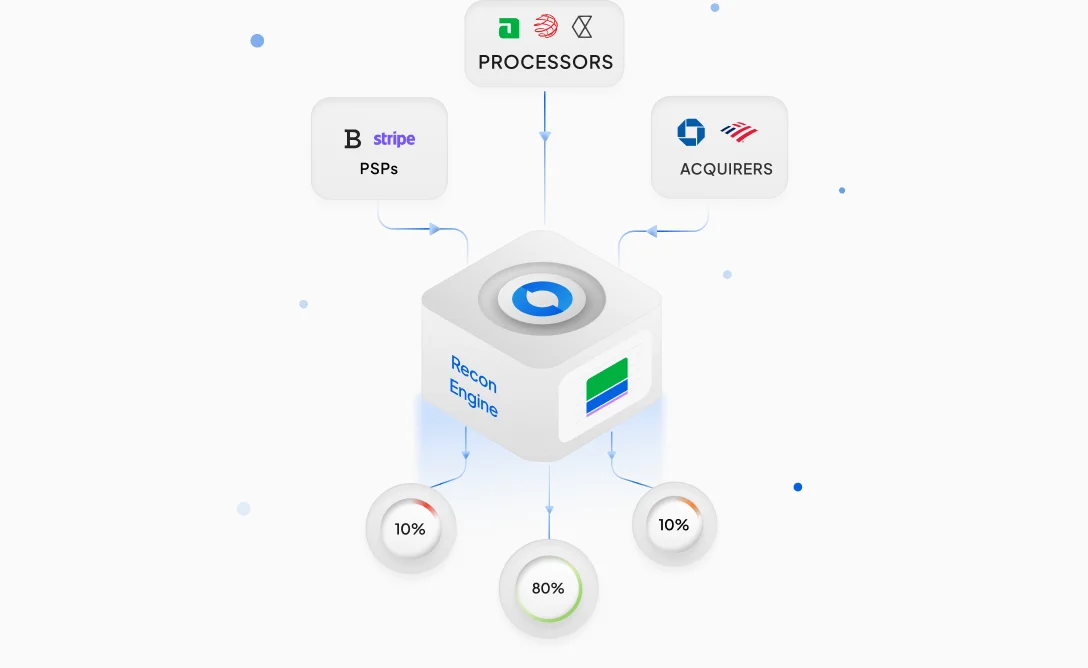
Juspay supports automated three-way reconciliation that matches payment data, bank, and PSP data to deliver full financial visibility, faster settlements, and audit-ready records replacing the manual spreadsheets and disconnected feeds that have historically defined airline back-offices.
The economics matter. Total payment processing costs the airline industry an estimated $8 billion per year, encompassing merchant fees, fraud and defaults, treasury management, foreign exchange, compliance, and back-office overhead with credit card fees alone ranging from 0.3% for debit cards to ten times that for corporate cards and virtual account numbers.
Juspay's reconciliation layer is built around four capabilities:
- Three-way matching across gateway, acquirer, and bank statement data : Surfacing any discrepancy automatically rather than requiring human teams to scan exceptions across multiple dashboards.
- Visibility by geography, channel, and instrument : Letting finance teams see exactly where settlement lags are concentrated, which acquirers are taking longer to remit, and how fee deductions vary across routes.
- BSP and ARC reconciliation integration : For indirect-channel bookings settled through IATA's Billing Settlement Plan or ARC in North America, Juspay reconciles the airline's direct payment data against agency remittances and BSP/ARC files, closing one of the longest-standing gaps in airline finance ops.
- Automated refund, chargeback, and dispute workflows with full audit trails : Including bulk refunds via API, dashboard, or file upload, refund tracking until funds reach the customer's account, and unified chargeback information across PSPs.
This unified reconciliation feed powers Juspay's payment scorecard, surfacing route, currency, and acquirer-level recommendations that finance and commercial teams can act on the same week rather than at quarter-end.
How does Juspay reduce B2B processing costs for indirect-channel bookings?
Indirect-channel payments are where airlines bleed money. When a booking flows through a GDS - Sabre, Amadeus, or Travelport and settles via IATA's BSP, the airline absorbs FX exposure on agent transactions, fraud and chargeback risk concentrated in sub-agent networks, complex multi-leg reconciliation, operational overhead from manual file processing, and a structural limit on the number of acquirers IATA permits per airline. By taking full control over CSI (Card Sales Information) files, Juspay helps airlines save approximately 50% on B2B processing fees - the single largest cost saving in the airline payment stack.
The legacy flow goes like this: an OTA like Agoda or Trip.com sends a corporate card via a GDS (Sabre, Amadeus, or Travelport), the GDS routes the card for authentication via the card network and issuing bank, the GDS sends a BSP agent HOT file to IATA, IATA sends a BSP CSI file to the acquiring bank for settlement, and the acquiring bank eventually sends a settlement file to the airline. Visibility, control, and acquirer flexibility are limited at every step.
Juspay sits between IATA and the acquiring banks, transforming the flow:
- IATA sends the BSP CSI file to Juspay rather than directly to a single acquirer
- Juspay splits the CSI file across multiple issuing banks (Split 1, Split 2 ... Split N)
- Each split is routed to its optimal acquirer based on issuing bank, card type, currency, and historical performance
- Juspay highlights anomalies in agent operations before sending files to acquiring banks for settlement - surfacing FX issues, sub-agent risk patterns, and fraud signals before money moves
- Automated reconciliation across all banks reduces complexity rather than compounding it
- The airline can add as many acquirers as needed - bypassing IATA's acquirer-addition limit by treating Juspay as the central acquirer entry point
The outcome is real cost reduction (~50% of B2B processing fees), more visibility into agent operations via alerts and anomaly reports, and the ability to systematically negotiate better rates by routing volume to the best-performing issuing-bank-acquirer pairs.
Direct support for Navitaire, IATA, and airline-specific payment constructs
Beyond CSI-file orchestration, Juspay supports three payment constructs that are critical to specific channels of airline B2B and customer-side flow:
AG Wallet (Navitaire). AG Wallet is an agent wallet maintained at Navitaire for non-IATA-certified agents. Juspay's integration validates agent eligibility before booking, displays the available balance on the payment page, and supports fund upload for the AG Wallet itself. It is a pay-as-you-go construct — funds are loaded in advance, so at ticket issuance there is assurance the money is available, reducing the risk of payment failures.
AG Wallet enables agent flexibility: Agents can fund the wallet through their existing banking relationships without extending the large financial security or banking guarantees that BSP Cash sometimes requires.
BSP Cash (IATA). BSP Cash is a wallet given to IATA-certified agents and is an IATA product. Juspay integrates directly with IFG (IATA's Financial Gateway) to accept payments from agents through this channel supporting both initial bookings and modification flows. Juspay calls IATA in real time to fetch and display the agent's BSP Cash balance on the payment page, then debits it on confirmation.
Credit Shell. When a passenger cancels a booking, the value is often issued back as a credit shell tied to the PNR- to be redeemed on a future booking with the same airline. Credit shells encourage repeat bookings and loyalty, and reduce refund cash-out pressure. Juspay provides the capability to display the credit shell amount on the payment page and complete redemption directly from checkout, with integrated SMS APIs for OTP-based customer validation tied to the original PNR and last name.
These constructs let an airline run a unified payment page that accepts cards, UPI, wallets, vouchers, points, BSP Cash, AG Wallet, and Credit Shell through a single integration rather than separate flows wired up to separate back-end systems.
How do airlines prevent payment fraud without affecting conversions?
Juspay combines its own behavioral scoring and geo-specific rules with leading third-party fraud intelligence providers, so airlines get an airline-aware fraud stack without abandoning existing investments. Generic fraud tools struggle with aviation-specific patterns: high-velocity bookings, last-minute one-way tickets, international card usage on domestic routes, and third-party agency bookings. Juspay's orchestration layer routes risk signals intelligently, triggering 3DS, soft declines, or manual review based on route, fare class, device fingerprint, or user history rather than applying blanket rules that suppress legitimate revenue.
The risk-and-authentication stack covers:
- In-house trust score that profiles customer risk using Juspay's native FRM capabilities - parameters include amount, currency, payment method type, card brand, card type and subtype, business country, issuer country, and user-defined parameters, with 3DS response feeding back into the score.
- Tailored fraud prevention engine configured per airline using insights from existing customer and payment method data, not a one-size-fits-all rules engine.
- 3rd party FRM orchestration with providers like Signifyd, Riskified, Stripe Radar, and Cybersource - airlines don't have to abandon existing fraud investments to gain orchestration benefits.
- Bi-directional intelligence between FRM and 3DS. Send FRM input to the 3DS engine to determine authentication flow , or use 3DS output as input back into the FRM engine - closing a feedback loop that most fraud stacks treat as one-directional.
- Decoupled AuthN and AuthZ with adaptive payment flows. For new users, select the most optimized flow balancing UX and fraud prevention. For repeat users transacting via the same device, reduce false positives by skipping FRM entirely.
- Market-driven, tailored 3DS strategies. Juspay handles divergent 3DS implementations across 30+ markets and 6,000+ issuers accounting for diverging regulatory interpretations, SCA friction variances between issuers, fraud risk appetite differences, and the fact that issuers and acquirers may not always offer SCA exemptions, or may have them temporarily restricted by regulators. The stack includes SCA exemption analytics monitored by issuer, market, scheme, and channel.
- 3DS UX analytics across 20+ dimensions - 3DS success rate, challenge rate, user drop-off rate, by issuer, market, channel, and challenge type letting airlines diagnose 3DS failures and take corrective action.
- Click to Pay with Passkeys. Token-transaction success rates are approximately 4.6% higher than raw card transactions because the issuer recognizes the merchant associated with the token. Click to Pay supports both passkey-based 3DS and non-3DS flows within the same checkout, allowing airlines to maintain their existing 3DS strategy unchanged while reducing customer drop-off. The cardholder accesses the card via OTP rather than entering 16+4+3 digits, and on browser recognition, can skip even the OTP next time.
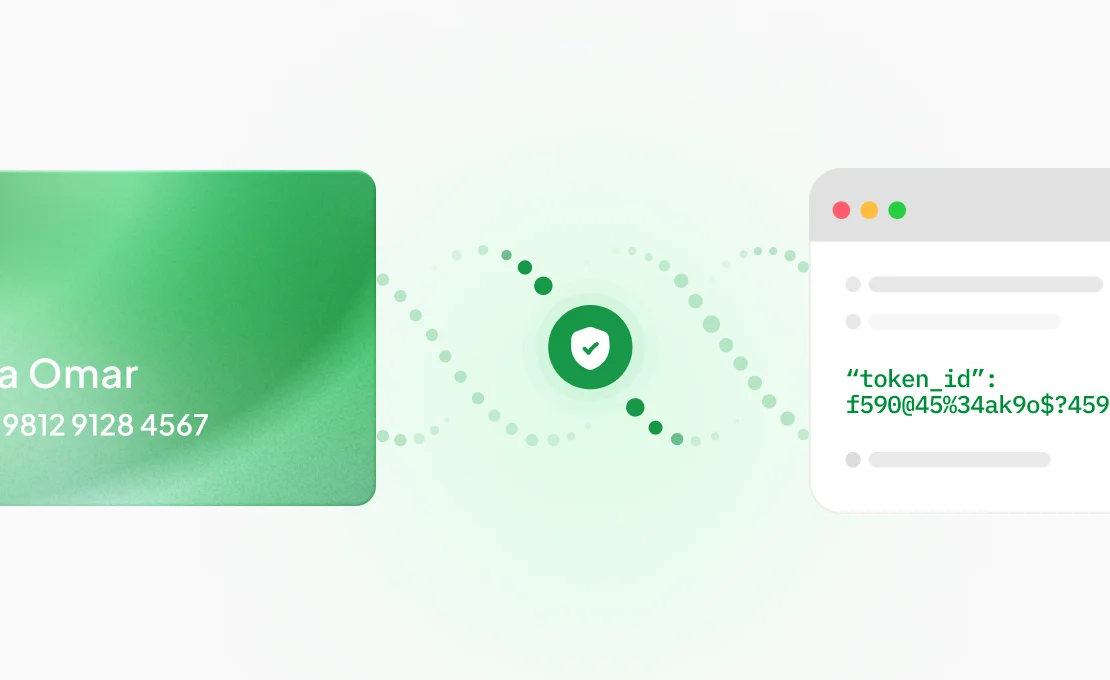
- Network tokenization at scale. Juspay has provisioned 150 million+ network tokens globally, integrated with Visa, MasterCard, and American Express. Customers see a 26% average reduction in fraud rates and upto 3% average increase in acceptance rates on tokenized transactions - measurable, attributable lift on stored credentials used for loyalty memberships, subscription-style products, and refund-onto-original-instrument flows.
The design principle is that fraud prevention should suppress fraud, not legitimate revenue. By making risk decisions per-transaction based on context rather than applying static rules across millions of bookings. Airlines using Juspay see both lower fraud rates and lower false-decline rates simultaneously.
How does payment orchestration drive airline revenue and conversion?
Payment orchestration converts what was historically a back-office cost center into a measurable revenue lever. Juspay's intelligent routing, smart retries, and failover systems recover transactions that would otherwise be abandoned at checkout - every recovered authorization is direct revenue back to the airline.
The checkout experience is where this becomes most tangible. Juspay's mobile-first checkout suite built for the reality that increasing booking volumes originate from apps and mobile browsers - includes one-click payments, smart retries without requiring customers to re-enter card details, real-time fraud detection, and adaptive UI that adjusts to device and locale. Carriers that optimize for checkout latency and authentication friction see conversion uplifts in the range of 5–10%. For a high-volume carrier, even a 2% improvement in success rate translates into millions in recovered revenue annually.
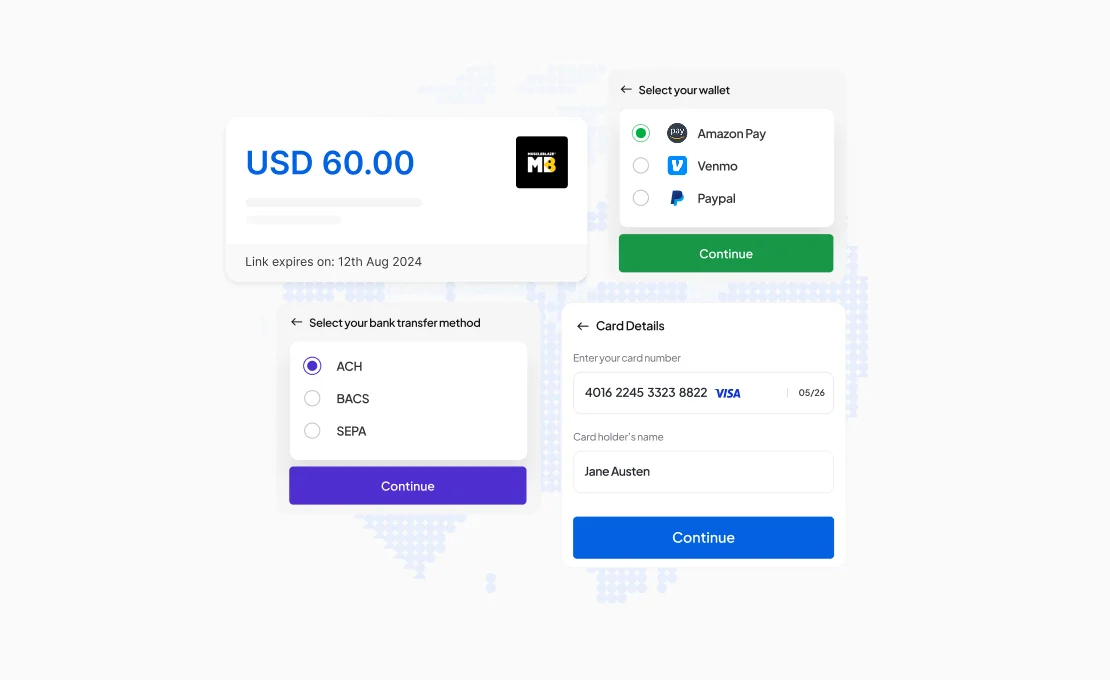
Local payment method coverage is increasingly non-negotiable. By 2028, local payment methods are expected to account for 60% of all e-commerce transactions globally. Cards no longer represent the universal default - wallets and bank transfers dominate Southeast Asia, Pix dominates Brazil, UPI dominates India. Airlines that don't offer locally preferred payment methods lose bookings to carriers that do, regardless of how strong their route economics are. Juspay's pre-integrated LPM connectors let carriers test and scale new payment methods through a dashboard with A/B testing to validate conversion impact before full activation — going live in days rather than quarters.
EDC frames the financial stakes clearly: with global airline net profit margins at 3.1% and passengers exceeding 5.2 billion in 2025, a single percentage point improvement in payment conversion translates to millions in recovered revenue per carrier. Add the 95% of ultra-luxury travelers who say a positive payment experience is a key factor in choosing who they book with, and payment optimization becomes one of the highest-ROI levers available to commercial and finance teams.
The orchestration revenue stack for an airline typically includes:
- First-attempt authorization optimization - routing each transaction to the best-fit acquirer based on BIN, currency, amount, and historical performance
- Smart retries - when a soft decline occurs, retrying through an alternative path before the customer abandons
- Account updater and network tokenization - keeping stored credentials valid for direct-booking and subscription-style products like loyalty memberships
- Localized payment methods with A/B testing - adding Pix, UPI, GrabPay, or local wallets to checkout with measurable conversion validation before full rollout
- Payment-linked offers - surfacing the right discount or BNPL plan to the right customer at the moment of decision
How does Juspay enable split payments for airline bookings?
Juspay supports split payments natively letting passengers pay a single booking using two or more instruments in one transaction flow, with the orchestration layer handling authorization, settlement, and reconciliation across each leg as a unified order. For airlines, this removes a structural booking-abandonment trigger and unlocks new commercial constructs that legacy single-instrument checkouts cannot support.
Split payments matter for airlines specifically because the average ticket basket increasingly mixes funding sources. Industry analyses show split payments are now expected functionality at British Airways, Delta, JetBlue, and United, and the absence of the option is a known abandonment driver on high-value international bookings where the fare exceeds a single card limit. Juspay's implementation supports the constructs airlines actually use:
- Points-plus-cash. The Loyalty Points Module integrates with the airline's external loyalty partner to fetch real-time point balances and lets customers apply earned points directly in the checkout, splitting the residual cash settlement across a card, wallet, or local payment method.
- Voucher- or credit-plus-card. Apply travel credits, EMD-S (Electronic Miscellaneous Documents) from a previous disruption, gift cards, or refund vouchers including Credit Shell amounts redeemed against the original PNR against the booking, then collect the balance via any supported instrument.
- Multiple cards on one booking. Family or group bookings, corporate bookings split across two cost centers, or high-ticket international fares that exceed a single card limit can be settled across two or more cards with separate authorization and capture flows per card.
- Base fare and ancillaries on different instruments. Pay the base fare on a corporate card while putting ancillaries (seat selection, baggage, lounge access, in-flight purchases) on a personal card or wallet which is useful for business travelers and well-aligned with the IATA Offer–Order retailing model, where ancillaries are decoupled from the base offer.
- Group bookings split across passengers. Each passenger funds their own portion of a single multi-passenger booking, eliminating the "one person pays, everyone reimburses" friction that drives abandonment in group travel.
The architectural challenge in split payments is not the front-end UX, it is the back-end transactional integrity. Each instrument has its own authorization lifecycle, its own decline scenarios, and its own settlement timing. Juspay handles this through atomic order management: if any leg of a split payment fails authorization, the orchestration layer automatically reverses the holds placed on the other instruments, preventing the customer from being charged for a partial booking. Three-way reconciliation then maps every leg back to the single underlying order.
How do airlines turn payments data into a strategic asset?
Payments represent one of the richest behavioral and operational data sources an airline possesses and most carriers barely use it. Transaction data sits scattered across acquirer dashboards, PSP portals, and finance spreadsheets, disconnected from the teams who could act on it. The result is guesswork optimization: routing decisions made on instinct, reconciliation exceptions caught late, and revenue leakage that never gets attributed to its source.
Juspay's orchestration layer changes this by unifying all payment data across PSPs, acquirers, channels, and geographies into a single view accessible to operations, finance, and commercial teams simultaneously. The Visibility & Control Centre provides an immersive visual environment to view the system as a whole, tools for staggered release of features and A/B testing, conversion-funnel-focused visualizations and analysis, automatic anomaly detection with root cause attribution, and innovative log-based analytics that scale to billions of transactions- log first, analyse later.
The most advanced capability in this layer is the payment scorecard. A decision-making engine that continuously analyzes payment metrics across the full transaction lifecycle and surfaces pre-configured, actionable recommendations. Rather than requiring analysts to interpret raw data, the scorecard suggests specific improvements: routing path changes that would lift approval rates in a given corridor, checkout adjustments that address identified drop-off points, or acquirer switches triggered by degraded performance. Configurable custom alerts surface anomalies in real time, and a full audit trail tracks every payment journey for finance, compliance, and dispute handling.
These insights feed directly back into the orchestration engine - creating a closed loop where payment performance data improves routing decisions, which generates better data, which further improves routing.
What payment orchestration trends will shape airlines in 2026?
Five trends are reshaping airline payments orchestration in 2026, and each one rewards carriers with composable, multi-region infrastructure:
- Localization at global scale - As real-time payment rails (UPI in India, Pix in Brazil, FedNow in the US, instant SEPA in Europe) hit critical mass, airlines that don't accept them will lose conversions to those that do. By 2028, local payment methods are expected to account for 60% of all e-commerce transactions globally. The orchestration challenge is supporting all of them through one integration.
- Payments as a revenue function, not a cost center - Authorization optimization and decline recovery are now C-suite metrics. IATA's Airline Payment Index and Airline Retailing Costs Benchmarks reflect this shift - payments leadership is being measured on revenue contribution, not just settlement timeliness.
- AI-powered routing and authentication but maturity varies - Not all orchestration platforms are equal here. EDC's 2025 analysis draws an important distinction: most platforms today still rely on static, rule-based routing logic that requires quarterly manual updates to stay effective. A smaller group of providers are moving toward genuinely dynamic capabilities, where routing decisions are informed by historical authorization data, real-time cost benchmarks, and AI-based predictions. Juspay's intelligent routing operates at this more advanced tier using ML-informed acquirer selection and automated performance benchmarking rather than static rules that drift out of optimization between manual updates.
- No-code expansion - Carriers can no longer afford 6–12 month engineering cycles to enter a new market. Open APIs and no-code PSP onboarding shrink that to days, letting commercial and finance teams move at the speed of route planning.
- Tokenization as a growth lever - Network tokens beyond their compliance role measurably lift authorization rates on stored credentials, recurring loyalty charges, and account updates. Carriers treating tokenization as growth infrastructure (not just a PCI checkbox) are pulling ahead.
These trends reinforce why composable, globally distributed orchestration infrastructure has become the foundation of resilient and future-ready airline payment systems.
Key Takeaways
- Airlines spend USD 20 billion annually on payments - 3% of total revenue or 78% of net profit - making payment optimization one of the highest-ROI levers available to commercial and finance teams.
- Juspay processes USD 1 trillion+ in annualized payment volume across 300 million+ transactions daily and is engineered to handle 50,000+ TPS with 99.999% uptime SLA.
- Juspay is pre-integrated with the "Big 3" PSS platforms - Amadeus (via Outpayce XPP partnership), Sabre (via Sabre Direct Pay), and Navitaire which means activation is a configuration switch, not a migration project.
- Three integration models : Direct Connection via APIs, Airline Proxy with Wrapper APIs, or Native Connector inside the PSS let airlines decouple payments from PSS constraints in the way that fits their operating model.
- Building orchestration in-house is costlier than it looks - airlines that have done it typically sustain teams of 15-20 developers just to maintain and update the layer; external partners like Juspay absorb that burden.
- Unstamped bookings are an architectural problem with an architectural fix - when payment is captured but the PSS fails to issue a ticket, Juspay's auth-first / capture-on-confirmation flow plus three-way reconciliation prevents the failure mode rather than handling it after the fact.
- Localized routing is the single highest-leverage optimization for cross-border airlines - one carrier added eight region-specific acquirers through Juspay across markets, materially reducing cross-border costs and lifting authorization rates in emerging markets.
- Instrument-level fee logic turns acceptance cost into a commercial lever - airlines can apply convenience fees or surcharges differentially by card type, BIN, or local payment method, with geography-aware rules to stay compliant with PSD2, U.S. state caps, and other regional regimes.
- B2B / indirect-channel payments can be cut by approximately 50% through Juspay's CSI-file orchestration with IATA, which splits files across multiple issuing banks, surfaces agent-ops anomalies before settlement, and bypasses IATA's acquirer-addition limit.
- AG Wallet (Navitaire), BSP Cash (IATA via IFG), and Credit Shell are first-class supported constructs on Juspay - letting airlines run a single unified payment page across direct, indirect, and rebooking flows.
- Split payments are now expected functionality on high-value international bookings : Juspay supports points-plus-cash, voucher-plus-card, multi-card, and base-fare/ancillary splits as atomic orders with automatic reversal on partial failure.
- 150 million+ network tokens already provisioned, delivering 26% average fraud reduction and 6–12% average acceptance rate increases - Juspay's tokenization is measurable revenue lift, not just a compliance checkbox.
- The shift to the IATA Offer–Order model makes orchestration structurally essential - split settlements, partial refunds, and multi-touchpoint synchronization require composable infrastructure, not point-to-point integrations.
Frequently Asked Questions
What is payment orchestration and why do airlines need it?
Payment orchestration is a unified layer that lets airlines route each transaction across multiple acquirers, processors, and local payment methods through a single integration. Airlines need it because cross-border travel involves dozens of currencies, regional payment preferences (Pix in Brazil, GrabPay in Southeast Asia, UPI in India), and acquirer-specific authorization quirks. Orchestration consolidates this complexity, typically lifts authorization rates measurably, and reduces cross-border processing fees.
Which airlines and travel platforms use Juspay?
Juspay's airline customers include Singapore Airlines, IndiGo, SpiceJet, Air India, and LATAM Airlines. Travel platform customers include Agoda, MakeMyTrip, Etraveli Group, KKday, Tiket.com, and Wego. Across these and 500+ other enterprise merchants including Amazon, Google, HSBC, Microsoft, Accor Plus, and Minor Hotels. Juspay processes USD 1 trillion+ in annualized payment volume across 300 million+ transactions daily.
How does Juspay improve airline payment success rates?
Juspay improves airline payment success rates through three mechanisms: intelligent routing trained on 500 million monthly transactions that sends each transaction to the acquirer most likely to approve it, localized acquirer connectivity that bypasses cross-border fraud markers used by issuing banks, and smart retry logic that automatically attempts failed soft declines through alternative paths. Combined with network tokenization (delivering 6–12% average acceptance rate increases) and dynamic 3DS with enriched AVS and device data, the stack helps airlines recover transactions that would otherwise abandon at checkout.
How quickly can airlines add new payment methods or markets with Juspay?
Airlines can add new markets, currencies, or payment methods on Juspay in days rather than months. The platform exposes 300+ pre-integrated payment providers and local payment methods across regions through open APIs and no-code configuration, with A/B testing tools to validate conversion impact before full activation. Typical web/app integration is 2 weeks with checkout page or 4 weeks without, plus approximately 1 week of Juspay Studio configuration to design the checkout.
How does Juspay integrate with airline PSS and GDS systems like Amadeus, Sabre, and Navitaire?
Juspay is pre-integrated with all three major PSS platforms - Amadeus (via the Outpayce XPP partnership), Sabre (via the Sabre Direct Pay strategic global agreement), and Navitaire - meaning activation is a configuration switch rather than a complex migration project. Integrations support both EDIFACT-based GDS bookings and modern NDC flows, with consistent authorization, tokenization, and reconciliation across direct, NDC, and indirect channels. Juspay offers three integration models : Direct API, Airline Proxy, or Native Connector depending on how the airline wants to manage the PSS boundary.
What is an unstamped booking and how does Juspay prevent it?
An unstamped booking is when an airline's payment system captures a customer's payment but the PSS or GDS fails to issue a ticket and PNR leaving the customer charged with no booking reference. Juspay prevents this by treating payment authorization and ticketing as a single distributed transaction: funds are held rather than captured until the PSS confirms ticket issuance. If the PSS handshake fails, the hold is released automatically and the customer sees a clear in-checkout failure rather than a silent debit.
Can airlines charge different convenience fees for different payment methods using Juspay?
Yes. Juspay supports per-instrument fee configuration- letting airlines apply a flat or percentage fee by card brand, card type (credit, debit, prepaid, commercial), wallet, BNPL, or local payment method. Rules are geography-aware, so carriers can comply with PSD2 in Europe (which bans surcharges on most consumer cards), U.S. state caps (typically 3% on credit cards), and similar regimes. Both convenience fees (tied to channel) and surcharges (tied to credit-card acceptance) are supported separately, and the Loyalty Points Module includes built-in provisions to charge a convenience fee when points are redeemed.
Does Juspay support split payments for airline bookings?
Yes. Juspay enables split payments natively across multiple instruments in a single booking including points-plus-cash, voucher-plus-card, multiple cards on one booking, base-fare-plus-ancillaries on different instruments, and group bookings with per-passenger payment. The orchestration layer treats each split as an atomic order: if any leg fails authorization, holds on the other instruments are automatically reversed, preventing the customer from being charged for a partial booking.
How does Juspay reduce B2B processing costs for indirect-channel bookings?
Juspay takes control of CSI (Card Sales Information) file processing between IATA and acquiring banks - splitting CSI files across multiple issuing banks, routing each split to the optimal acquirer, surfacing agent-operations anomalies before settlement, and bypassing IATA's acquirer-addition limit. The result is approximately 50% savings on B2B processing fees, more visibility into agent operations via alerts and anomaly reports, and automated reconciliation across all banks.
What is AG Wallet, BSP Cash, and Credit Shell and does Juspay support them?
Yes, all three are first-class supported constructs. AG Wallet is an agent wallet maintained at Navitaire for non-IATA-certified agents — pay-as-you-go, funded by the agent in advance, validated by Juspay before booking. BSP Cash is an IATA-product wallet for IATA-certified agents, integrated by Juspay via IFG (IATA's Financial Gateway) with real-time balance display and debit on confirmation. Credit Shell is the rebooking-credit construct issued against a cancelled PNR; Juspay displays the credit shell amount on the payment page, validates the customer via integrated SMS APIs for OTP, and completes the redemption against the original PNR and last name.
How does Juspay address airline-specific risk and reconciliation challenges?
Juspay blends its own in-house Trust Score and behavioral scoring with third-party fraud intelligence providers including Signifyd, Riskified, Stripe Radar, and Cybersource. Bi-directional intelligence between FRM and 3DS closes the feedback loop most fraud stacks miss; market-driven 3DS strategies are tailored across 30+ markets and 6,000+ issuers; Click to Pay with Passkeys lifts token-transaction success rates approximately 4.5% higher than raw card transactions; Level 2 and Level 3 interchange data unlocks lower rates on corporate cards; and three-way reconciliation matches gateway, acquirer, and bank statement data automatically.
Does Juspay support both global and local payment methods for airlines?
Yes. Juspay supports global card networks (Visa, Mastercard, Amex, Diners, JCB, UnionPay), digital wallets (Apple Pay, Google Pay, GrabPay, Alipay, WeChat Pay, PhonePe, Jio, MobiKwik, Amazon Pay), real-time payment rails (UPI, Pix, FedNow, instant SEPA), Buy Now Pay Later providers, the full Affordability Suite covering EMIs across major banks, and 300+ regional payment methods across 150+ countries.
What are Juspay's performance and reliability guarantees for airline deployments?
Juspay delivers 99.999% uptime on a self-healing system, processes 50,000 TPS at horizontal scale, runs at <0.1 second latency with bug-free frequent releases, and provides real-time alerting through a Digital Mission Control Centre. The same resilience powers global enterprises like Amazon, Google, HSBC, Microsoft, and Agoda. The fault-tolerant routing system saves 99%+ of revenue in PSP incidents by automatically cascading to alternative providers when an acquirer degrades.