














The Payment Landscape Overview
Indonesia's payment ecosystem is undergoing one of the world's most rapid and structured transformations. This evolution is built upon a foundation of strong macroeconomic resilience, with the national economy expanding by 5.04% by the end of the third quarter of 2025, marking an increase from the 4.95% growth seen in the prior quarter.
The digital penetration is also accelerating rapidly, with the volume of digital payment transactions reached 12.99 billion, growing 38.08% (YOY) in Q3 of 2025.
This entire ecosystem is a deliberately curated environment managed by two distinct, powerful regulatory pillars.
- Bank Indonesia (BI): The central bank acts as the national architect. Its mandate covers the payment system itself—the infrastructure, rails, and systemic stability. It designs and implements the national blueprints, most notably the Indonesian Payment System Blueprint 2025 (BSPI 2025).
- Otoritas Jasa Keuangan (OJK): The Financial Services Authority acts as the supervisor. Its mandate covers financial services institutions and consumer protection. This includes the licensing and oversight of digital banks, peer-to-peer (P2P) lending, and Buy Now, Pay Later (BNPL) providers.
Recent Innovations and Regulations Shaping the Landscape
The primary driver of Indonesia's payment transformation is Bank Indonesia's Payment System Blueprint 2025 (BSPI 2025). This central strategic document outlines a vision to integrate the national digital economy, promote financial inclusion, and ensure the central bank's functions in a digital-first era. This blueprint has been executed through several key national infrastructure projects.
The BSPI 2025 Blueprint: Architecting a Digital Nation
- QRIS (Quick Response Code Indonesia Standard)QRIS is a BI-mandated unified QR code standard. Before its launch, the market was fragmented, with merchants needing to display multiple different QR codes for each provider. QRIS unified this system, creating a single, interoperable standard. This initiative has been one of the most significant drivers of Micro, Small, and Medium Enterprise (MSME) digitization, with acceptance now spanning over 30 million merchants, many in rural settings. The impact is evident in its growth: QRIS transaction volumes surged by 175% year-on-year in 2024.Strategically, QRIS shifted the entire competitive landscape for each provider. By commoditizing merchant acceptance, it rendered the previous "land grab" for merchants obsolete. The competitive battleground is no longer about merchant acquisition; it has shifted entirely to the consumer side, forcing providers to compete on user experience, loyalty programs, and deep ecosystem integration.
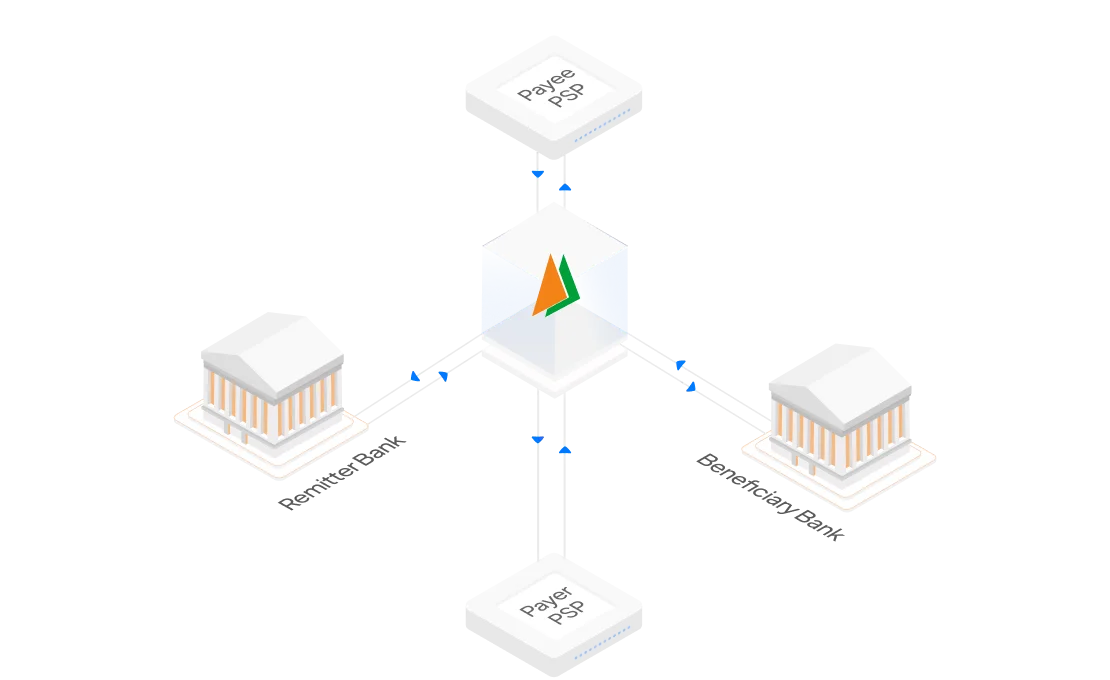
- BI-FAST (Fast Payments)BI-FAST is Indonesia's national Fast Payment infrastructure. It connects over 120 banks and payment providers, enabling 24/7 instant transfers with settlement within seconds. Leveraging the global ISO 20022 messaging standard for interoperability, BI-FAST processed 3.4 billion transactions in 2024, a 62.4% YOY increase.2
- SNAP (Standar Nasional Open API Pembayaran)SNAP is Indonesia’s national standard for payment Open APIs, established by Bank Indonesia to enable secure, interoperable, and efficient integration between banks and payment service providers. It provides a regulated, consent-based mechanism for third-party providers to access bank data and initiate payments, forming a foundation to align with the World Bank FSAP’s recommendations for a comprehensive open finance framework.,
- GPN (Gerbang Pembayaran Nasional)The National Payment Gateway (GPN) is a BI initiative to ensure all domestic debit card transactions are processed onshore. This strategy reduces reliance on foreign networks, improves national payment sovereignty, and lowers transaction costs.
New Governance and Data Privacy Frameworks
The ecosystem's legal framework is also maturing. Effective March 27, 2025, Bank Indonesia has strengthened the Regulation No 4 of 2025, replacing 2016 regulations with better accommodating future innovations, including the governance needed for the Digital Rupiah. These updates reflect a forward-looking policy approach aligned with the direction in BSPI 2025 blueprint.
Simultaneously, the ecosystem is aligning with the full implementation of the Personal Data Protection (PDP) Law (Act No. 27 of 2022). This GDPR-modeled, comprehensive regulation covers all sectors processing personal data and reached full enforcement on October 17, 2024, after a two-year transition. The law is now fully effective.
The ecosystem, which has grown rapidly by leveraging vast consumer data for e-commerce and lending, now faces strict requirements for consumer consent and data governance. Sanctions for non-compliance are severe, including administrative fines of up to 2% of annual revenue and potential criminal penalties. This creates significant new operational costs and risks, favoring established players who can build and afford robust compliance frameworks.
Key Players in the Ecosystem
E-Wallets (Digital Wallets): The Battle for Daily Use
With an estimated 144 million digital payment users in 2024, the primary focus for consumer payments is the e-wallet, which currently boasts a high awareness rate of 96%. The market is dominated by:
- GoPay: The integrated wallet of the GoTo (Go-Jek) ecosystem.
- OVO: Widely used and familiar to 78% of users, with strong ties to the Grab platform.
- DANA: A major independent wallet, often described as "Indonesia's Alipay".
- ShopeePay: The in-house wallet for the dominant Shopee e-commerce platform.
Digital Banks (Neobanks): The New Financial Hubs
A new wave of digital-first banks (or neobanks) is challenging incumbents, with digital banking transactions growing 10.82% YOY in May 2024. The most successful players are those tied to a larger platform:
- Bank Jago: Acquired by investors including Go-Jek (GoTo), it functions as the financial services arm of the GoTo ecosystem.
- SeaBank: Owned by Sea Group, the parent company of Shopee and ShopeePay.
Payment Gateways and Enablers: The Digital Tollbooths
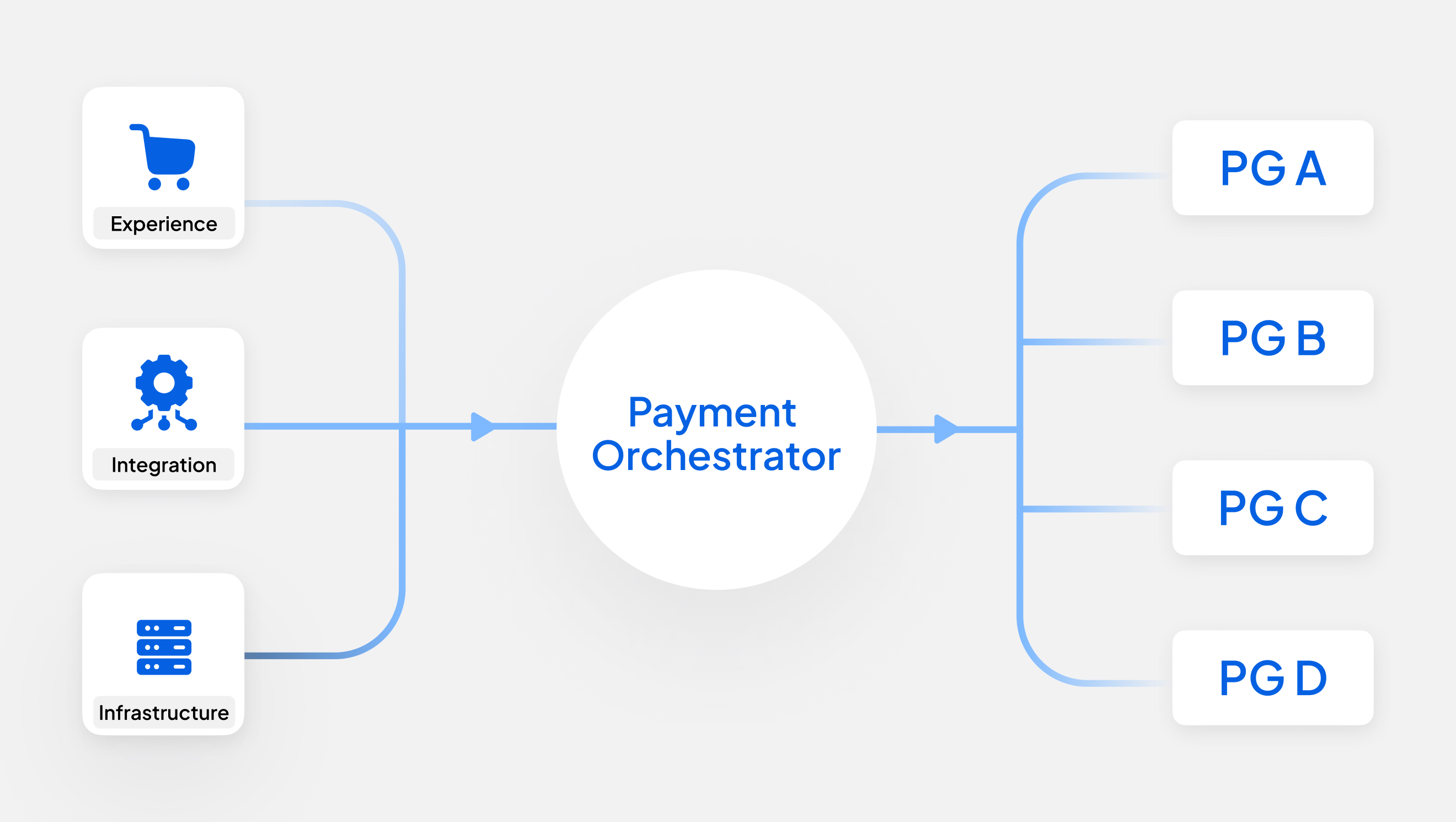
Payment gateways are the critical B2B infrastructure that enables e-commerce. In a market with highly fragmented payment methods, gateways aggregate these options (wallets, VAs, cards, BNPL) into a single API integration for merchants. Key players include Xendit, a prominent regional gateway known for easy integration, and Midtrans, a long-standing, reliable gateway. The strategic importance of gateways is evidenced by Midtrans's integration into the GoTo Financial platform.
Popular Payment Methods
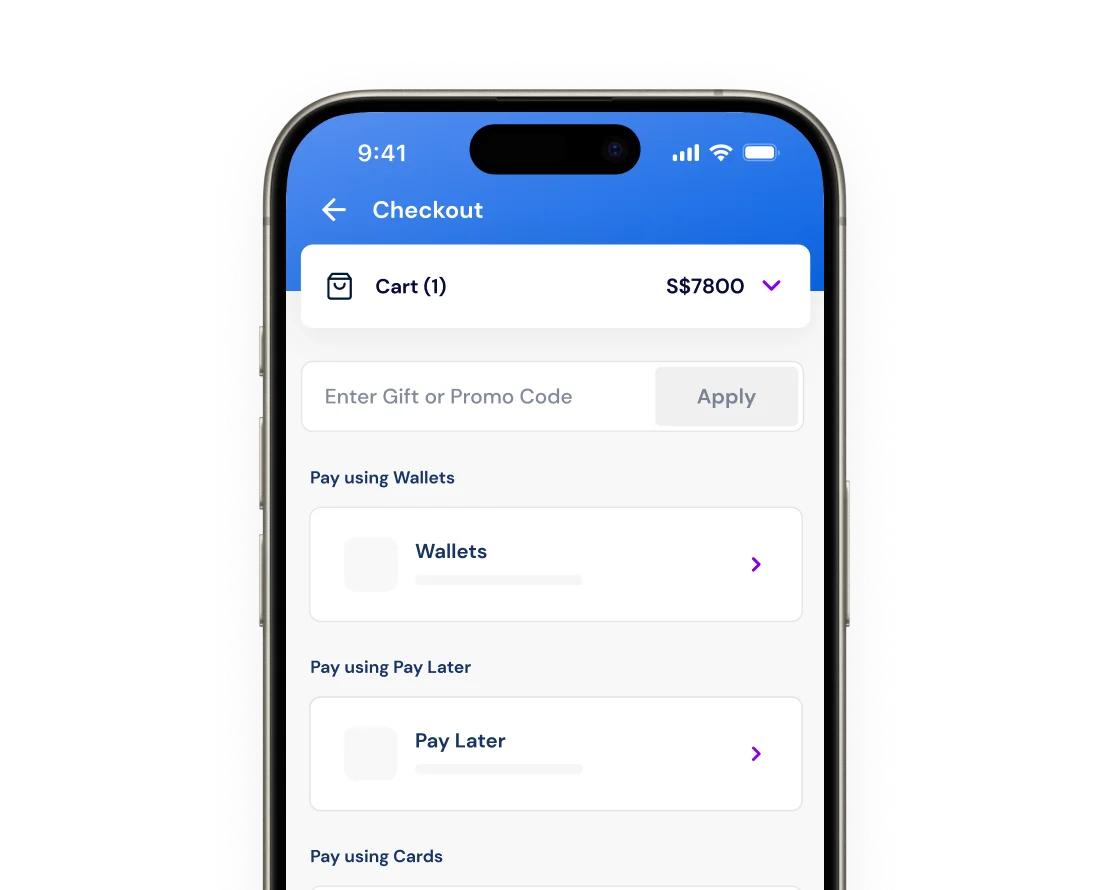
For any merchant, understanding the e-commerce checkout is non-negotiable. The Indonesian consumer expects a wide array of options, and a failure to provide core local methods is a direct cause of cart abandonment.
E-commerce Payment Method Dominance
Based on 2024/2025 data, the share of preferred payment methods for online e-commerce transactions is highly fragmented:
- Digital Wallets: ~35%
- Bank Transfers & Virtual Accounts (VAs): ~26%
- Credit Cards: ~13%
- Buy Now, Pay Later (BNPL): ~9%
- Cash-on-Delivery (COD): ~8%
- Debit Cards: ~6%
The combined 61% share held by digital wallets and bank transfers/VAs sends a clear message: a merchant without these two options is at a significant disadvantage.
Analysis of Core Payment Modalities
- Bank Transfers & Virtual Accounts (VAs):The "Virtual Account" (VA) is a sophisticated solution: A payment gateway generates a unique, temporary account number for a specific transaction. When the customer pays this VA, the merchant's system receives an instant notification and automatically reconciles the payment in real-time. This system eliminates the need for manual "proof of payment" screenshots, solving a massive operational bottleneck. VAs are the trusted, high-tech backbone of Indonesian e-commerce.
- Buy Now, Pay Later (BNPL):BNPL is the fastest-growing segment, projected to become an $8.59 billion market in 2025 and reach $13.59 billion by 2030. This explosive growth is because BNPL fills a structural gap: It is the first and only form of point-of-sale consumer credit for millions.
Upcoming Trends
The market is now entering a new phase of maturation, defined by regulatory intervention in high-risk sectors, a technological arms race in security, and the international expansion of its core infrastructure.
Regulatory Scrutiny on Consumer Credit (BNPL)
The explosive, high-risk growth of BNPL has triggered a direct regulatory response from the OJK. The data is alarming: total BNPL debt reached $1.9 billion, with Non-Performing Financing (NPF) rates rising from 2.99% to 3.37% in early 2025. BNPL loan balances grew 33.56% YOY as of July 2025.
In response, OJK is "tapping the brakes." New regulations have been issued to strengthen the sector, including a minimum monthly income requirement of IDR 3 million (three million rupiahs) for new borrowers and new formal licensing rules for "alternative credit scoring" providers. This is a deliberate intervention to end the "growth-at-all-costs" phase. It will force a "flight to quality," weeding out providers with weak underwriting models and legitimizing those with robust, data-driven risk management.
AI and Machine Learning in Fraud Detection
The surge in digital transactions has created a parallel surge in sophisticated fraud. Traditional rules-based systems are failing, and OJK is actively encouraging the adoption of Artificial Intelligence (AI), Machine Learning (ML), and big data analytics to detect fraudulent patterns and protect consumers.
Cross-Border Payment Interoperability
Bank Indonesia is actively expanding the QRIS standard to other countries, enabling cross-border payments. This initiative is already live or in pilot with Thailand, Malaysia, and Singapore, with plans for Japan and China. This move creates a seamless regional payment corridor, initially for tourism, with vast future potential for trade.
Future Outlooks
Looking beyond the immediate trends, several long-term structural changes are on the horizon, including the digitization of the currency itself and the persistence of structural challenges.
The Digital Rupiah: Project Garuda
Bank Indonesia's long-term plan is the creation of a Central Bank Digital Currency (CBDC), known as the "Digital Rupiah." This is not a speculative concept; it is now formally included in BI's governance scope under Regulation No. 4 of 2025.
Developed under "Project Garuda," it focuses on features like programmability, composability, and tokenization, which would allow BI to issue funds with specific rules (e.g., subsidy funds that can only be spent on specific purposes, improving public sector efficiency. ).
The Open Finance Trajectory
The BSPI 2025 and SNAP are just the beginning. The clear long-term trajectory, endorsed by the World Bank , is to move from Open Banking (payments and account data) to a comprehensive Open Finance ecosystem. This would involve standardizing API access for a wider range of financial products, including insurance, wealth management, and alternative credit data.
Market Challenges and Headwinds
Despite the rapid progress, significant structural challenges remain.
- Interoperability and Infrastructure Gaps: Even though QRIS, BI-FAST, and SNAP have significantly strengthened the national payment infrastructure, variations in technical readiness across banks and PSPs continue to create gaps. Consequently, payment flows across the ecosystem are not yet fully seamless or consistently delivered.
- Cybersecurity and Fraud Risks: As digital transactions grow rapidly, fraud and cyber risks are rising, driving the industry to strengthen the authentication, detection, and cybersecurity systems.
- Rising Compliance Requirements: The full enforcement of the Personal Data Protection Law and stronger governance standards from BI and OJK are increasing compliance demands, requiring significant investment in data security and risk management. This can be especially challenging for smaller players.
Conclusion
The Indonesian payment ecosystem is a study in structured revolution. BI's BSPI 2025 blueprint has successfully created one of the world's most dynamic payment infrastructures by building the "public roads"—QRIS, BI-FAST, and SNAP—and then inviting private firms to innovate on top of them. This state-led model has resulted in a market defined by a "battle of ecosystems," where integrated platforms like GoTo and Sea Group leverage vertical integration to create closed-loop flywheels and capture dominant market share.
The market is now at a critical inflection point. The era of pure, unbridled growth is ending, and a new era of compliance and sustainability is beginning, driven by the full enforcement of the Personal Data Protection Law and OJK's intervention in high-risk sectors like BNPL.
For merchants, success demands a non-negotiable acceptance of core local payment methods: digital wallets, Virtual Accounts, and QRIS. For investors, success hinges on understanding the "ecosystem gravity" of the major players, pricing in the new costs of compliance, and aligning with the nation's clear strategic vision.