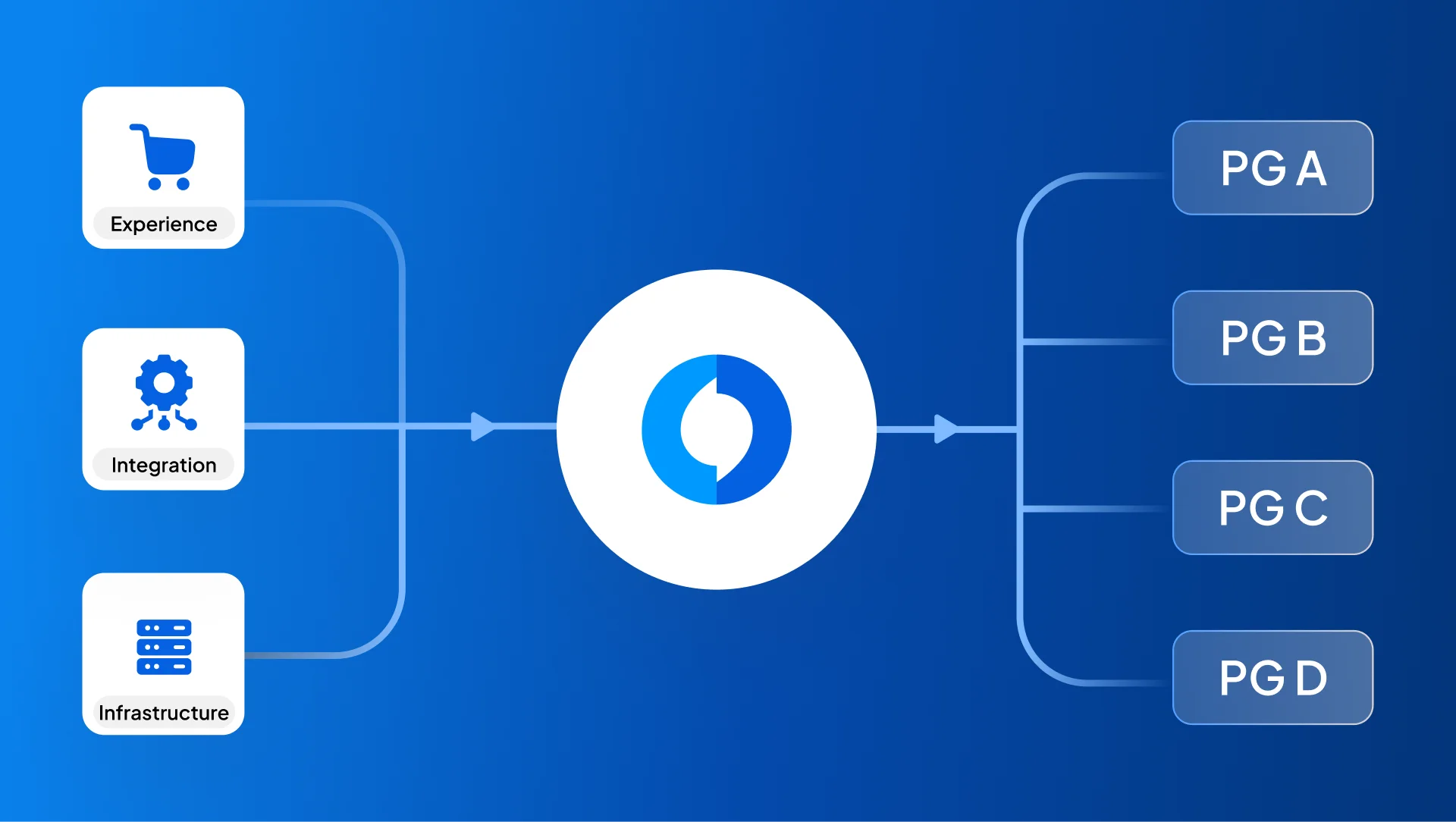
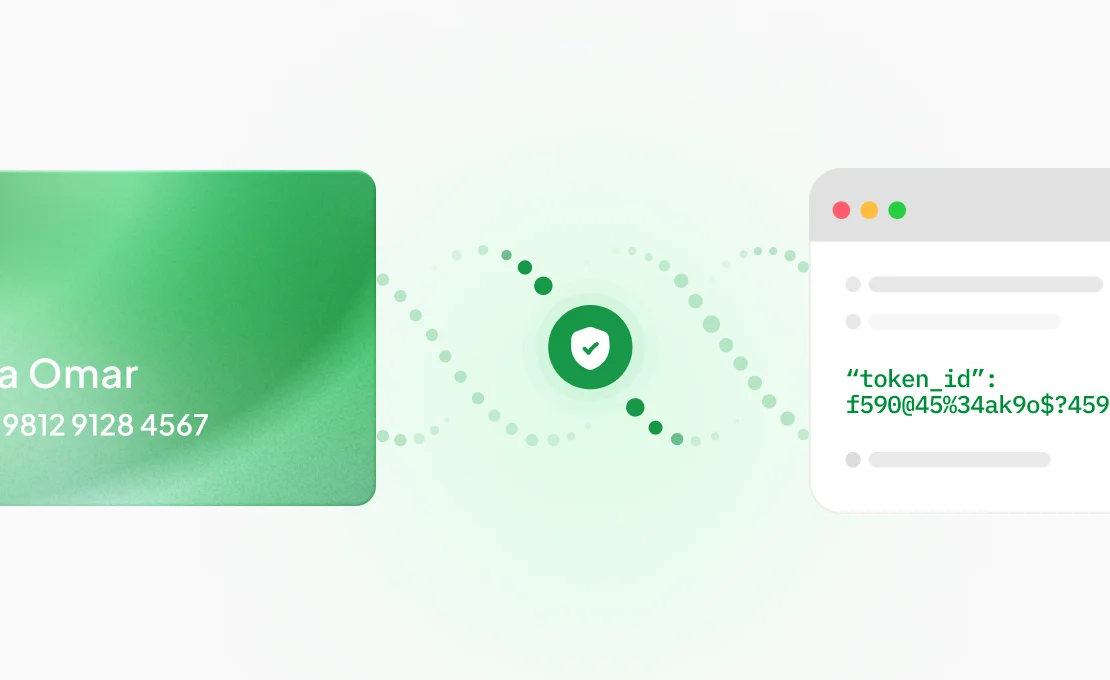













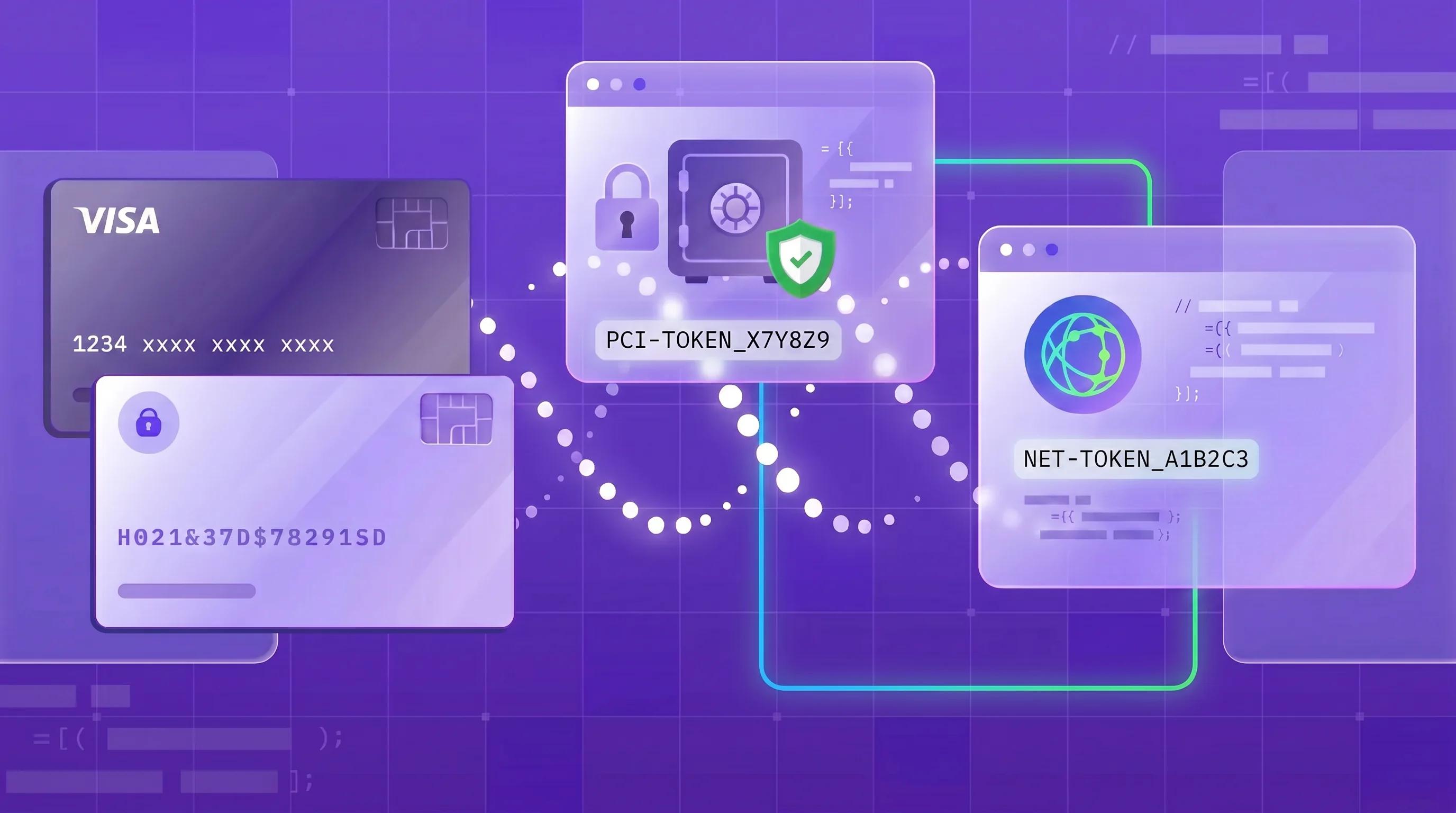
Network tokenization replaces a card's primary account number (PAN) with a token issued by the card network itself (Visa, Mastercard, Amex, Discover) under the EMVCo Payment Tokenization Specification. PCI tokenization replaces the PAN with a token generated by a payment provider or third-party vault and stored in a PCI-DSS-compliant environment. Network tokens carry domain restrictions, dynamic cryptograms, and automatic lifecycle updates - typically lifting authorization rates by 3–5% and reducing card-not-present fraud by up to 26%. PCI tokens are primarily a compliance and storage tool. Most serious enterprises now run both, orchestrated together, with clear PAN held in reserve for fallback.
What is network tokenization?
Network tokenization is a security standard, defined by EMVCo in 2014, where the card networks themselves replace a customer's 16-digit PAN with a network-issued token bound to a specific merchant, device, or transaction domain. The token is generated and managed by the network's Token Service Provider (TSP) - Visa Token Service (VTS), Mastercard's MDES (now Secure Card on File), or American Express Token Service and the issuer recognizes it natively during authorization.
Unlike a PSP-level token, a network token carries three structural security features: a Token Requestor ID (TRID) that binds it to a specific requesting entity, Token Domain Restriction Controls that constrain how it can be used, and a transaction-specific cryptogram that proves authenticity at every authorization. Stolen network token data, without its corresponding cryptogram and domain match, is effectively useless.
Network tokenization typically delivers a 3% authorization rate uplift on global card-not-present transactions and a 26% reduction in fraud, according to Visa's published VisaNet data.
What is PCI tokenization?
PCI tokenization is the practice of replacing card data with a surrogate token that is stored in a PCI-DSS-compliant token vault, operated either by a payment provider, a third-party vault service, or less commonly the merchant itself. The token has no mathematical relationship to the underlying PAN; it is simply a reference that maps back to encrypted card data inside the vault.
The primary purpose of PCI tokenization is scope reduction. By ensuring that raw card data never enters the merchant's systems, a merchant can drop from PCI DSS SAQ-D (the most rigorous self-assessment, with hundreds of controls) to SAQ-A (a fraction of the effort). This single architectural choice can save enterprise merchants six- or seven-figure audit and remediation costs annually.
PCI tokens, however, lack the in-network intelligence of network tokens. They are not issued by the card networks, do not carry domain restrictions or cryptograms, and do not auto-update when a card is reissued. Most importantly, they are typically tied to a specific PSP or vault - meaning the merchant cannot port them to another processor without re-collecting cardholder data.
How does the EMVCo Payment Tokenisation Specification underpin both?
EMVCo's Payment Tokenisation Specification, first published in March 2014 and now in its v2.4 draft, is the canonical framework that defines how payment tokens are issued, transmitted, and validated globally. The spec defines four core roles: the Token Service Provider (TSP), the Token Requestor (TR), the Token Vault, and the registration programs (TRIDs, TSP Codes, BIN Controller IDs) that ensure interoperability.
Interestingly, the original EMVCo specification does not contain the term "network token." That term was coined when Visa, Mastercard, and Amex launched their own EMVCo-registered TSPs alongside Apple Pay in 2014. A "network token" is simply an EMVCo payment token whose TSP happens to be a card network.
Juspay is certified as both a Token Requestor (TR) and Token Service Provider (TSP) under the EMVCo framework - a credential most payment orchestrators do not hold, and one that allows Juspay to provision and manage tokens directly with the networks rather than depending on a third-party intermediary.
How does Token Domain Restriction Control (TDRC) make network tokens architecturally safer?
Token Domain Restriction Controls - a feature unique to EMV Payment Tokens are the single most important reason network tokens are structurally more secure than PCI tokens. [TDRCs](file:///Users/somasekhar.mamidi/Downloads/evolution-of-payment-tokenization.pdf) constrain how a token can be used, by channel (e.g., e-commerce only), by device, by merchant, by transaction type, or by usage count.
The practical implication: if a network token issued for use at Merchant A is intercepted and replayed at Merchant B, the transaction will be rejected even though the token itself is technically valid. PCI tokens have no equivalent built-in restriction. A compromised PCI token, if replayed inside the original vault's ecosystem, can be used until the breach is detected and the token revoked.
This is a fundamental architectural difference. PCI tokens depend on where the data is stored. Network tokens depend on what the token is allowed to do. The first is a fence; the second is a passport with conditions written on it.
Why does the token cryptogram matter for fraud prevention?
Every network token transaction includes a single-use, transaction-specific cryptogram — Visa calls it TAVV (Token Authentication Verification Value), Mastercard uses UCAF that mathematically proves the token's authenticity to the issuer at the moment of authorization. The cryptogram changes per transaction, similar to how EMV chip cards generate unique cryptograms per dip.
This makes a stolen network token effectively unusable. Without the freshly generated cryptogram for the current transaction, the issuer rejects the request. PCI tokens, by contrast, have no such per-transaction proof - if a PCI token is exfiltrated from a vault, it can be replayed against the same vault until the breach is discovered.
Juspay's tokenization API surfaces both the network token and the cryptogram (TAVV) at transaction time, allowing the orchestration layer to attach the cryptogram to the authorization request automatically.
How does lifecycle management work, and why does it matter for subscriptions?
Lifecycle Management (LCM) is the feature that quietly drives most of network tokenization's commercial value. When an issuer reissues a card because of expiry, loss, theft, or upgrade - the network automatically updates the token's underlying PAN. The merchant's stored token never changes. The next subscription charge processes cleanly.
LCM events are pushed in real time or batch to the merchant's vault, with three defined statuses: ACTIVE (token valid), SUSPENDED (temporarily flagged, often for cardholder dispute or suspected fraud), and DELETED (final state, requires re-collection). PCI tokens have no equivalent - they sit in the vault pointing at a PAN that may already be dead.
For subscription businesses, this is enormous. Payment failures account for up to 40% of involuntary churn in subscription businesses, according to a Checkout.com case study with the Financial Times, and 55% of merchants enabling network tokens cite improved storage and updates as their top motivation, per a Mastercard report. Checkout.com alone saw a 3.3% acceptance-rate uplift after enabling Real-Time Account Updater on tokenized cards.
Juspay's tokenization platform refreshes vaulted tokens monthly, with Account Updater integrated for cards where issuers do not yet support full LCM - closing the gap that pure network tokenization cannot.
Network Tokenization vs PCI Tokenization: side-by-side comparison
| Dimension | Network Tokenization | PCI Tokenization |
| Issuer of the token | Card network TSP (Visa, Mastercard, Amex, Discover) | Payment provider, third-party vault, or merchant |
| Underlying standard | EMVCo Payment Tokenisation Specification (v2.4 draft) | PCI DSS 4.0.1 (mandatory March 31, 2025) |
| Where card data lives | At the network TSP; merchant never touches PAN | In a PCI-compliant vault, often the PSP's |
| Token scope | Domain-restricted (merchant + channel + device) | Tied to vault / PSP environment |
| Per-transaction cryptogram | Yes (TAVV / UCAF) | No |
| Auto-update on card reissue (LCM) | Yes - automatic, network-pushed | No - requires separate Account Updater |
| Authorization rate impact | +3% global avg (Visa); 3–5% industry range | Neutral - no inherent uplift |
| Fraud reduction (CNP) | Up to 26% (VisaNet) | Indirect - depends on vault security |
| PCI DSS scope reduction | Significant - merchant stores tokens, not PANs | Significant - primary purpose of the technology |
| Interchange savings | Up to ~10 bps in supported geographies | None |
| Portability across PSPs | High - tokens belong to the network | Low - typically PSP-locked, vendor lock-in risk |
| Best-fit use case | Recurring billing, subscriptions, mobile wallets, e-commerce CoF | Internal data minimization, audit-scope reduction, fallback storage |
Why most enterprises actually run both - the hybrid token strategy
The framing of "network tokenization vs PCI tokenization" obscures how serious enterprises actually deploy these technologies. The mature pattern is layered: network tokens for transaction processing, PCI tokens (or vaulted clear PANs) for fallback, all orchestrated together.
The reasons clear PAN access still matters:
- Not all cards are tokenizable. Issuer participation in network tokenization is uneven by region and by bank. A merchant relying solely on network tokens will see a measurable share of cards fail to provision.
- Not all PSPs accept network tokens. Some acquirers particularly local ones in emerging markets still process clear PAN only. Network token portability is constrained by the downstream stack.
- Cross-border transactions show issuer hesitation on tokens. Some issuers apply stricter rules to tokenized cross-border transactions, leaving authorization rate on the table.
- Acquirer-side fraud models often perform better on PAN. Fraud detection systems trained on PAN data points may be less effective on tokens, where some metadata is masked.
- Local-network routing requires PAN. In multi-network markets, routing a transaction to the cheapest local rail (instead of the global network) often requires the underlying PAN.
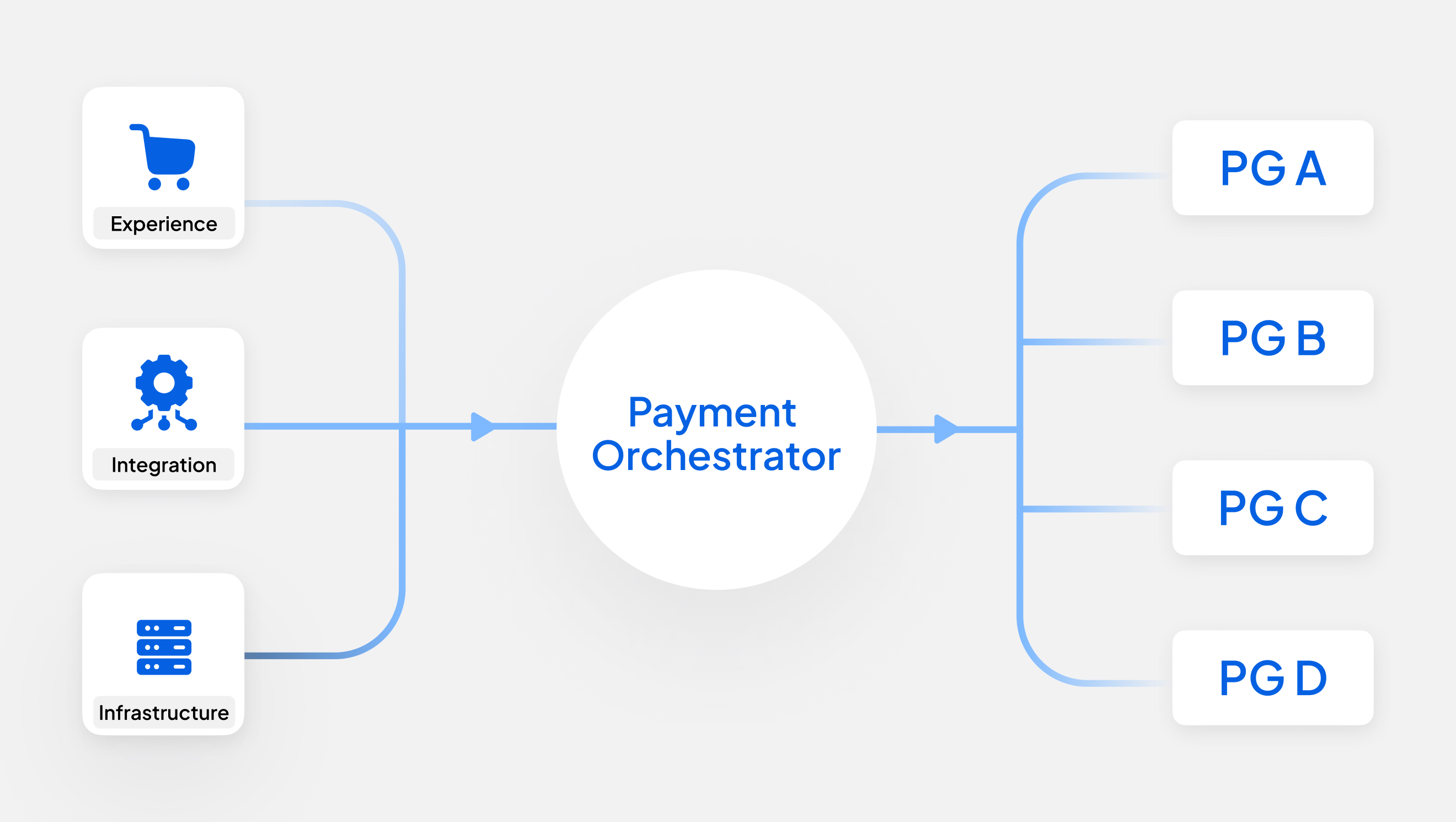
This is why best-in-class merchants build a fallback hierarchy: try network token first, fall back to clear PAN + CVV if the network token fails, retry through an alternate PSP if needed. Juspay's orchestration layer executes this hierarchy automatically - silently retrying with clear PAN when a network token specific error occurs, without the merchant needing to write a single retry rule.
Provider-locked vs agnostic vaults: the vendor lock-in question
A token vault is the encrypted database that stores the mapping between tokens and underlying card data. Where that vault lives- and who controls it is one of the most consequential and least discussed decisions in payments architecture.
Provider-specific vaults are tied to a single PSP or gateway. They are operationally convenient (one integration, one contract) but create vendor lock-in by design: the merchant's tokens only work inside that provider's ecosystem. Switching providers means re-collecting cardholder data - which, in practice, means losing a meaningful share of the customer base to friction.
Agnostic vaults decouple storage from processing. Card data is tokenized once and the tokens can be routed through any PSP, in any geography, for any transaction type. This is the architecture behind the negotiating power that enterprise merchants exercise when they tell their current processor they can migrate volume in weeks, not months.
Juspay's vault is built explicitly for this decoupling. Merchants can bring their own Token Requestor ID (TRID), bring their own existing vault (BYOV), or run Juspay's vault as a managed service or self-hosted on-prem deployment. Tokens are issued against the merchant's TRID - meaning they belong to the merchant, not to the orchestrator. This is the structural difference between renting your customer credentials and owning them.
Network tokenization vs Account Updater: complementary, not redundant
Account Updater services - When a card is reissued, Account Updater services like Visa's VAU and Mastercard's ABU step in to refresh the underlying PAN. These tools have actually been around since before network tokenization became widespread, and they are still heavily relied upon today. However, the relationship between the two technologies is frequently misunderstood.
| Feature | Network Tokenization | Account Updater |
| What it updates | The token's mapping to the PAN, automatically | The stored PAN itself, on demand or batch |
| Security model | Domain controls + cryptograms | Standard PAN security |
| Authorization impact | Improves approval through richer metadata | Avoids declines from invalid credentials |
| PCI DSS impact | Reduces merchant scope | No change |
| When it's essential | Recurring billing on tokenized cards | Cards not eligible for network tokenization, retry on token failure |
Best-in-class enterprises run both. Network tokens cover the modern card book; Account Updater covers the gaps - issuers who do not yet support LCM, regions where tokenization adoption is still maturing, and the fallback flow when a network token fails and the orchestrator needs to retry on a refreshed PAN.
How global regulation shapes tokenization architecture
Tokenization does not exist in a regulatory vacuum. Three frameworks shape how and where it must be implemented:
PCI DSS 4.0.1 (global). Mandatory since March 31, 2025, with future-dated requirements that elevated encryption, authentication, and scope-management standards. Tokenization remains the most direct path to scope reduction - moving merchants from SAQ-D to SAQ-A.
India's RBI Card-on-File Tokenization mandate. Since October 2022, the Reserve Bank of India has prohibited merchants and payment aggregators from storing full card data. The only permitted form of card-on-file is network tokenization, with strict requirements: tokens must be unique to Customer + Card + Token Requestor + Merchant, explicit consent and Additional Factor of Authentication (AFA) are mandatory, and merchants may store only the last four digits of the card and the issuer name. Notably, RBI does not yet support full Lifecycle Management updates, meaning merchants in India must combine tokenization with Account Updater–style workflows.
EU PSD2 / PSD3 and SCA. Strong Customer Authentication interacts directly with tokenization through 3DS exemptions, delegated authentication, and the upcoming PSD3 framework. Network tokens that carry valid cryptograms can qualify for low-friction flows that PCI tokens cannot.
Juspay built its tokenization platform inside the world's most stringent card-on-file regulation - RBI's 2022 mandate and now operates the same infrastructure across 150+ countries, including markets governed by PCI DSS 4.0.1, PSD2, and Middle East scheme rules. The lessons travel: a platform built for the strictest regulator tends to comply easily with the others.
How a tokenized transaction actually flows: end-to-end
Here is the full sequence of a tokenized payment, from first save to repeat charge:
- Card capture. Customer enters card details at checkout. Consent is captured (mandatory in India under RBI rules; recommended globally).
- Token request. The merchant or Juspay acting as the Token Requestor - submits a token request to the network's TSP, including the TRID and ID&V data.
- Issuer validation. The TSP validates the request with the card issuer. ID&V (Identification & Verification) determines the Token Assurance Level.
- Token provisioning. On approval, the TSP issues a network token bound to the merchant + domain + device, with TDRCs applied. The token is returned to the requestor.
- Vault storage. The token is stored in the merchant's vault - Juspay's managed vault, a self-hosted Juspay Vault, or a third-party vault under BYOV.
- Transaction time: cryptogram generation. When the customer returns for a repeat purchase or when a recurring charge fires, the vault retrieves the token and a freshly generated cryptogram (TAVV / UCAF).
- Authorization request. The orchestrator passes the token + cryptogram to the PSP/acquirer, which routes to the network.
- Network detokenization and issuer auth. The network detokenizes, attaches PAN + metadata + fraud score, and forwards to the issuer for authorization.
- Fallback on failure. If the network token authorization fails for token-specific reasons, Juspay's orchestration layer silently retries using clear PAN + CVV / NTI recovering authorization that would otherwise be lost.
- Lifecycle update (asynchronous). When the issuer reissues the underlying card, the network pushes a lifecycle update to the vault. The merchant's stored token continues to work without intervention.
Tokenizing more than cards: the modern vault is multi-credential
The conversation around tokenization has historically been card-centric. That is no longer accurate. Modern token vaults store and tokenize a wide range of payment credentials: card PANs, network tokens, PSP tokens, device tokens (Apple Pay, Google Pay), bank account credentials for ACH and SEPA, UPI VPAs, wallet IDs, and BNPL account references.
For markets where cards are not dominant - UPI in India, PIX in Brazil, GrabPay across Southeast Asia, mada in Saudi Arabia tokenizing the local credential matters as much as tokenizing cards. A vault that only handles cards is a vault built for one geography.
Juspay's vault is multi-credential by design, supporting cards, alternate payment methods, wallets, and BNPL across the markets it serves a direct consequence of building infrastructure for a global merchant base across 150+ countries.
Choosing the right tokenization architecture: a framework
For payments and engineering leaders evaluating tokenization, the decision is not "network or PCI." It's a sequence of architectural questions:
- Do you control your TRID? If your tokens are issued under your PSP's TRID, they belong to the PSP. Owning your TRID is to network tokens what owning your domain name is to email.
- Is your vault portable? A PSP-locked vault is a hostage situation. An agnostic vault -managed, self-hosted, or BYOV preserves the optionality to switch processors, add a backup, or route by geography.
- Do you have a clear-PAN fallback? Network tokens fail. Issuers reject. Cross-border transactions hesitate. Without a vaulted fallback path, every token failure is a lost transaction.
- Is lifecycle management orchestrated, not bolted on? Network LCM + Account Updater + retry logic should run as a single coordinated flow, not three disconnected systems.
- Does your tokenization layer cover non-card credentials? Cards may not be the future in many markets. The vault you choose for 2026 should already support UPI, wallets, and account-to-account.
Key Takeaways
- Network tokenization is governed by EMVCo and issued by card networks; it carries domain restrictions, cryptograms, and automatic lifecycle updates. PCI tokenization is a vault-based scope-reduction tool with no inherent network intelligence.
- Network tokens deliver measurable authorization-rate uplift ( 3% global average) and fraud reduction (up to 26%, per Visa). PCI tokens primarily reduce PCI DSS scope.
- The two technologies are complementary, not competitive. Best-in-class merchants run a layered strategy: network token first, clear PAN fallback, with retries orchestrated automatically.
- Vendor lock-in is the silent risk. Provider-specific vaults trap tokens in one PSP's ecosystem. Agnostic vaults with merchant-owned TRIDs preserve negotiating power and routing flexibility.
- Lifecycle Management is network tokenization's most underrated commercial benefit, particularly for subscription businesses where payment failures cause up to 40% of involuntary churn.
- Regulation is converging on tokenization. RBI mandates it for card-on-file in India; PCI DSS 4.0.1 incentivizes it globally; PSD2/PSD3 rewards it via 3DS exemptions.
- The real decision is architectural, not binary. Who issues your tokens, where they're stored, how they fall back, and whether they cover non-card credentials - these are the questions that separate a payment stack from a payment liability.
Frequently Asked Questions
Is network tokenization safer than PCI tokenization?
Network tokenization is structurally more secure than PCI tokenization for transaction processing, because each token carries domain restrictions and a per-transaction cryptogram that prove authenticity at authorization. A stolen network token without its cryptogram is unusable. PCI tokens by contrast, depend entirely on the security of the vault they live in. Most enterprises use both: network tokens for transactions, PCI vaults for fallback storage.
Does network tokenization actually improve authorization rates?
Yes, measurably. Visa's published data shows a 3% global average authorization-rate uplift on card-not-present transactions for tokenized credentials versus PANs. Industry benchmarks place the range at 3–5%. The mechanism is issuer trust: networks pass richer metadata with tokens, and issuers approve more confidently.
Will my saved card stop working when it's reissued if I use network tokens?
No. That is precisely the problem network tokenization solves. When the issuer reissues a card for expiry, loss, or theft - the network automatically updates the token's underlying PAN through Lifecycle Management. The merchant's stored token continues to work without any customer action. This is why subscription businesses adopt network tokens primarily.
Is PCI tokenization required if I already use a payment gateway?
Not strictly required, but strongly recommended. Most modern gateways tokenize automatically, but the merchant should verify whether those tokens are network tokens, PCI tokens, or both and crucially, whether the merchant's TRID is on file. PCI tokenization through the gateway typically reduces the merchant's PCI DSS scope from SAQ-D to SAQ-A, saving meaningful audit cost.
How does Juspay's tokenization differ from a traditional payment gateway?
Juspay is certified as both a Token Requestor and Token Service Provider under EMVCo, and operates an agnostic, portable vault rather than a PSP-locked one. Merchants can use Juspay's TRID or bring their own; can deploy the vault as managed, self-hosted, or via BYOV; and can pass tokens to any downstream PSP. The orchestration layer automates network-token-first routing with clear-PAN fallback.
What changed in PCI DSS 4.0.1 for tokenization?
PCI DSS 4.0.1, mandatory since March 31, 2025, introduced stricter requirements on encryption, authentication, and scope management, with several future-dated controls. Tokenization remains the most direct path to PCI scope reduction - the new framework reinforces, rather than weakens, the architectural case for tokenizing card data and never letting raw PANs touch merchant systems.
How much can interchange fees actually drop with network tokens?
In supported geographies, card networks offer interchange savings of up to ~10 basis points for transactions processed via network tokens. PCI tokenization alone does not qualify for these incentive programs. At enterprise scale, 10 bps on annual TPV is a material number often enough on its own to justify a tokenization migration.
Should a global merchant use network tokens, PCI tokens, or both?
Both, orchestrated together. Run network tokens as the default path for authorization-rate uplift, fraud reduction, lifecycle management, and interchange savings. Maintain a PCI-compliant vault is ideally agnostic, with the merchant's own TRID for clear-PAN fallback when network tokens fail, when issuers do not yet support tokenization, or when local-network routing requires the underlying PAN. The orchestration layer is what makes the layered strategy work in production.