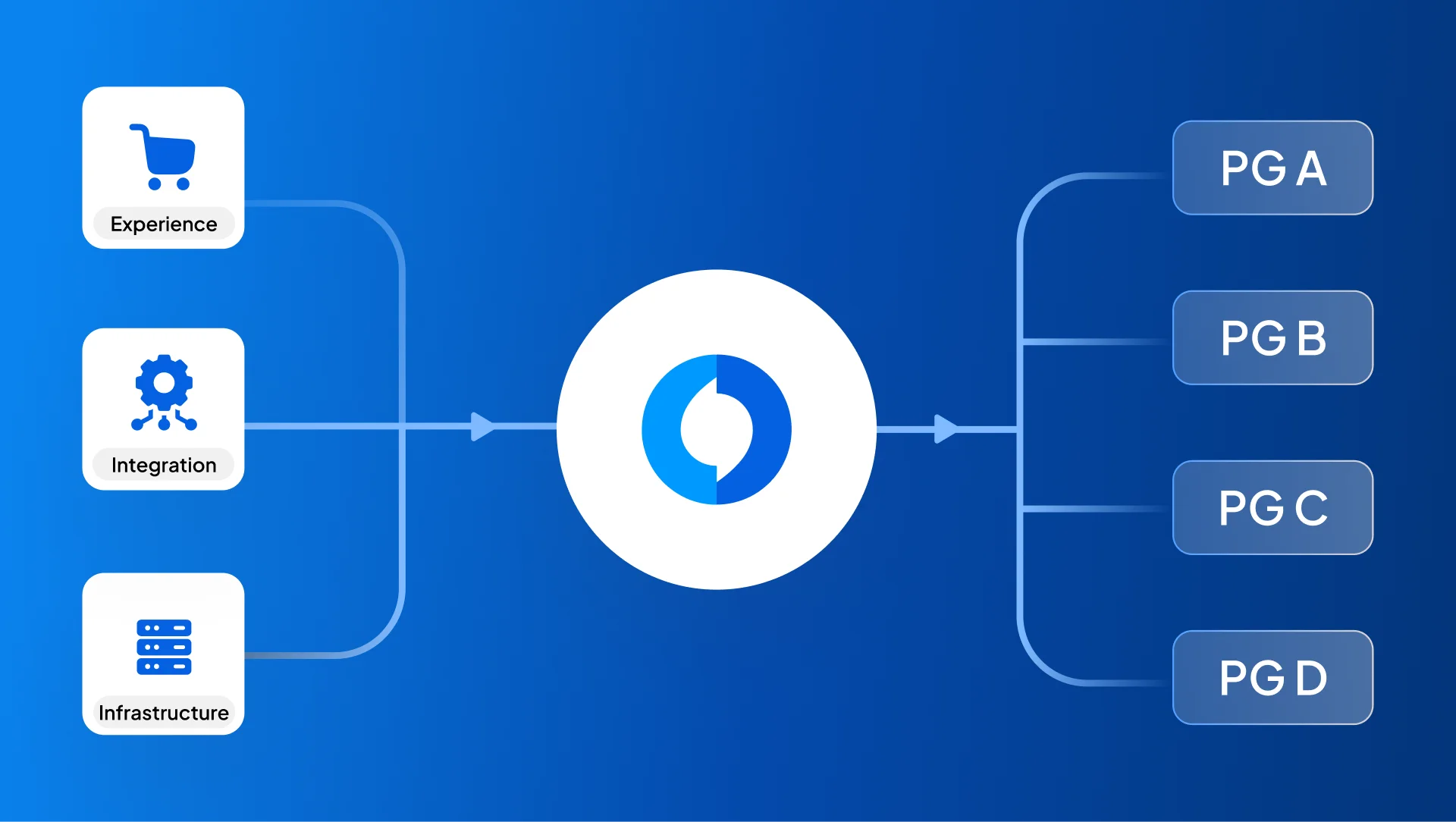
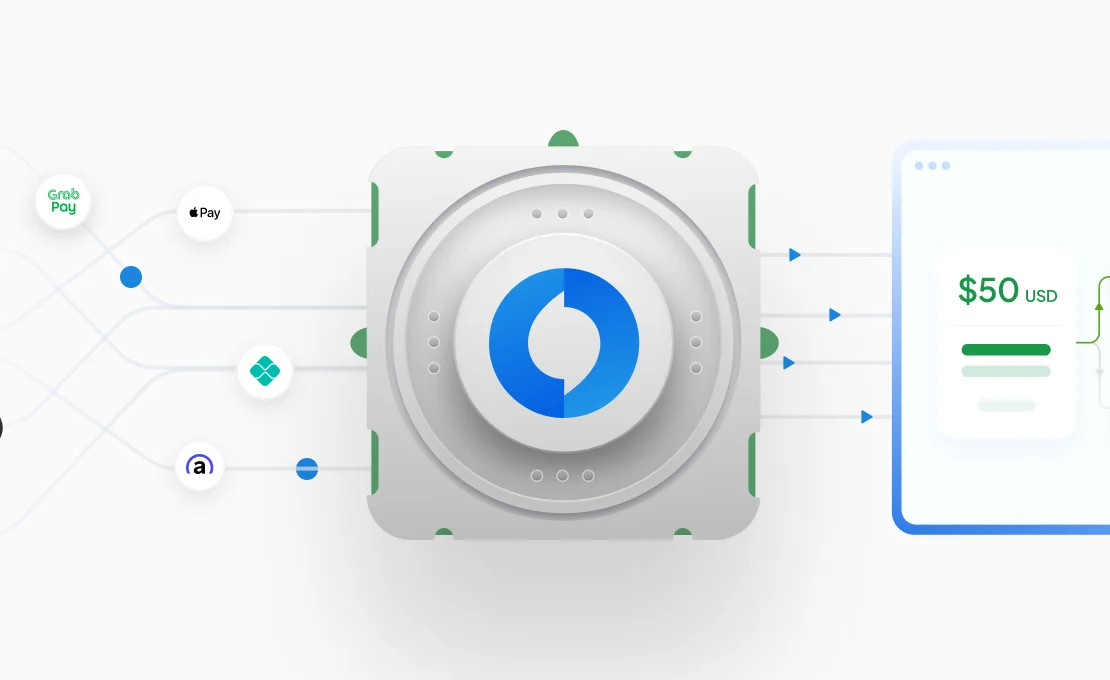














Travel payment orchestration is a routing layer that sits between a booking platform and the dozens of acquirers, PSPs, and local payment methods needed to process bookings across multiple countries. For airlines and OTAs operating in Brazil and LATAM, it converts cross-border card-not-present transactions which fail 5–15% more often than domestic ones into locally acquired flows, while connecting Pix, Pix Parcelado, OXXO, PSE, and 300+ other regional methods through a single integration. The result is fewer declined bookings, lower interchange and FX costs, and supplier payouts that settle in days, not weeks.
The LATAM travel payments stack is a routing problem, not a checkout problem
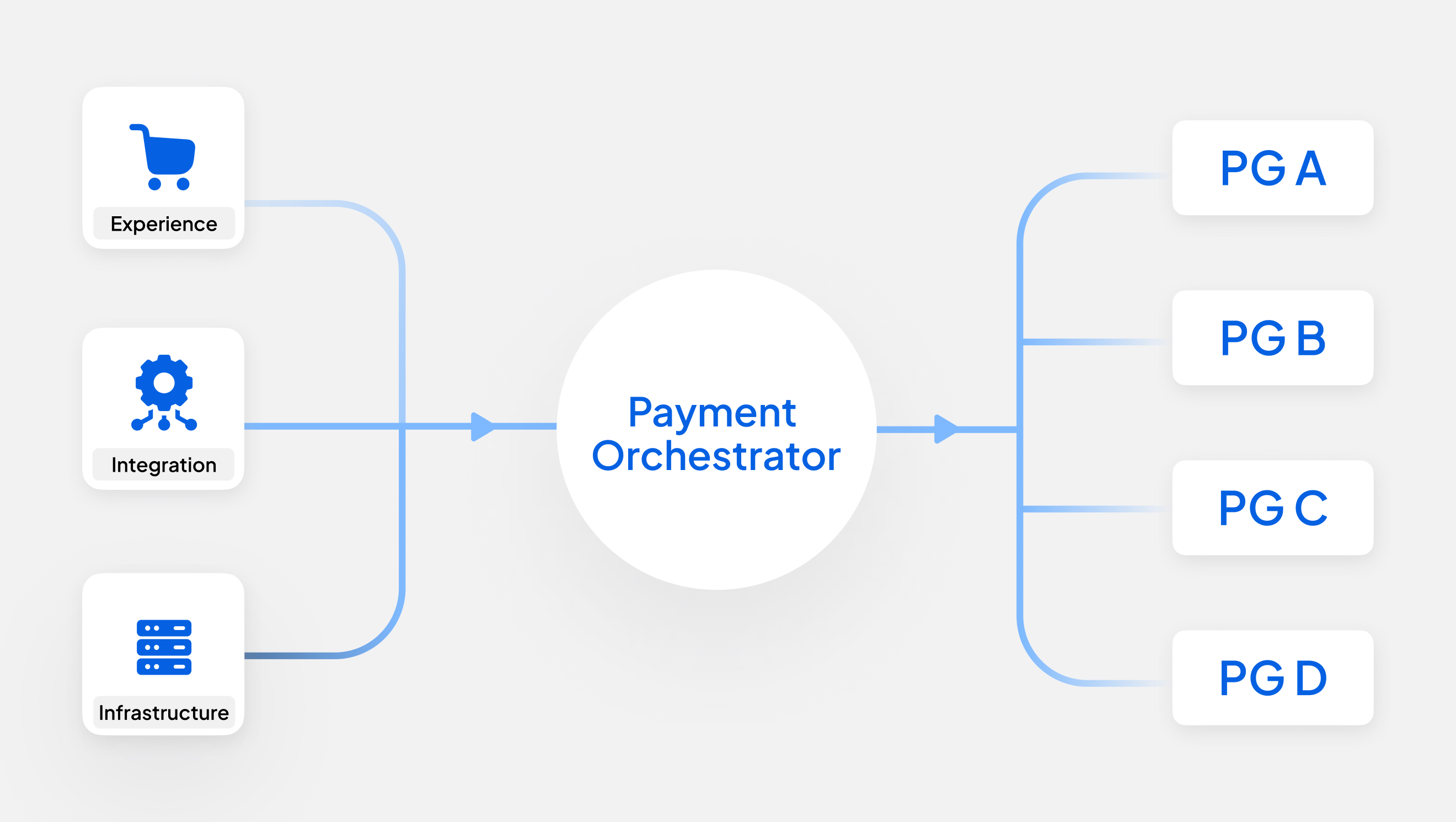
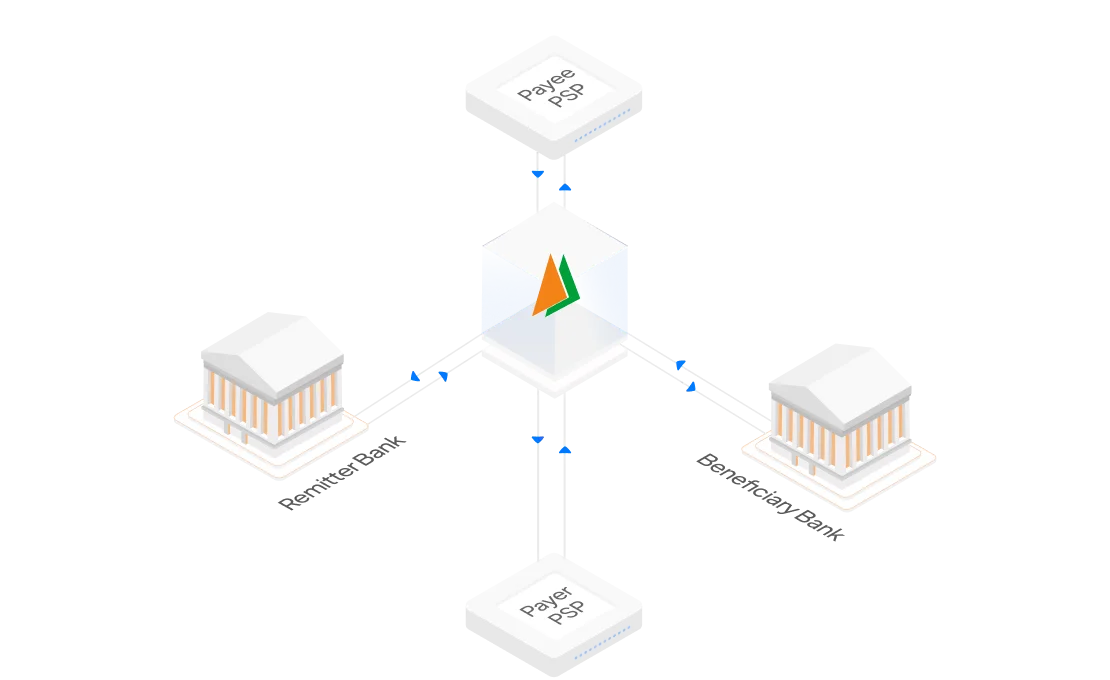
In an enterprise travel payments architecture, the orchestration layer sits between the booking platform and the network of acquirers, PSPs, and local payment methods that handle each transaction. The checkout is what the traveler sees. Everything that determines whether their click on "Pay" becomes a captured booking - provider selection, retry logic, fraud routing, currency settlement that happens beneath it.
The commercial reason this matters for LATAM in 2026 is volume. Brazil welcomed 9.3 million international visitors in 2025, a 37% jump year-on-year, according to Embratur. Phocuswright's Global Travel Market Report 2025 puts global gross travel bookings at $1.67 trillion in 2025, with online bookings on track to reach $1.2 trillion by 2026. Within the top 15 markets, Phocuswright forecasts that Mexico, Brazil, and India will deliver the strongest growth momentum through 2027.
That growth doesn't translate cleanly into revenue. It translates into more cross-border card-not-present transactions routed through global acquirers, more currency hops, and more friction points where bookings die silently. The architectural question for CTOs and Heads of Payments at airlines, OTAs, and travel platforms isn't whether they can accept bookings from international travelers. It's whether their stack converts those attempts at a rate competitive with locally optimized infrastructure.
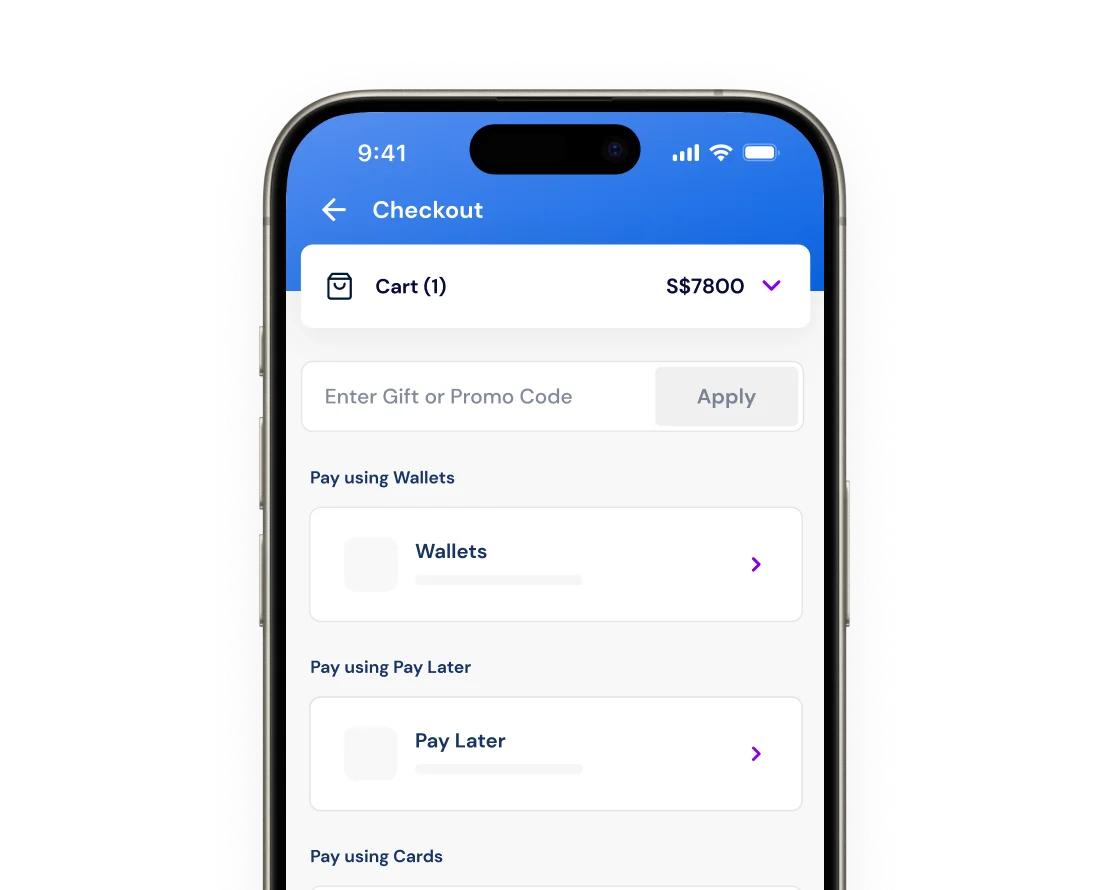
The checkout owns presentation. The orchestration layer owns routing, retry, and settlement. Conflating these is the most common architectural mistake we see in OTAs scaling into Brazil.
Where revenue actually leaks: the cost stack behind every cross-border booking
Every cross-border travel transaction fires a cost stack that domestic transactions don't: cross-border interchange tier, scheme cross-border assessment, FX conversion spread, and acquirer markup. For travel, where the average ticket value is meaningfully higher than typical e-commerce, the absolute cost on each transaction compounds quickly.
The starting point is failure rates. Cross-border card-not-present transactions fail 5–15% more often than domestic equivalents. Issuers apply stricter risk scoring when the transaction route looks unfamiliar; for travel, where AOVs are high and booking patterns are bursty, that scoring tips toward decline. A single false decline on a R$4,000 family vacation doesn't lose R$50, it loses the booking, and the traveler completes it on a competitor's platform within minutes.
Settlement timing compounds the leak. Global acquiring and SWIFT-based transfers typically settle in T+3 to T+14. Brazilian domestic acquiring settles in T+1 or T+2, but only for locally acquired transactions. Markets move in between. A booking that looked profitable on Monday can disappoint by Friday.
Interchange and scheme fees are set by networks. The acquirer markup is negotiable, but only on volume routed through that acquirer. Orchestration is what makes that volume route-able. Without it, every cross-border booking pays full retail on costs the merchant has no leverage to reduce.
Why "just adding Pix" isn't a payments strategy (and what Pix Automático and Pix Parcelado change for travel)
Pix is necessary but not sufficient. Banco Central do Brasil's Estatísticas de Pagamentos de Varejo for the second half of 2025 show Pix accounting for 54.7% of all financial transactions in Brazil, totaling 79.8 billion transactions and R$35.3 trillion across the year. Travel companies that don't offer Pix at checkout are visibly leaving conversion on the table. But Pix is a payment method. A payments strategy is an architecture that includes Pix alongside the credit card installment culture (parcelamento), international cards, Boleto for edge cases, digital wallets, and BNPL for inbound international travelers.
Two recent Pix variants change the addressable market specifically for travel. Pix Automático, in effect since June 16, 2025 per BCB Resolution 402, enables recurring Pix collection which is relevant for subscription-based travel services, loyalty programs, and installment plans on multi-trip purchases. Pix Parcelado, which extends installment behavior to Pix-initiated transactions with interest charged by the payer's institution, opens a roughly 60 million individuals credit access gap: that is the number of Brazilian adults without credit cards cited by the BCB in its Pix Parcelado announcement. For travel, where the average booking ticket is high enough to make a parcelamento decision material, this is a new monetization channel, not just a checkout convenience.
The architectural challenge is that each new method requires its own integration, fraud logic, and reconciliation flow. Without an orchestration layer, every new method adds operational complexity that scales linearly with payments team headcount.
What payment orchestration actually solves: four named problems
Cross-border failure recovery
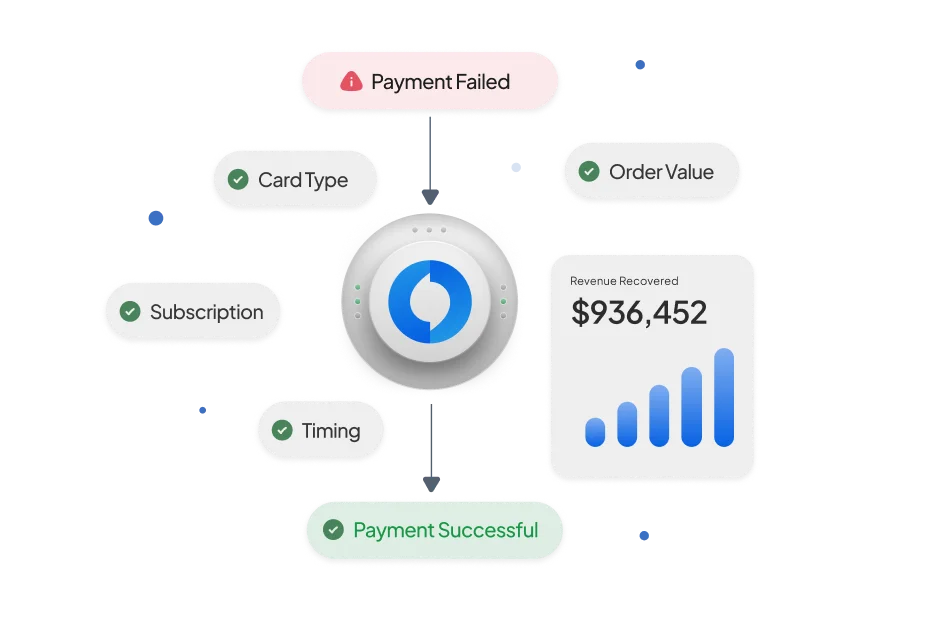
When a Brazilian-issued card hits a US-based acquirer, the issuer's risk scoring elevates and approval rates drop. An orchestration layer recognizes the card BIN, routes the transaction to a Brazil-licensed acquirer settling in BRL, and if the primary route soft-declines, retries through a secondary acquirer with adjusted 3DS flags or an alternative authentication path. The traveler experiences a single checkout attempt. The system has run a multi-leg routing decision in milliseconds.
Multi-country method coverage
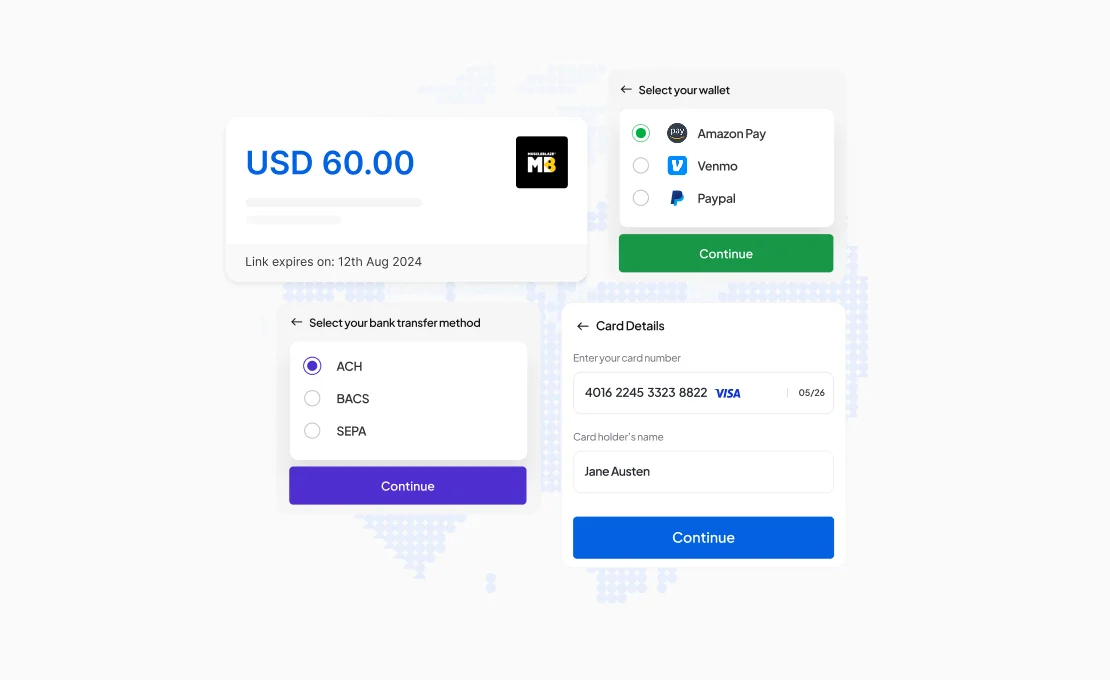
LATAM markets don't share preferences. Brazil runs on Pix and parcelamento, Mexico on OXXO cash payments and SPEI bank transfers, Colombia on PSE bank transfers, Argentina on local credit cards with government-mandated surcharges. A modern orchestration platform connects to 300+ PSPs and local methods through a single integration, with payment methods enabled or disabled per market without code changes. The right options surface based on the traveler's location, device, and currency.
Three-way reconciliation
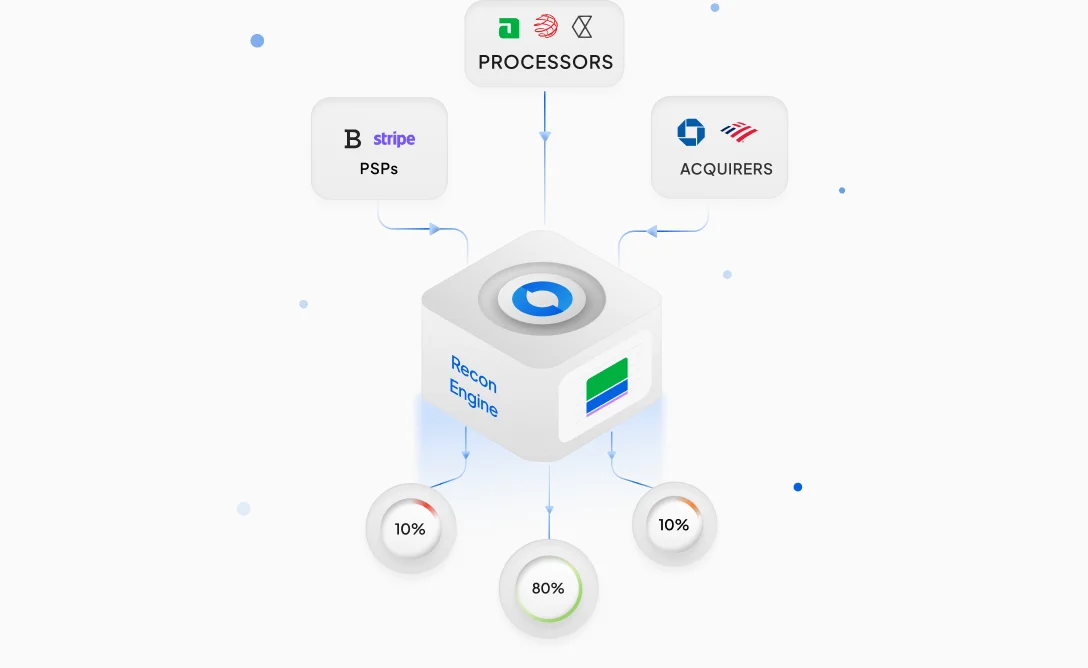
When transactions route through five acquirers across three currencies, reconciliation becomes a full-time finance job. Settlement amounts don't match. Chargebacks arrive in different formats. FX rates applied at different timestamps create discrepancies that take days to investigate. Automated three-way reconciliation matching internal payment data against PSP reports and bank statements in real time that replaces month-end scramble with exception flagging. Cash flow visibility becomes operational, not periodic.
Supplier payouts
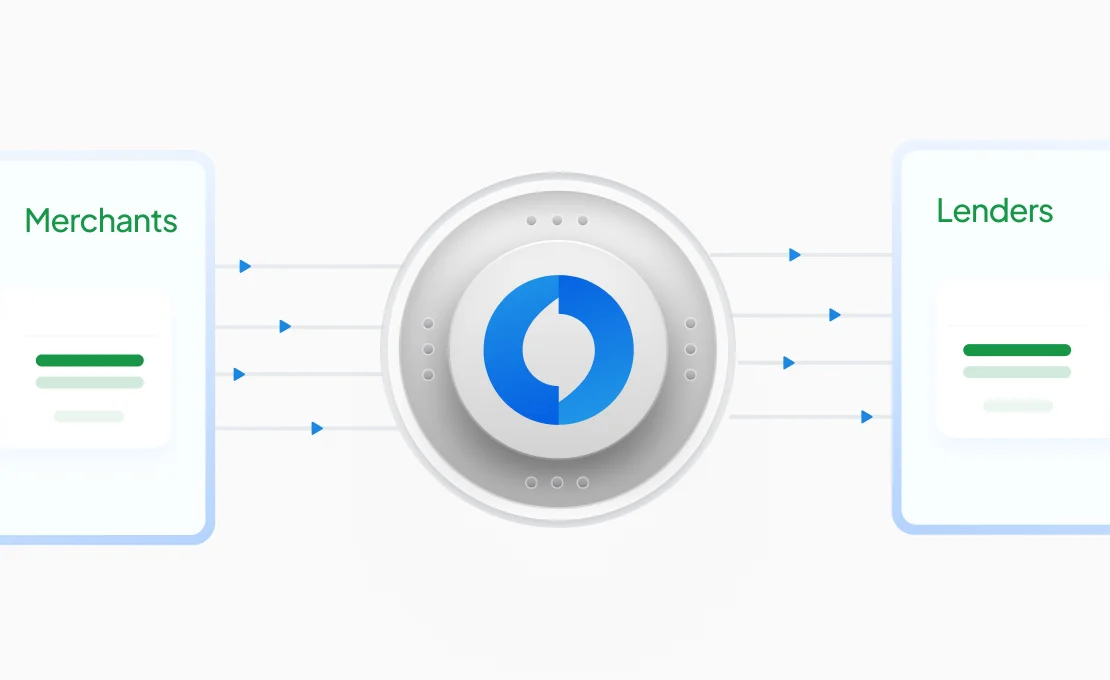
For OTAs and marketplaces, the payment doesn't end at checkout. Hotels, airlines, car rental providers, and tour operators all need to be paid, often in different currencies, on different timelines, through different rails. A complete orchestration platform handles payouts alongside pay-ins: refunds, vendor payments, and marketplace settlements through cards, bank transfers, and wallets, with direct integrations to networks, banks, and PSPs globally.
The airline-specific challenge: how local acquiring converts cross-border flows to domestic
Airlines face a uniquely complex payments landscape because every route is a cross-border transaction by definition. A passenger buying a São Paulo to Lisbon flight may be using a Brazilian-issued card, but the airline's acquiring setup might sit in Europe. That mismatch triggers higher cross-border interchange tiers and lower authorization rates on every booking.
The economics are material. When one global airline expanded into more than 20 countries through Juspay's orchestration layer, the team reconfigured existing acquirer connections and added eight region-specific acquirers. The carrier achieved approximately a 10% reduction in processing costs by converting cross-border flows into locally acquired transactions, while improving authorization rates in emerging markets where global card penetration is low.
Two specific mechanics drive this. First, virtual card issuance at booking, routed through local acquirers, can convert interregional B2B flows (IATA BSP settlement, supplier payments) into domestic transactions, cutting FX costs and improving margins on every ticket. Second, providing Level 2 and Level 3 data - itemized invoices, freight amounts, shipping details, PO numbers - unlocks lower interchange tiers, since issuers gain more transaction context to authorize at preferred rates.
Airlines also operate in an industry where the International Air Transport Association estimates approximately 1.2% of online revenue is lost to payment fraud annually. Recent Accertify analysis published in September 2025 showed global airline fraud rates dropped 30% year-over-year to 0.25% in 2025, a gain driven by mandatory 3DS authentication and improved data sharing across the ecosystem.
The OTA and hotel chain side: where the payout layer becomes the margin layer
OTAs and hotel chains don't just collect payments. They distribute them. A single booking through an OTA might involve a traveler paying in BRL, the OTA settling in USD, and a hotel in Colombia that needs to be paid in COP. Multi-party settlement is not a feature; it's the operational backbone of the OTA model.
The payout side compounds margin in two ways most travel companies underweight. Cash flow timing: when supplier payouts run on slow correspondent banking rails (T+3 to T+14), working capital sits idle. Reconciliation overhead: when each supplier expects a different file format and currency, finance teams build manual workflows that don't scale. An orchestration platform that handles pay-ins and payouts through one layer collapses both costs.
Fraud is the third axis. Ravelin's Global Fraud Trends report found that 53% of travel merchants say online fraud costs them more than $10 million annually, and fraud incidence increased for ~75% of travel-sector merchants in the year preceding the report. Travel-specific fraud patterns like ticket reselling, account takeover, booking manipulation creates risk profiles that generic e-commerce fraud tools were not built for. The orchestration layer is where fraud decisioning intersects with routing: a high-risk transaction can be soft-declined to step-up 3DS rather than blocked outright, recovering legitimate bookings that a static fraud rule would lose.
What goes wrong without orchestration: a named failure mode
When a Brazilian-issued card is routed through a US-based acquirer and the 3DS authentication result is passed to the PSP without the ECI flag and CAVV value attached, the PSP treats the transaction as non-authenticated and applies standard liability rules. The merchant absorbs the chargeback even though the customer completed authentication. This typically shows up as a spike in fraud chargebacks 30 to 60 days after a gateway migration, and it is one of the most common reasons OTAs see chargeback rates climb when they expand into LATAM without rerouting through a local acquirer.
The deeper failure is structural, not technical. Most teams scaling into LATAM treat acquirer addition as a procurement decision rather than an architectural one. They add a Brazilian PSP without changing how the orchestration layer routes by BIN and currency. The PSP captures the transaction. The chargeback flow still runs through the original cross-border path. The savings on processing fees get returned in dispute losses.
Counterargument: isn't a single regional acquirer enough?
The strongest version of the objection is: "I can just contract a Brazilian acquirer directly. Why pay for an orchestration layer?"
A single local acquirer fixes one corridor. It doesn't fix Mexico's OXXO and SPEI mix, Colombia's PSE bank transfers, or Argentina's surcharge dynamics. For an OTA or airline operating across LATAM, the regional mix is the problem, not any single country. And single-acquirer setups have no failover. When that acquirer experiences an outage (and major acquirers do, regularly), the booking dies. Orchestration is the difference between point fixes and a stack that scales: it makes acquirer additions a configuration change rather than an integration project, and it gives the merchant the routing logic to decide which acquirer handles which transaction based on real-time approval data.
What to look for in a travel payments partner
The travel industry has specific requirements that generic e-commerce solutions don't address.
Delayed capture and tokenization. Cards are stored at booking and charged later at check-in, at departure, or on cancellation. Network tokenization at booking, paired with rule-based fee collection, is foundational for travel-specific lifecycles.
GDS and distribution integration. Payment flows need to connect with Amadeus, Sabre, and Navitaire. The orchestration layer must understand travel-specific transaction lifecycles, not just standard e-commerce checkout. Recent ecosystem partnerships matter here: in March 2026, Juspay's orchestration stack went live inside RateGain's RG Pay, the embedded fintech platform serving 33 of the top 40 hotel chains, four of the top 5 airlines, and seven of the top 10 car rental companies. Juspay partnered with Sabre Direct Pay and Amadeus Outpayce to power faster, more secure checkout for airlines, hotels, and OTAs using their distribution network.
Multi-party settlement. OTAs, airlines, and hotel chains involve multiple parties in a single transaction. Split, route, and reconcile across suppliers, franchisees, and partners in multiple currencies. This separates travel-grade infrastructure from generic payment processing.
99.999% uptime with documented failover architecture. Travel operates 24/7 across time zones. The infrastructure must match. Five-nines uptime requires multi-active stacks, geo-redundancy, and progressive deployment patterns rather than a single-region setup with a hot standby.
Local expertise in LATAM. Understanding Banco Central do Brasil regulation, IOF tax implications on cross-border transactions, and the evolving Pix ecosystem is not a service tier. It requires a team on the ground. Juspay operates from São Paulo for exactly this reason.
One configuration detail worth fixing first
When setting up cascade routing for LATAM bookings, the fallback acquirer should be in a different acquiring bank network than the primary. Routing from one Brazilian acquirer to another that shares the same underlying network won't rescue a network-level outage. For Pix specifically, the fallback should be configured as a distinct Pix indirect participant, not just a different PSP fronting the same participant, to maintain rail-level redundancy. That single configuration choice prevents the failure mode that most "we have multi-PSP" teams discover only after their first network incident.
Key Takeaways
- Travel payment orchestration is a routing layer that converts cross-border card-not-present transactions, which fail 5–15% more often than domestic ones, into locally acquired flows while connecting Pix, Pix Parcelado, OXXO, PSE, and 300+ other regional methods through a single integration.
- Brazil welcomed 9.3 million international visitors in 2025 (+37% year-on-year, per Embratur). LATAM is among the fastest-growing regions in global travel through 2027, but volume only converts to revenue when the payments stack handles cross-border interchange, FX, and settlement timing as routing decisions.
- Pix accounted for 54.7% of all Brazilian financial transactions in H2 2025 (Banco Central do Brasil). Pix Automático (live since June 2025) and Pix Parcelado expand the addressable market for high-AOV travel bookings to the roughly 60 million Brazilians without credit cards.
- A global airline expanding into 20+ countries through Juspay's orchestration layer reconfigured its acquirer setup and added eight region-specific acquirers, reducing processing costs by approximately 10% while improving authorization rates in emerging markets ( Juspay IndiGo customer story ).
- Single-acquirer setups fix one corridor and have no failover. Orchestration makes the regional mix configurable and gives merchants real-time routing logic based on approval data.
- The most cited failure mode in LATAM expansion is gateway migration without proper 3DS data handoff (ECI flag, CAVV value), which surfaces as a chargeback spike 30–60 days later.
Frequently Asked Questions
What is payment orchestration for travel?
Payment orchestration for travel is a software routing layer that sits between a booking platform and the dozens of acquirers, PSPs, and local payment methods needed to process bookings across countries. Unlike a single gateway, it routes each transaction to the provider most likely to approve it based on card BIN, currency, geography, and real-time approval data, automatically retrying failures and switching providers as needed.
How does Pix Parcelado change pricing strategy for OTAs and airlines in Brazil?
Pix Parcelado lets travelers split a Pix payment into installments with interest charged by the payer's institution. For high-AOV travel bookings, this opens credit-style installment behavior to roughly 60 million Brazilians who don't have credit cards, per Banco Central do Brasil. For airlines and OTAs, it functions as a monetization channel rather than just a checkout option, because it converts otherwise priced-out travelers into bookings.
Why do cross-border travel bookings fail more often than domestic ones?
Cross-border card-not-present transactions fail 5–15% more often than domestic equivalents because issuers apply stricter risk scoring when the transaction route looks unfamiliar. For travel, where average ticket values are well above e-commerce norms, that scoring tips toward decline. Payment orchestration recovers a significant portion of this gap by routing each booking to a locally licensed acquirer and retrying soft declines automatically.
How do airlines reduce cross-border interchange fees?
Airlines reduce cross-border interchange by converting cross-border transactions into locally acquired transactions through a payment orchestration layer that routes by card BIN to a region-specific acquirer. They also unlock lower interchange tiers by submitting Level 2 and Level 3 data like itemized invoices, freight amounts, shipping details, and PO numbers that give issuers more context to authorize at preferred rates.
What's the difference between a payment gateway and a payment orchestration platform for travel?
A payment gateway is a single connection that captures and transmits transaction data to a single processor. An orchestration platform sits above multiple gateways and acquirers, routing each transaction to the optimal provider based on real-time data. For travel, where bookings span currencies, regions, and payment methods, orchestration handles the multi-provider complexity that a single gateway can't.
How does Juspay support travel companies in Brazil and LATAM?
Juspay operates from São Paulo with on-the-ground expertise in Banco Central do Brasil regulation, IOF tax implications, and the Pix ecosystem. The platform processes more than 300+ million transactions daily across 150+ countries with 99.999% uptime, and powers travel specific partnerships including RateGain's RG Pay , Sabre Direct Pay and Amadeus Outpayce.