















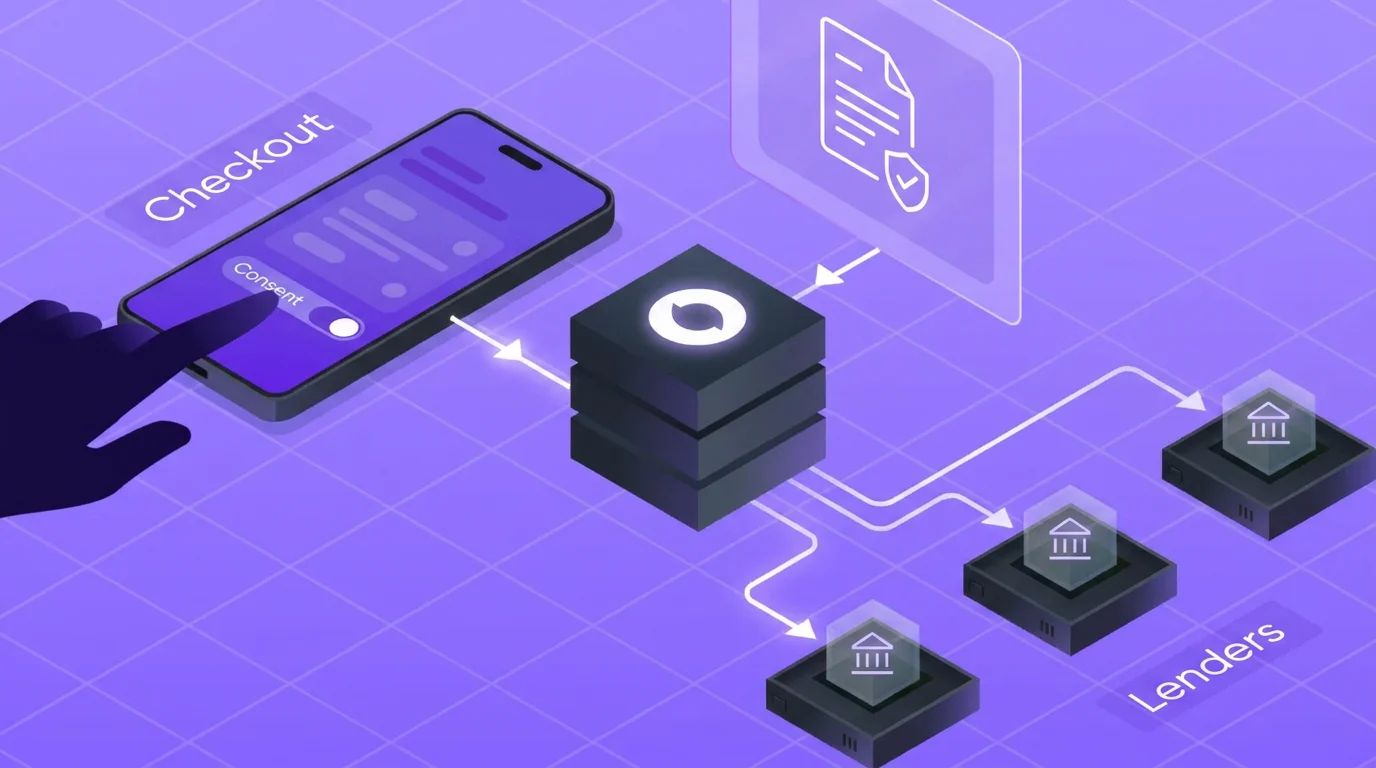
Embedded lending is entering a phase where compliance is no longer just a lender-side responsibility—it is becoming an infrastructure challenge for the entire ecosystem. As RBI’s Digital Lending Guidelines and the broader regulatory landscape place greater emphasis on transparency, consent, borrower protection, data governance and accountability, fragmented implementations across merchants and lenders become increasingly difficult to scale. Much like payments compliance needs an infrastructure layer that separates policy from execution: lenders retain ownership of their products, underwriting and regulatory policies; merchants remain focused on commerce; and the LSP orchestrates the regulated lending journey consistently across the ecosystem. HyperCredit is built specifically around this exact model. It provides a common compliance and execution layer while maintaining strong data security, auditability, and clear lender/merchant isolation. This smart design allows regulatory requirements to easily evolve over time, completely avoiding any extra complexity across every single integration.
How India's evolving digital lending regulatory framework is reshaping lending infrastructure
Every generation of embedded lending has been shaped by a distinct infrastructure challenge.
The first generation solved distribution. Credit moved away from standalone lending applications and directly into point-of-sale environments. These environments included e-commerce marketplaces, vertical SaaS platforms, and B2B procurement networks. This shift successfully brought financing straight to the exact point of need.
As distribution matured, the industry shifted its focus to conversion. Simply connecting merchants with lenders was no longer enough. The new goal was to perfectly match the right borrower with the right lender. To solve this, eligibility engines and multi-lender orchestration platforms were built to evaluate borrowers across multiple financial institutions.
Today, embedded lending faces a new infrastructure challenge. The constraint is no longer reaching borrowers or integrating lenders, but ensuring that complex, multi-party lending journeys operate within an evolving regulatory framework. This must be done while completely avoiding any extra operational and engineering complexity for every participant in the ecosystem. Compliance is no longer just a post-facto audit exercise. It is now an active, real-time component of the transaction itself.
Managing this shift is an infrastructure problem.
Embedded lending compliance is no longer a post-facto audit exercise. In a multi-party digital loan journey, disclosure, consent capture, and offer presentation are executed in real time inside the transaction itself, across a merchant checkout surface the Regulated Entity does not own. The resulting gap between accountability and control is an infrastructure problem, rather than a legal one. The solution is to separate the rules from how they are carried out. Lenders own the regulatory policy. At the same time, a shared layer handles the regulatory execution. This shared layer makes sure the rules are applied identically across every merchant surface.
Every generation of embedded lending solved a different infrastructure problem
Embedded lending has been shaped by three successive constraints, and the current one is compliance execution.
The first generation solved distribution. Credit moved beyond standalone lending applications into point-of-sale environments: e-commerce marketplaces, vertical SaaS platforms, and B2B procurement networks, bringing financing to the point of need.
As distribution matured, the focus shifted to conversion. Connecting merchants with lenders was no longer enough. The problem became matching the right borrower with the right lender, and eligibility engines and multi-lender orchestration platforms emerged to evaluate borrowers across multiple financial institutions.
Today the constraint is neither reach nor integration. It is ensuring that complex, multi-party lending journeys operate within an evolving regulatory framework without multiplying operational and engineering complexity for every participant in the ecosystem.
Compliance has moved inside the lending journey
Historically, regulatory compliance lived inside the Regulated Entity's (RE) core environment. Onboarding, disclosures, agreements, and servicing occurred within systems owned and operated by the bank or NBFC. When guidelines changed, the lender updated its internal workflows with minimal downstream impact on commercial partners.
Embedded lending dissolved that boundary. A single digital loan journey now spans multiple independent entities:
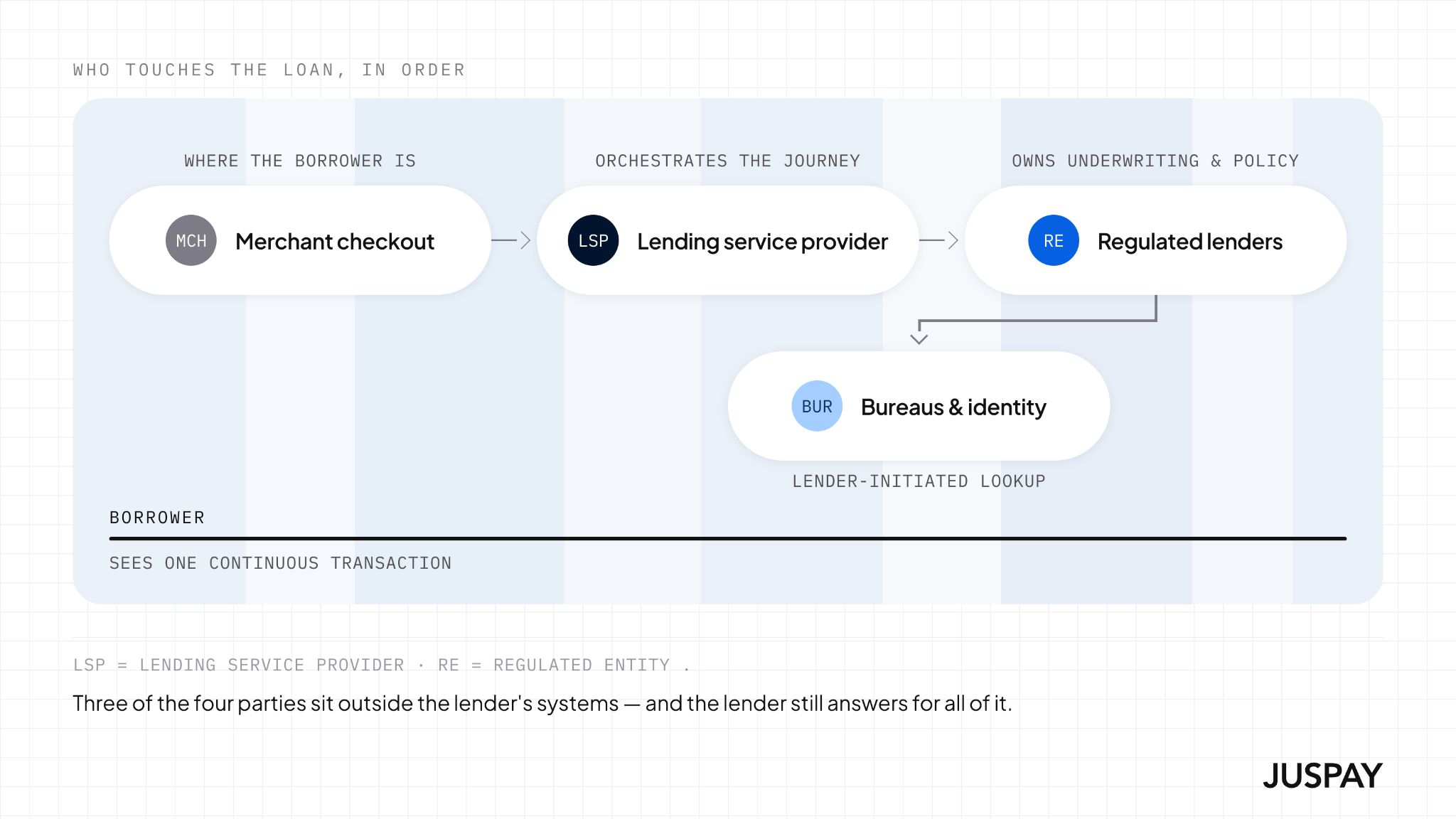
Although operational responsibilities are distributed across independent parties, the borrower experiences them as a single continuous transaction. Compliance is no longer an administrative wrapper around lending. Instead, it is now an active, real-time component built directly into the transaction orchestration stack.
DLG and the Evolution of Digital Lending Regulation
The regulatory framework governing this distributed stack is always changing. As embedded credit has scaled across India, supervisory frameworks have matured right alongside it. This growth reflects a natural progression toward greater transparency, systemic resilience, and borrower trust.
Instead of being a fixed set of one-time rules, the Reserve Bank of India’s (RBI) Digital Lending Guidelines has continuously evolved to keep pace with market innovation:
- From Operational Boundaries to Risk Formalization: What began in 2022 as foundational rules to define LSP roles, enforce direct cash flows, and restrict data access evolved in 2023 into a formal Default Loss Guarantee (DLG) structure. This new structure caps risk-sharing arrangements at 5% to bring legal clarity and balance to fintech-lender partnerships.
- From Standard Disclosures to Systemic Harmonization: Subsequent updates expanded the Key Fact Statement (KFS) requirement across all retail and MSME credit. These updates also standardized Annual Percentage Rate (APR) calculations and tightened IT Act-compliant digital signature flows for loan agreements.
The framework increasingly governs how critical customer interactions within a digital lending journey are executed:
- Transparent Multi-Lender Offers: Borrowers must receive an unbiased, transparent presentation of eligible lender options, with clear visibility into non-selected options to eliminate preferential routing bias.
- Pre-Execution Key Fact Statement (KFS): Borrowers must review a dynamic KFS before executing the loan agreement. This document clearly details important information like the Annual Percentage Rate (APR), the total cost of credit, the fee schedules, and the specific cooling-off terms.
- Direct Cash Flows: Loan disbursals and repayments must flow directly between the borrower’s bank account and the RE’s bank account, strictly prohibiting intermediate LSP pool accounts or pass-through vehicles.
- Explicit, Purpose-Specific Consent: Data collection must be explicit, revocable, localized within Indian jurisdiction, and restricted strictly to need-based underwriting inputs (prohibiting unauthorized access to mobile phone resources like contacts or media).
- Binding Accountability: Regulated Entities maintain ultimate legal accountability for all sourcing, disclosure, and servicing actions executed on their behalf by LSPs.
When looking at them one by one, these updates show a regulatory environment that is actively maturing alongside industry growth. When viewed as a whole system, they reveal exactly why hardcoded integrations struggle to keep pace. As guidelines continuously adapt to protect borrowers and clarify risk allocation, the technology layer governing checkout flows must be built for agility. This built-in agility allows regulatory updates to be operationalized seamlessly across the entire ecosystem.
Why fragment implementation is costly
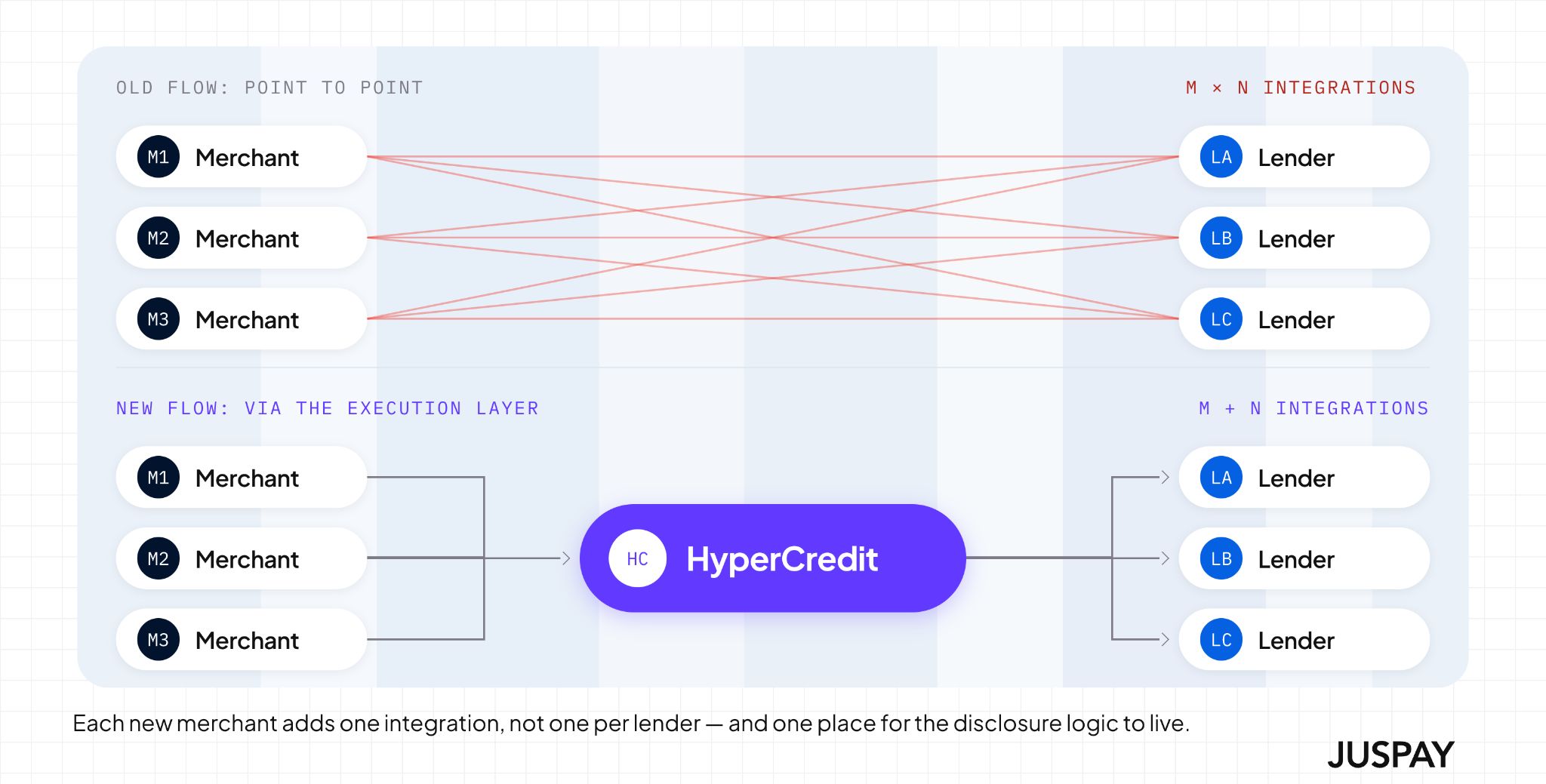
Regulations are created to make sure the entire system works consistently. However, traditional technical implementations remain fragmented. Without a shared execution layer, every regulatory update or even a simple routine change creates a lot of extra work. For example, a lender might revise its KFS methodology or update its consent wording. Whenever this happens, these changes must be completely re-engineered at every single digital touchpoint where that lender's credit is offered:
- Merchants must continuously alter checkout UIs, rebuild consent collection screens, and manage multi-lender offer displays.
- Lenders must audit and monitor every unique merchant checkout variation to ensure their specific KFS, privacy notices, and consent flows are rendered correctly. This constant need to monitor becomes a heavier burden with every new merchant integration.
When regulatory expectations evolve annually, hardcoding DLG logic into individual merchant surfaces creates compounding technical debt. It's regulatory exposure that compounds with every integration the ecosystem adds. The RE remains accountable for compliance it cannot directly verify, while the merchant spends core engineering bandwidth playing catch-up with regulatory changes.
Decoupling Policy from Execution
Building scalable infrastructure requires establishing a clear separation of responsibilities. Other infrastructure layers in financial services have already been through this exact problem, and it's worth borrowing the pattern.
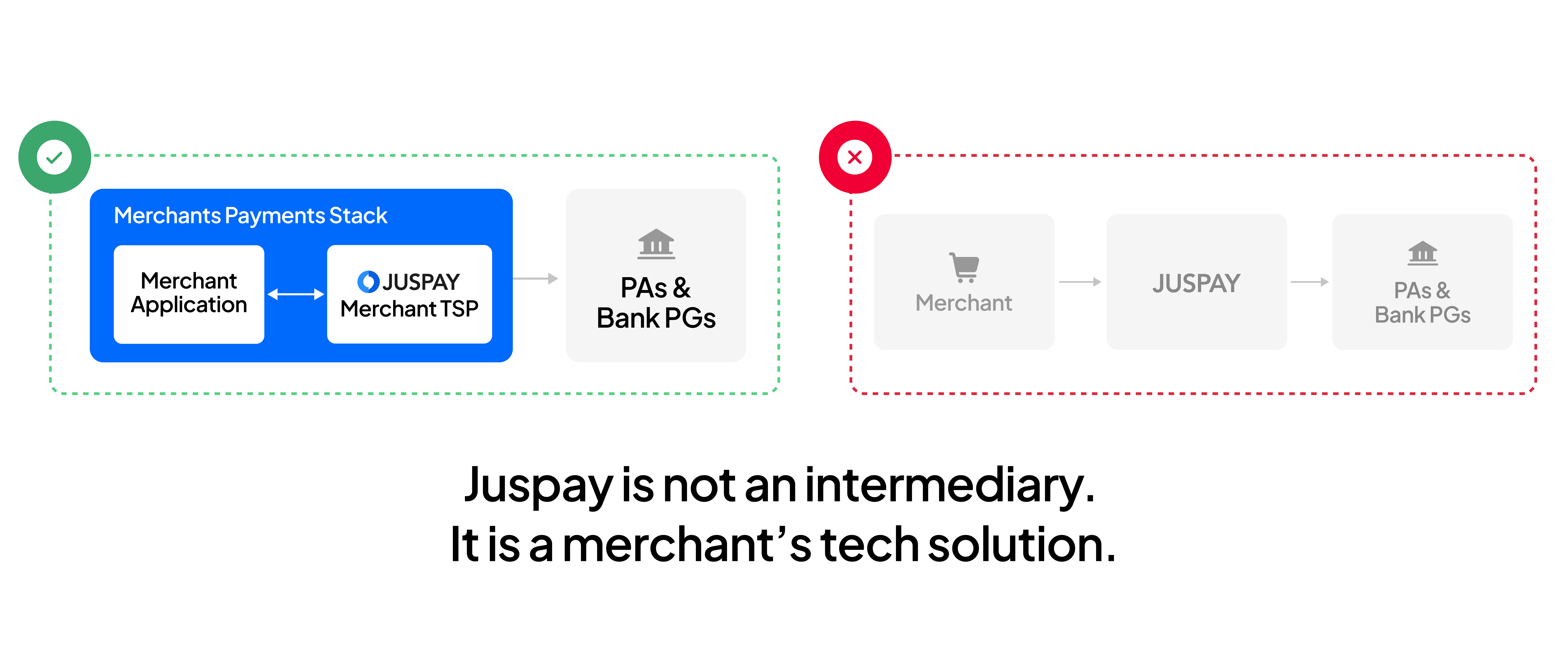
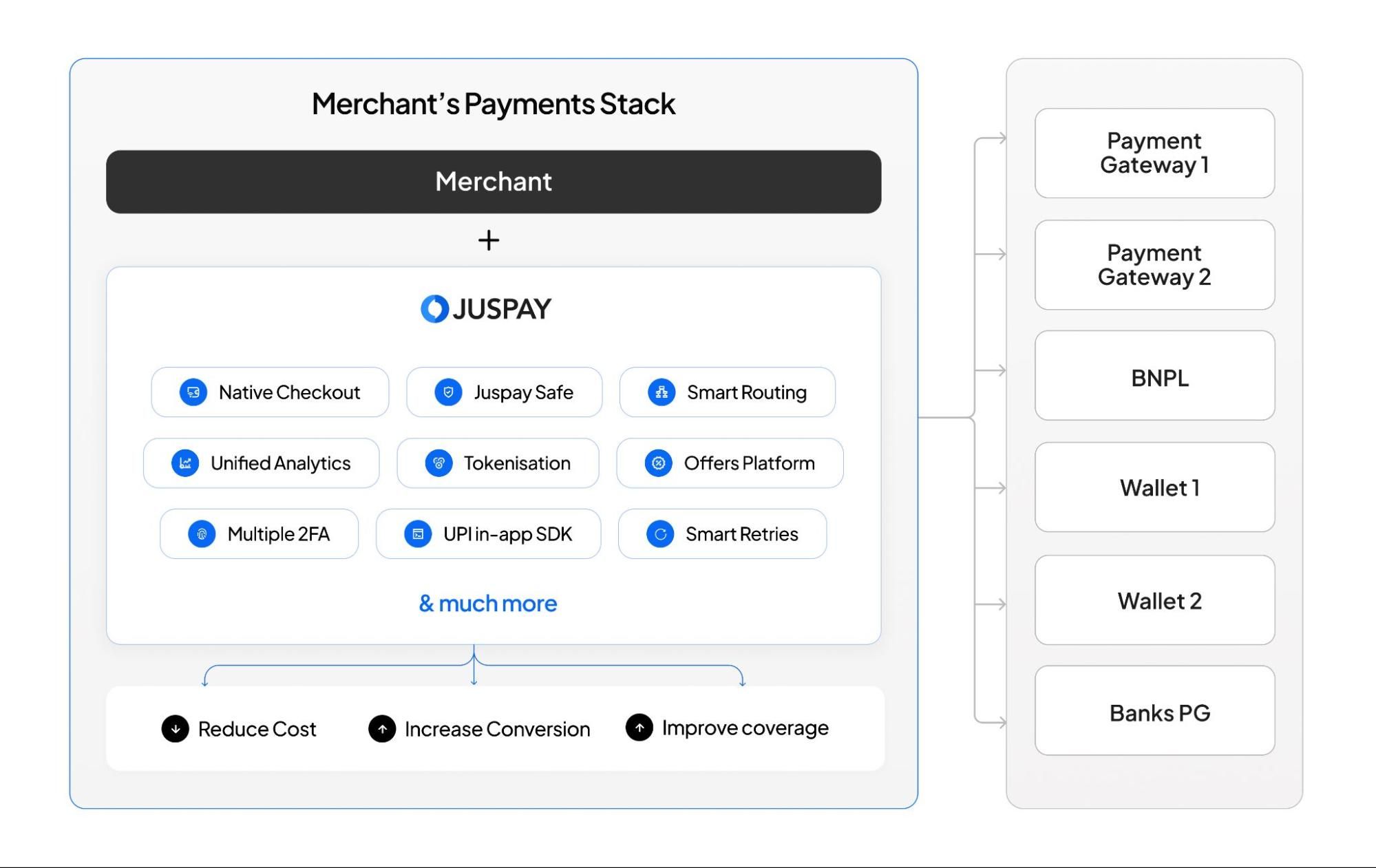
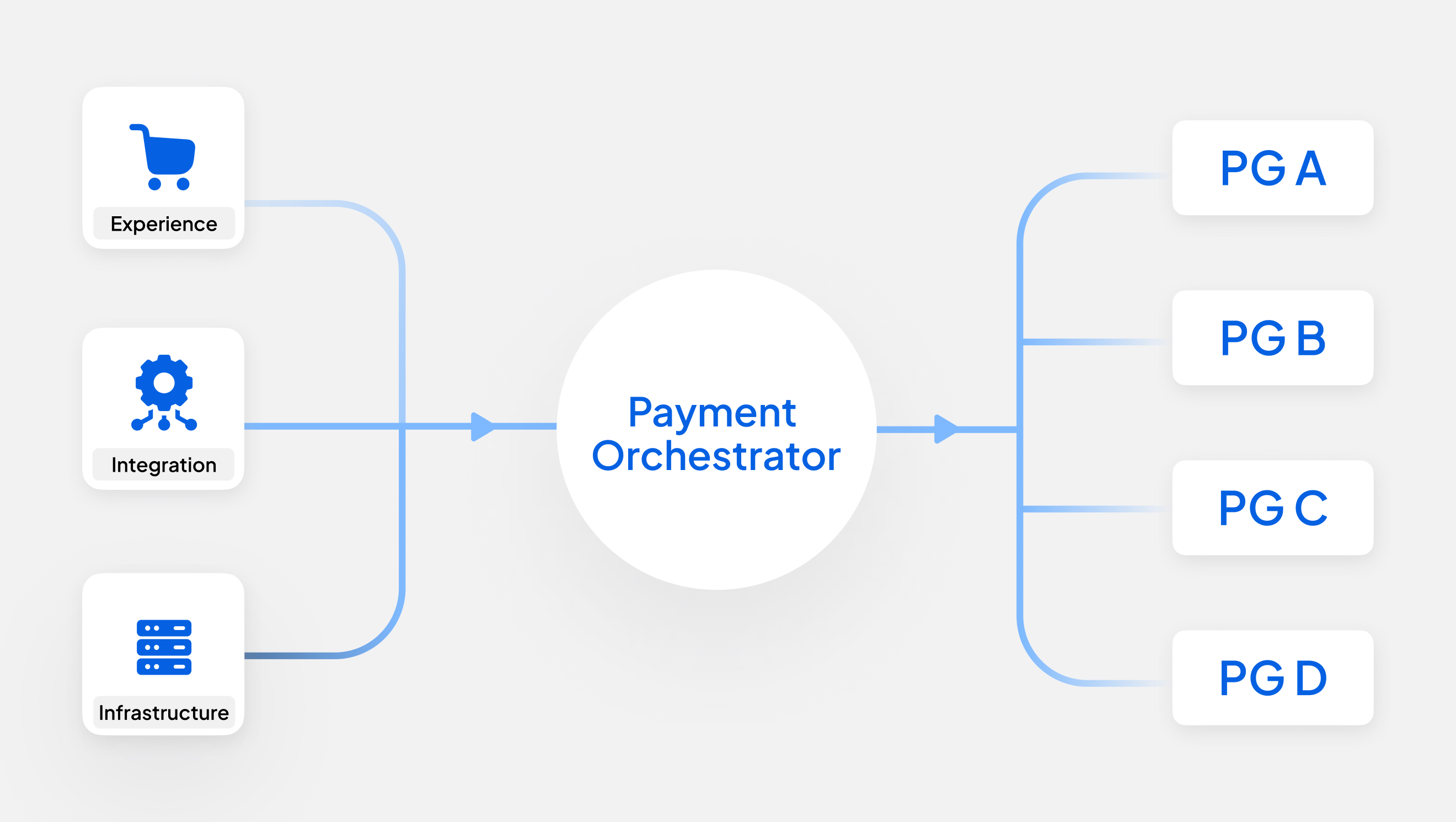
In payments, an issuing bank decides whether to authorize a transaction. Payment gateways' role is to standardise how payments are executed across different payment networks.
Embedded lending compliance is reaching the same architectural fork. First, regulators set the main rules and obligations. Lenders then decide how these rules apply to their products using disclosures, agreements, and internal policies. On the other side, merchants choose how financing options are displayed to customers during the purchase experience.
What is currently missing is the connecting layer in the middle. This missing layer is needed to consistently execute these regulatory requirements across the board. It would do this without forcing lenders to give up control of their own policies. It would also save merchants from having to act like compliance engineers.
The goal is not to centralize compliance decision-making, or to put a single vendor between a regulator and a lender's accountability. The binding accountability of the Regulated Entity (RE) under the Default Loss Guarantee (DLG) framework does not change. In fact, this strict accountability simply cannot be moved. What does change is the actual execution of the policies that the RE still completely owns. This execution process handles specific tasks like the rendering, the sequencing, the consent capture, and the final audit trail.
Once these responsibilities are clearly separated, regulatory evolution no longer requires every participant in the ecosystem to repeatedly solve the same implementation problem.
How HyperCredit operates as the unified execution layer
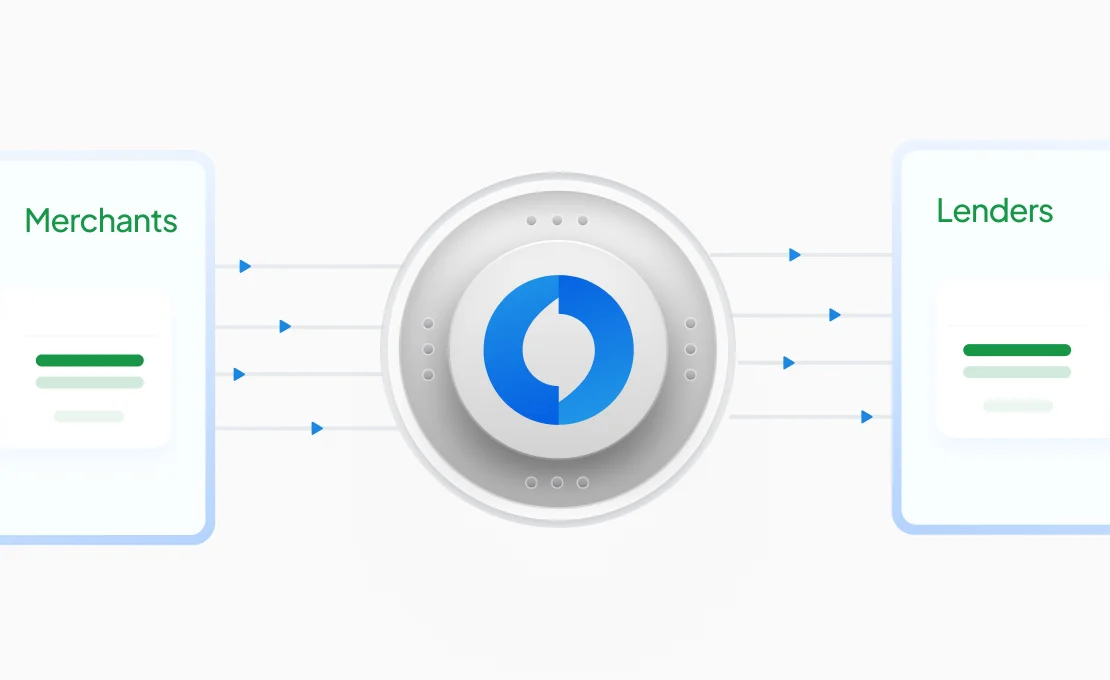
HyperCredit is engineered specifically to operate as this execution layer for embedded credit sitting between merchant commerce platforms and regulated financial institutions.
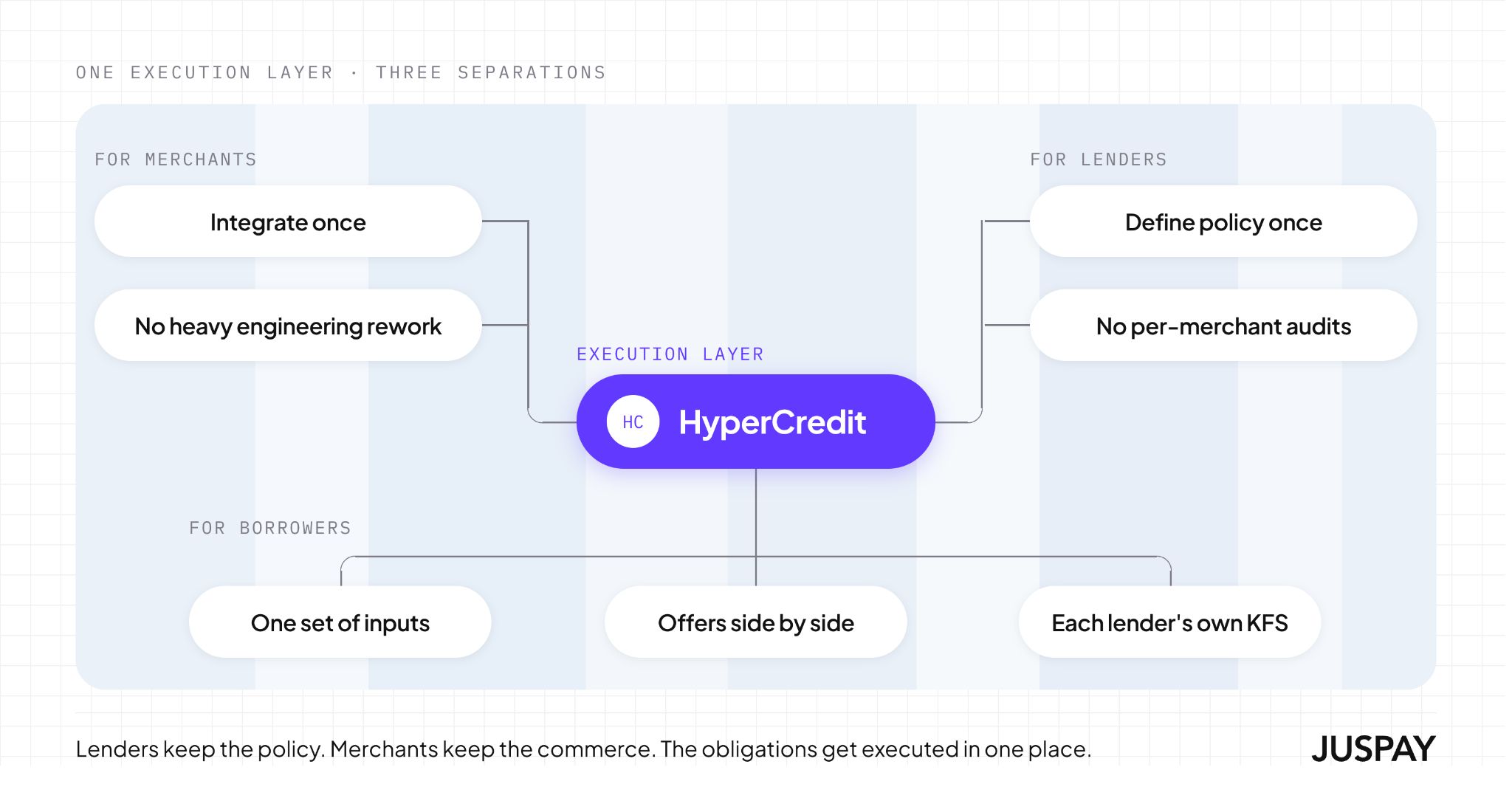
1. Zero Compliance Overhead for Merchants
Merchants integrate HyperCredit once via unified SDKs and APIs. Merchants do not need to build lender-specific compliance logic, manage dynamic KFS rendering, or track evolving RBI disclosure guidelines.
HyperCredit dynamically renders the required multi-lender journey orchestration, standardised KFS displays, explicit consent capture, and compliant lending flows within the merchant's native checkout UI. When a regulatory mandate changes or a lender updates its disclosure rules, that logic updates centrally. As a result, the merchant does not have to ship any new updates or write any new code.
2. Zero Merchant-Wise Monitoring for Lenders
For lenders, the shift is from per-merchant auditing to policy definition. KFS formulas, disclosure language, cooling-off rules, and underwriting criteria are defined inside HyperCredit, and enforced identically across every connected merchant surface. Lenders keep full ownership of underwriting, credit decisions, and regulatory policy. This eliminates the operational burden of conducting bespoke technical audits across individual merchant implementations.
3. Transparent, Unbiased Experience for Borrowers
For borrowers, this separation creates a single smooth journey rather than a confusing, stitched-together process. They only need to provide one set of data inputs. After that, they get a transparent, side-by-side view of every qualifying lender's APR, tenure, and total repayment amount. The experience also provides direct links to each lender's own Key Fact Statement.
The result is a clear separation of responsibilities: lenders continue to own policy, merchants remain focused on commerce, and HyperCredit provides a common execution layer through which regulatory obligations are delivered consistently across the ecosystem.
Security and Governance as Architectural Properties
A shared execution layer must build data protection and governance standards directly into its system architecture rather than treating governance as an operational afterthought.
| Security & Governance Parameter | Technical Implementation |
| Data Localization | 100% Indian jurisdiction - data stored and processed exclusively on in-region servers |
| Data Separation | Each lender's loan-application and policy data is stored separately, with no cross-lender pooling |
| Data Retention | Runtime-only, transient processing for underwriting decisions; configurable retention and purging logic per merchant and per lender |
| Data Protection | Field-level PII encryption at rest (AES-256) and in transit (TLS) with strict Role-Based Access Controls |
| Auditability | Cryptographically timestamped, version-linked consent events tied to an immutable audit trail for full lifecycle traceability. |
| Enterprise Certifications | ISO 27001, SOC 2 Type II, PCI DSS, VAPT |
The Next Era of Embedded Credit
Every new infrastructure layer in this industry was built because the ecosystem simply outgrew disconnected and fragmented implementations. For example, payment infrastructure simplified payment processing without changing how banks actually moved money. Similarly, decisioning infrastructure standardized policy evaluation without changing how lenders assessed credit risk.
Compliance is now following this exact same path. India's digital lending framework is heavily speeding up this shift. As digital lending regulations continue to mature, regulatory agility will separate true market leaders from outdated legacy implementations. Platforms that treat compliance as a built-in, integrated architectural layer will bring major benefits. They will enable lenders to update policies instantly. They will also allow merchants to seamlessly offer embedded credit without any operational friction. At the same time, they will provide borrowers with fully transparent and secure credit experiences.
By separating the rules of a policy from its actual execution, HyperCredit allows a regulatory change to be implemented just one time. It achieves this while fully preserving the responsibilities of every single participant in the lending ecosystem. Ultimately, this new approach creates a highly scalable financial infrastructure.
Key Takeaways
- Embedded lending's current constraint is compliance execution, not borrower reach or lender integration. The first generation solved distribution; the second solved conversion and matching.
- Compliance now runs inside the transaction. A single loan journey spans a merchant checkout surface, an LSP, and one or more Regulated Entities, but the borrower experiences it as one continuous transaction.
- India's regulatory framework governs the borrower interface directly: unbiased multi-lender offer presentation, a pre-execution KFS, direct borrower-to-lender cash flows with no LSP pool accounts, explicit purpose-specific consent, and binding RE accountability for actions LSPs execute on their behalf.
- Fragmented implementation leads to a high chance of failure. Without a shared execution layer, every regulatory or lender-level change is re-engineered at every merchant touchpoint, and lenders must audit every unique checkout variation.
- The fix is separating policy from execution. Lenders keep policy and underwriting; the layer handles rendering, sequencing, consent capture, and the audit trail.
- Accountability does not move. A compliance execution layer does not absorb the Regulated Entity's legal responsibility or make credit decisions on a lender's behalf.
Frequently Asked Questions
What is embedded lending compliance infrastructure?
Embedded lending compliance infrastructure is a shared execution layer that operationalises regulatory obligations across a multi-party loan journey. It renders disclosures, captures consent, presents multi-lender offers, and maintains the audit trail consistently across every merchant surface where a lender's credit appears, without holding the underwriting or policy decisions those obligations attach to.
Why can't merchants just build digital lending compliance into their own checkout?
Merchants can, but the cost compounds. Every regulatory update, and every routine change such as a lender revising its KFS methodology or consent wording, has to be re-engineered at each digital touchpoint. Merchants end up altering checkout UIs and rebuilding consent screens continuously, spending core engineering bandwidth on regulatory catch-up rather than commerce.
Who is accountable for compliance when an LSP owns the borrower interface?
The Regulated Entity remains accountable. Regulated Entities retain ultimate legal accountability for all sourcing, disclosure, and servicing actions executed on their behalf by Lending Service Providers. A shared execution layer does not move that accountability. It changes how the RE's own policies are rendered and evidenced, not who answers for them.
What does a compliant multi-lender offer display have to show?
A compliant display presents an unbiased, transparent view of eligible lender options, including clear visibility into non-selected options so preferential routing bias is eliminated. Borrowers see each qualifying lender's APR, tenure, and total repayment amount side by side, with direct links to each lender's own Key Fact Statement.
When must the Key Fact Statement be shown to a borrower?
The Key Fact Statement must be reviewed before the loan agreement is executed, not after. The KFS is dynamic and details the Annual Percentage Rate, the total cost of credit, fee schedules, and cooling-off terms, giving the borrower the full cost picture ahead of commitment.
How does HyperCredit differ from a lender marketplace?
HyperCredit operates as an operating system for embedded credit rather than a lender list. Lenders define KFS formulas, disclosure language, cooling-off rules, and underwriting criteria inside the platform, and those definitions are enforced identically across every connected merchant surface. Merchants and lenders integrate once through unified SDKs and APIs and ship nothing when a lender's policy or a regulatory mandate changes.