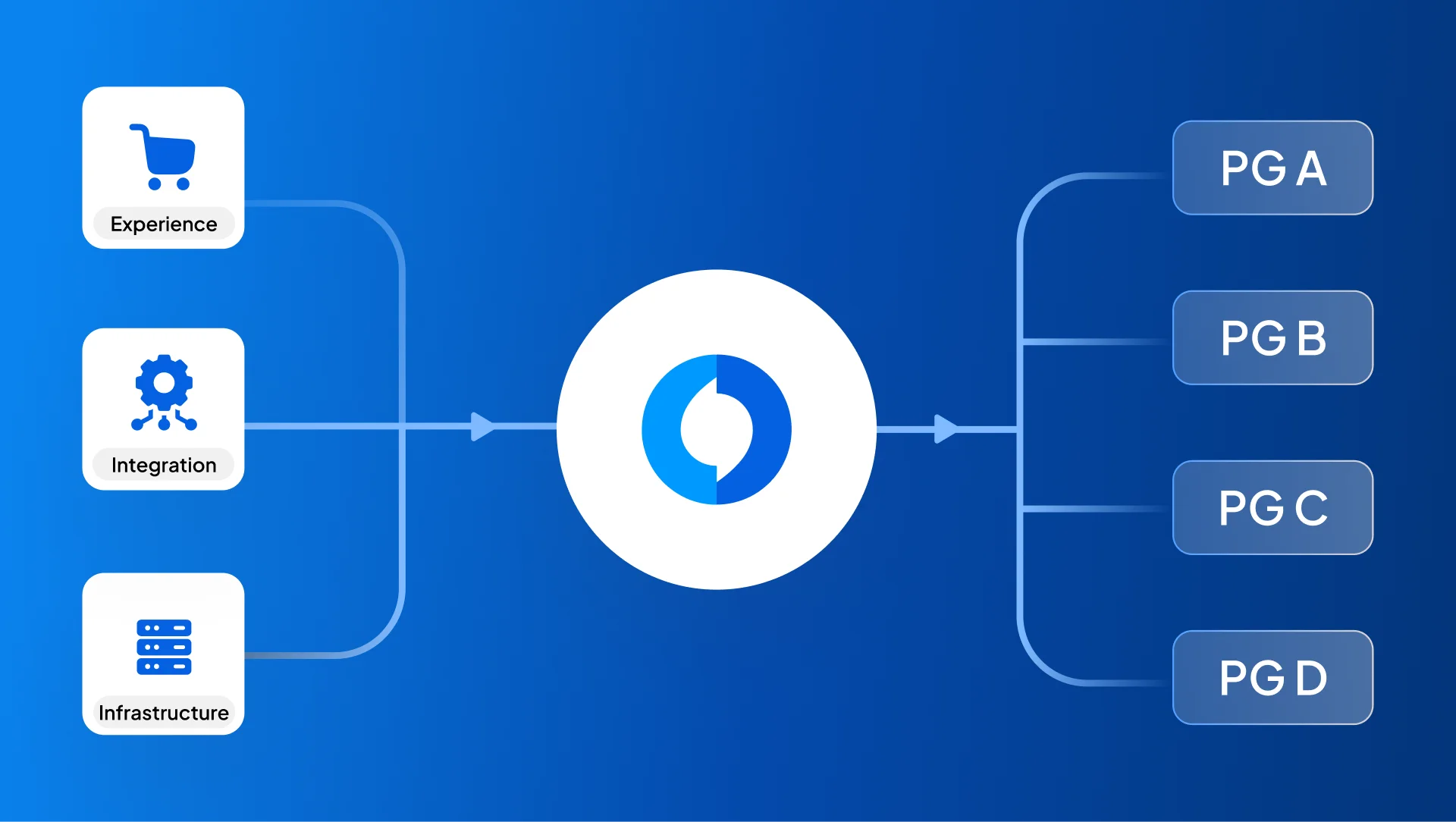










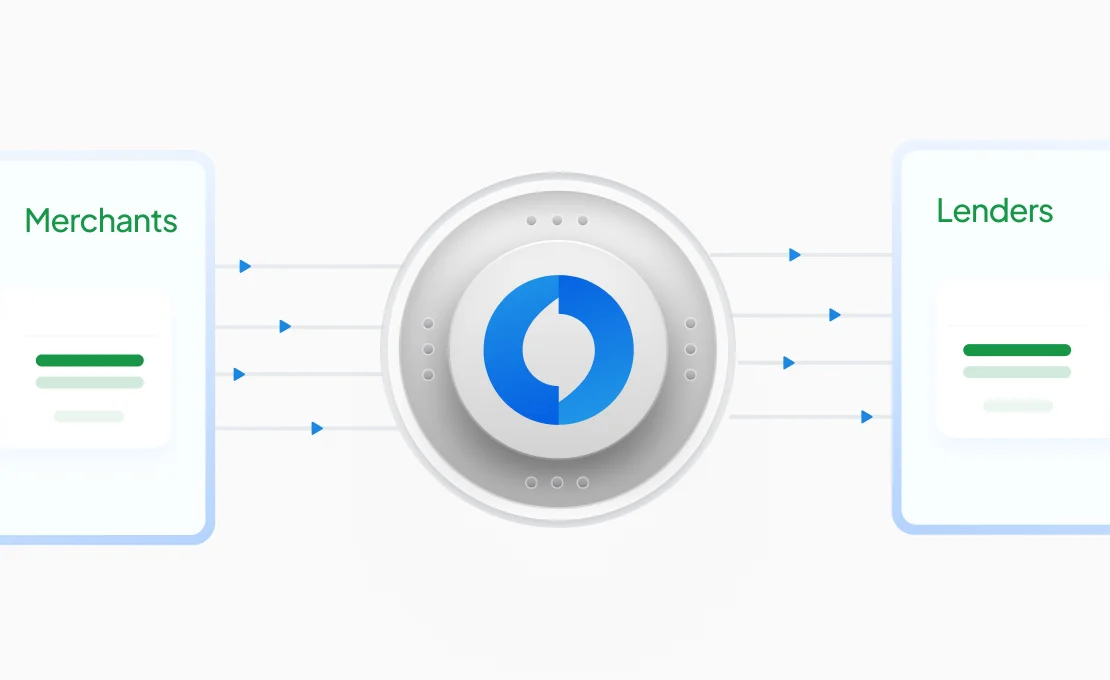
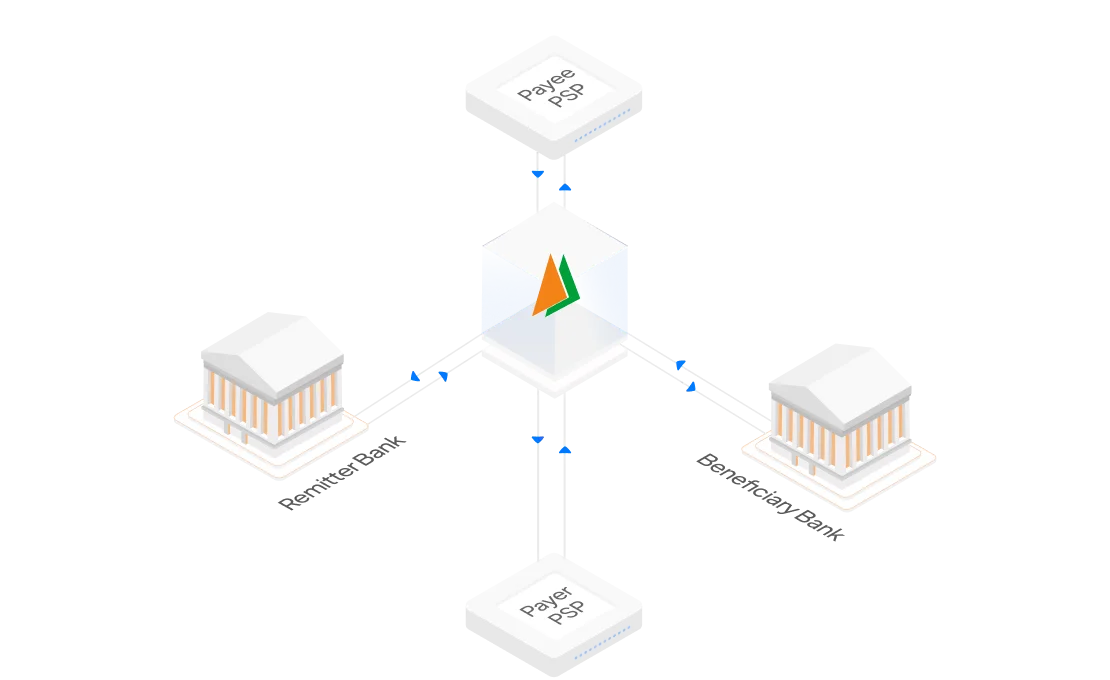



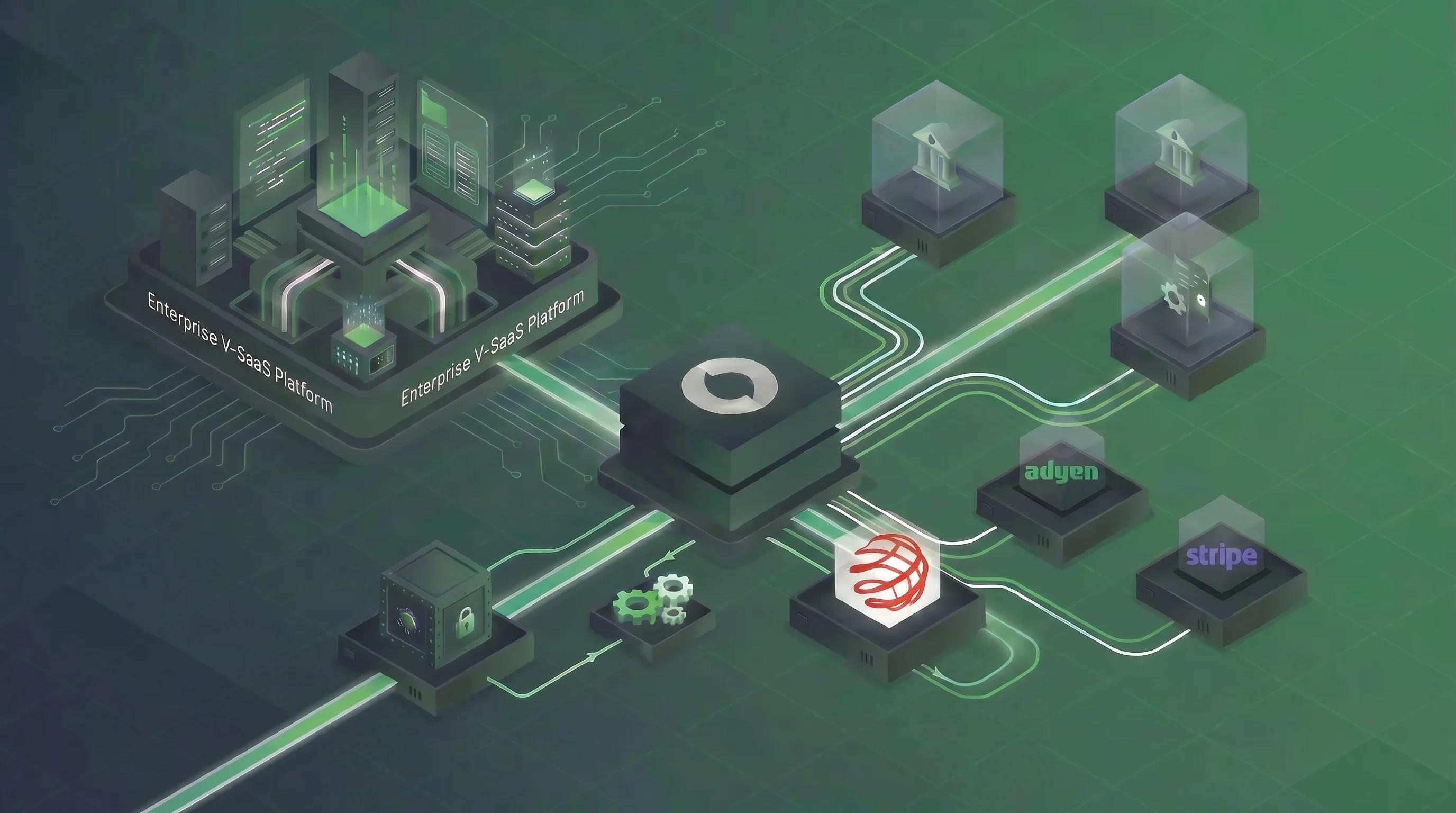
Enterprise Vertical SaaS (V-SaaS) merchants face a structural payments problem: their largest customers each come with a different bank acquirer, a different preferred processor, and a different set of payment workflows. Juspay solves this with a single orchestration layer that lets V-SaaS platforms onboard any processor in days instead of weeks, route transactions intelligently across providers, and run modular vaulting and payment workflows tailored to each enterprise client. The result is faster enterprise sales cycles, higher authorization rates, and a payments stack that scales with the platform instead of throttling it.
Juspay, which orchestrates payments across 150+ countries and processes 300 million transactions a day, brings the same battle-tested infrastructure used by Amazon, Google, HSBC, and Agoda to V-SaaS platforms expanding into enterprise.
What is Vertical SaaS (V-SaaS), exactly?
Vertical SaaS is software built for a single industry rather than a single function. Where a horizontal SaaS product like Slack or Zoom sells the same workflow to every industry, a V-SaaS product like Toast (restaurants), Mindbody (fitness and wellness), ServiceTitan (home services), or Veeva (life sciences) sells a deeply tailored end-to-end workflow to one vertical. That depth is the product's moat.
V-SaaS platforms typically:
- Serve a single industry vertical: restaurants, healthcare, real estate, travel, donations, fitness, retail, logistics, education, automotive, and dozens more
- Replace the 5-10 separate tools a business used to juggle with one platform built for their industry
- Sit on top of the industry's transactional workflows (bookings, appointments, orders, invoices, subscriptions, donations)
- Make money from a mix of SaaS subscriptions plus, increasingly, embedded payments and financial services
The financial product layer is what's reshaping the category. According to research from Andreessen Horowitz, incorporating financial products into a V-SaaS offering can lift revenue per user by 2-5x while simultaneously lowering customer acquisition costs, because financial services sell into an installed base that already trusts the platform. Toast, the restaurant V-SaaS, processed USD 4.1 billion in payments revenue in 2024 against USD 706 million in subscription fees. Payments is now its primary business. Mindbody reports that more than half of its revenue comes from embedded financial products.
The shift is not subtle. Bain & Company projects US embedded finance transaction value will exceed USD 7 trillion by the end of 2026, up from USD 2.6 trillion in 2021. The global embedded payments market is forecast to grow from USD 39 billion in 2025 to USD 430 billion by 2033 at a 35.5% CAGR, according to Grand View Research. Within that market, more than half of independent software vendors now offer embedded payments, and 87% of platforms offering any fintech service offer payments specifically.
Which is exactly why V-SaaS payment infrastructure has become a board-level conversation.
Why payments break first in enterprise V-SaaS
A V-SaaS platform usually starts with a simple embedded payments setup: one PSP, one integration, one checkout flow. That works fine for SMB clients on standard contracts. The first time it stops working is when the platform tries to sell upmarket.
Large enterprises do not arrive with a clean slate. They arrive with a bank acquirer they have used for fifteen years, a globalized payments contract negotiated at the parent-company level, and a strong preference to keep using both. When the V-SaaS platform tells them, "We only support Stripe," the conversation often ends there.
Manoj Radhakrishnan who leads hyperswitch.io, speaks about V-SaaS payments, frames the shift as the move from "Embedded Payments 1.0" (PSPs giving V-SaaS platforms a working payment widget and managed PCI compliance) to Embedded Payments 2.0 (V-SaaS platforms offering enterprise clients modular, composable card vaulting and payment workflows that match the enterprise's existing processor, banking, and treasury setup).
The infrastructure problem hiding underneath that shift comes in five distinct forms.
1. Each new processor takes weeks to integrate
A V-SaaS platform's engineering team can comfortably integrate one PSP. The trouble starts at the second, third, and tenth. Each processor has its own API contract, error taxonomy, webhook format, and certification cycle. The breakdown the actual effort:
| Workflow being integrated | Engineering effort |
| Basic card authorization (CIT and MIT) plus refunds | 1 to 2 weeks |
| Payment authentication and 3DS integrations | +2 weeks |
| Additional authorization workflows (incremental auth, split payments) | +2 weeks |
| Dispute observability and management | +2 weeks |
| Apple Pay / Google Pay via token decryption | +3 weeks |
| Global APMs (PayPal, Klarna, iDEAL, Sofort, ACH, and others) | +4 weeks |
Bank acquirer integrations sit roughly 50% above these numbers.If a V-SaaS platform lands five enterprise clients who each insist on a different acquirer, the team can burn most of a year just building payment connections.
2. Enterprise clients demand multi-processor flexibility
A single processor cannot serve every enterprise client well. Cross-border merchants need local acquirers in each major market because local processing improves authorization rates and avoids cross-border interchange premiums. High-risk verticals like gaming and charitable donations need a fallback processor because losing the primary is an existential business event. Cost-sensitive merchants want On-us routing, which sends transactions to the same bank that issued the consumer's card to save the roughly USD 0.25 per USD 100 in network scheme fees.
None of this is possible if the V-SaaS platform is locked into one processor. And it is not solvable by adding "another integration" without an orchestration layer above, because routing logic, vault portability, and retry strategies have to be coordinated across providers.
3. Card vaulting has to be modular per client
Different V-SaaS clients want different things to happen with stored card data. A parking app wants one shared vault, so a driver who saves a card in one city does not have to re-enter it in another. A subscription platform serving a newsletter publisher wants the cards stored with the publisher's own payment provider, so the publisher can switch providers later without losing its customer data. A property management platform wants a separate vault for each landlord, so one landlord's tenant cards stay walled off from another's.
No single vaulting setup covers all three. A V-SaaS platform either supports every model or loses the enterprise deals that depend on the one it skipped.
4. Authorization rates fluctuate without smart retries
In a single-processor setup, a failed transaction is a lost transaction. In a multi-processor setup, a failed transaction can often be saved by retrying with an alternate processor, but only if the platform knows which retries are worth attempting. System errors like network timeouts are retriable. Client errors like incorrect card numbers are not. Fraud declines are conditionally retriable depending on the alternate processor's fraud model, and bank issuer errors are conditionally retriable depending on the specific decline reason.
Building this retry logic takes deep payments engineering that most V-SaaS platforms do not have, and running it across hundreds of enterprise clients, each with a different set of processors, is still harder.
5. Payments expertise sits outside the V-SaaS core competency
The fundamental issue: payments is not what the V-SaaS platform was built to do. A restaurant POS company exists to help restaurants run better; building a global multi-processor payments stack is a tax on every other roadmap priority. Most platforms learn this the hard way after their first or second enterprise client demands custom payment workflows the team did not budget for.
How Juspay solves V-SaaS payment infrastructure
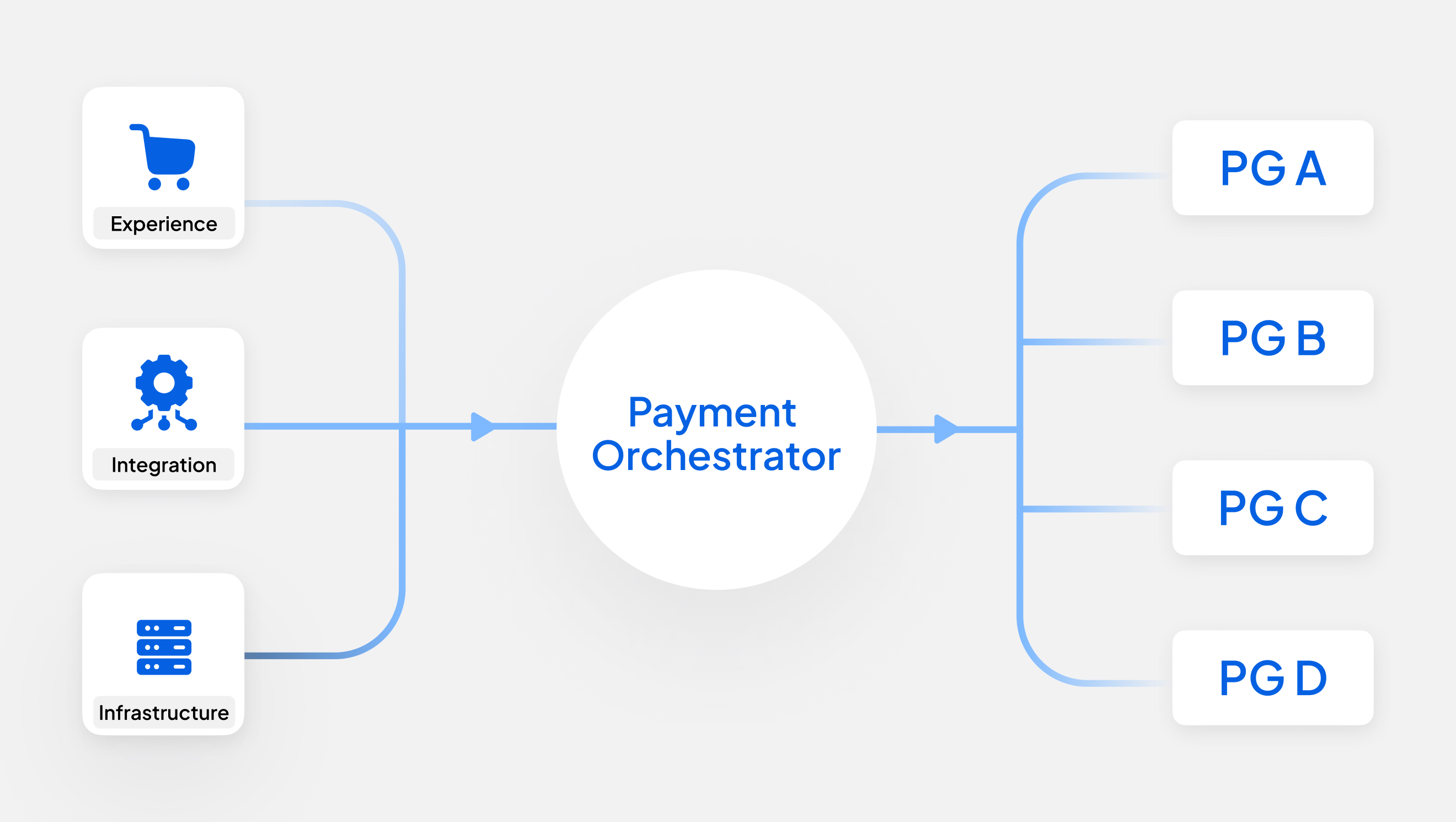
Juspay operates as a global payments operating system that V-SaaS platforms can embed into their product. Instead of building processor integrations, routing logic, vaulting workflows, and retry intelligence in-house, the V-SaaS platform consumes them as configurable building blocks. Five capabilities map directly to the five problems above.
Pre-built processor library with no-code client onboarding
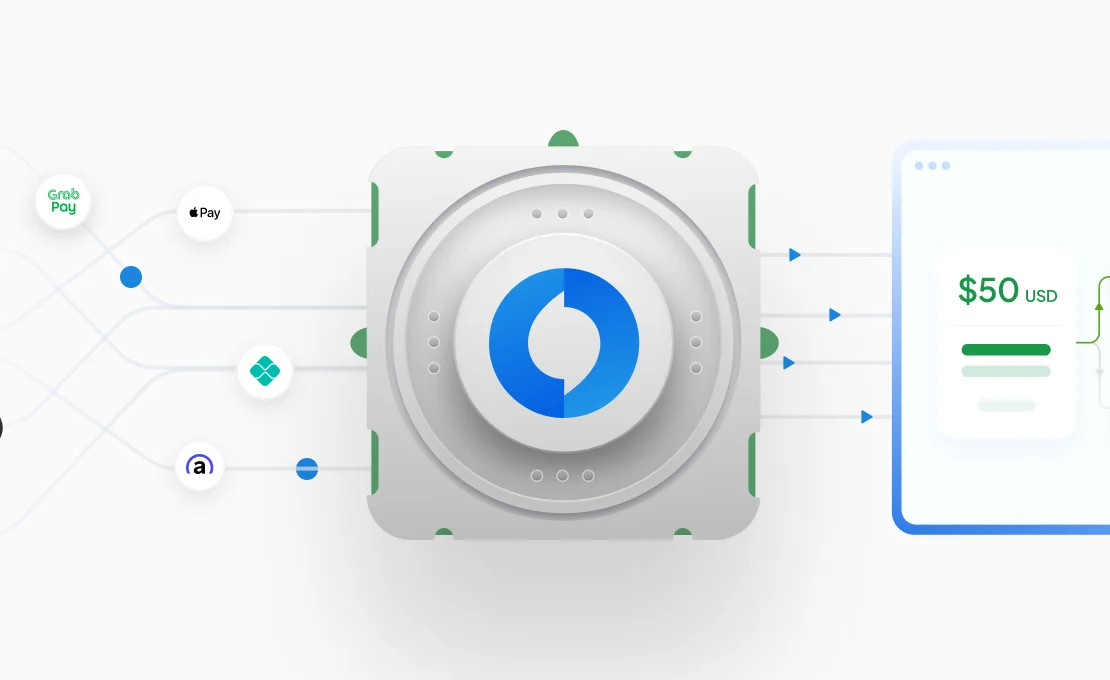
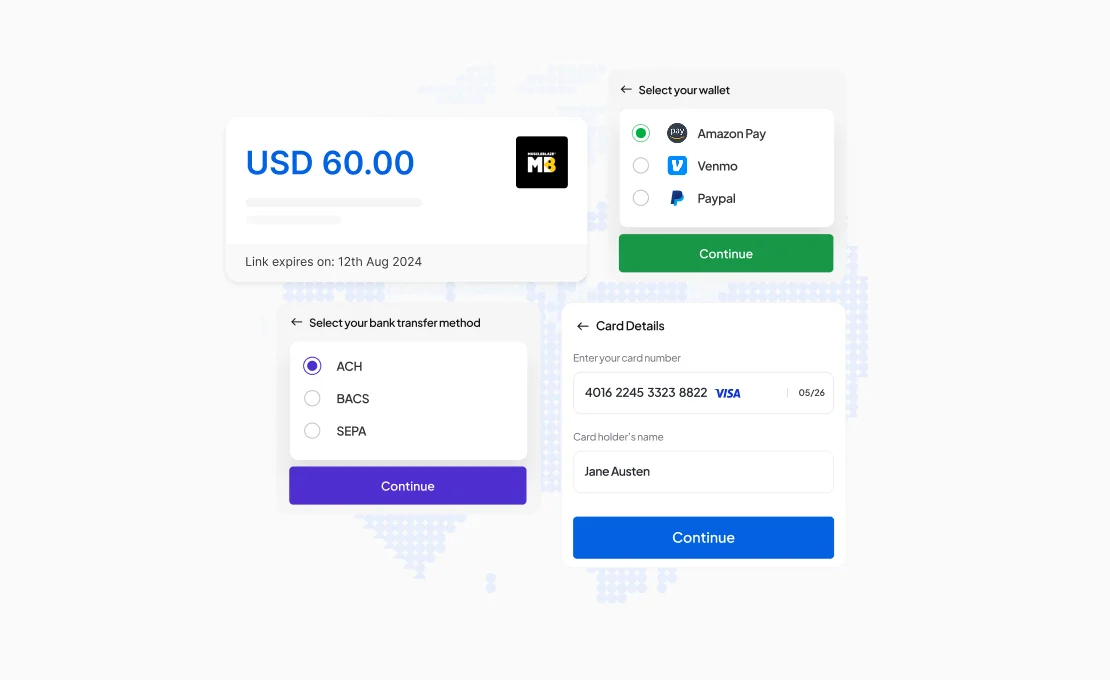
Juspay maintains certified integrations with 300+ payment providers and payment methods across 150+ countries. For a V-SaaS platform, that means a new enterprise client demanding their existing acquirer does not trigger a multi-week engineering project. The platform invites the client into the Juspay-powered dashboard, the client self-configures their processor credentials, and the integration is live.
Onboarding stops being engineering work and becomes a product workflow. This is what unlocks enterprise sales cycles measured in weeks instead of quarters.
Multi-processor routing with rule-based and volume-based logic
Juspay's orchestration layer lets each V-SaaS client configure routing rules on any payment dimension, and crucially on non-payment metadata passed in the transaction request as well. A retail V-SaaS client can route by sales channel (app, website, direct sales), brand, business segment, geography, card BIN, transaction value, or any custom field. They can also configure volume-based routing to honor minimum-volume commitments with each processor (sending the first set of transactions per month to Processor A, the next batch to Processor B).
For Onus routing, the rules can detect when a customer's card was issued by a specific bank acquirer the client has a direct relationship with, and route those transactions inside that acquirer's network to avoid the scheme network fee. A USD 100 million annual V-SaaS client moving 30% of volume to Onus routing recovers approximately USD 75,000 a year in network fees alone.
Three modular vaulting models, configurable per client
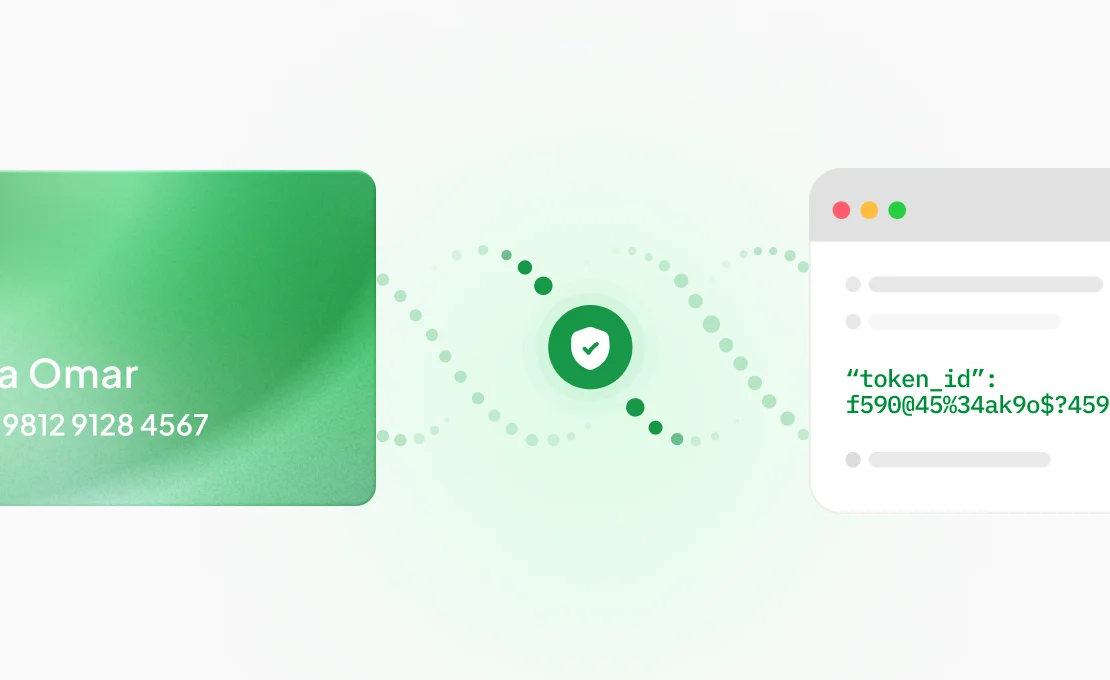
Juspay supports unified vaulting, PSP-scoped vaulting, and client-scoped vaulting under the same orchestration layer. Combined with network tokenization (which replaces raw PANs with network-issued tokens that survive card reissuance and improve authorization rates), the V-SaaS platform can offer each enterprise client the exact card data architecture their business model needs without standing up separate infrastructure.
For the parking app case, unified vaulting means a single saved card works across every parking inventory provider on the platform. For the property management case, client-scoped vaulting ensures each landlord's vault is logically isolated. For the subscription management case, PSP-scoped vaulting keeps the client portable.
Smart retries with error normalization across processors
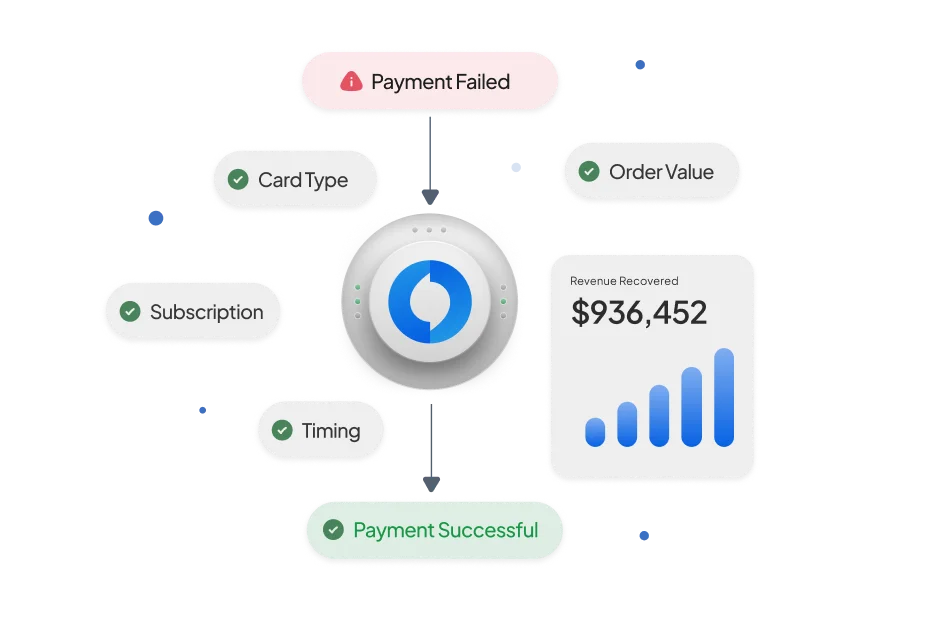
Juspay normalizes the noisy, processor-specific error codes that PSPs return into a common decision framework. A do_not_honor from one processor and a pickup_card from another can be classified as the same category for retry purposes. The orchestration layer then applies the right strategy: retry with the same processor using alternative request data (for example, removing a network token and sending the clear PAN), retry with an alternate processor using the original request, or stop and surface the failure to the customer.
Smart retries can move a merchant's authorization rate from around 85% on a single processor to 92-95% across multiple processors, on the exact same traffic. For a hypothetical V-SaaS client processing USD 500 million a year, each percentage point of that lift is worth about USD 5 million more in approved payments.
Payments expertise embedded into the platform's product surface
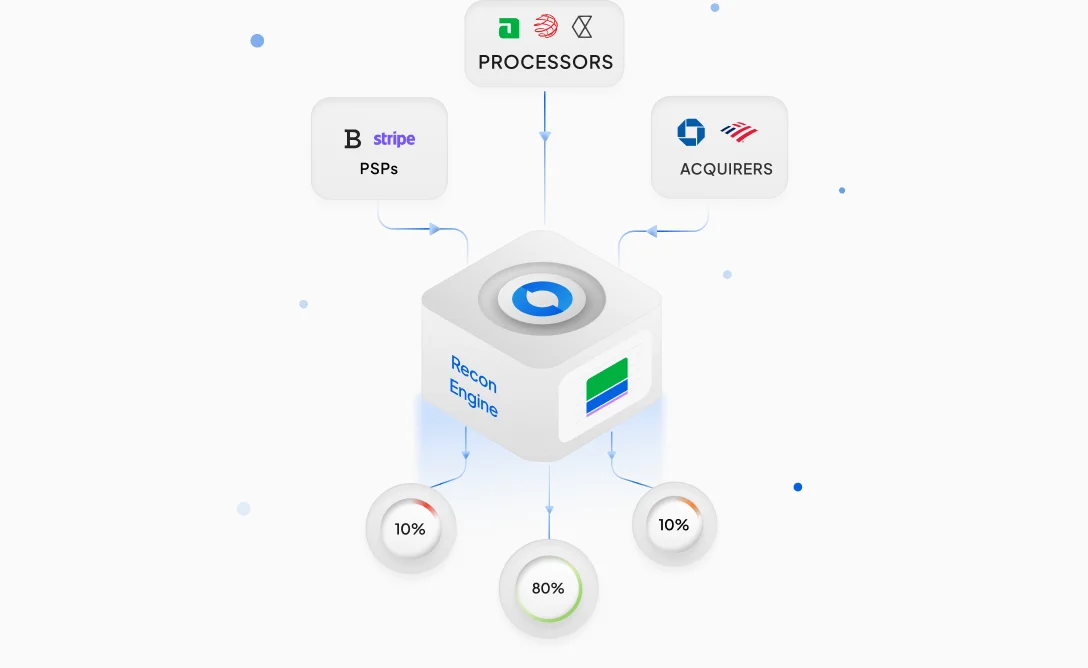
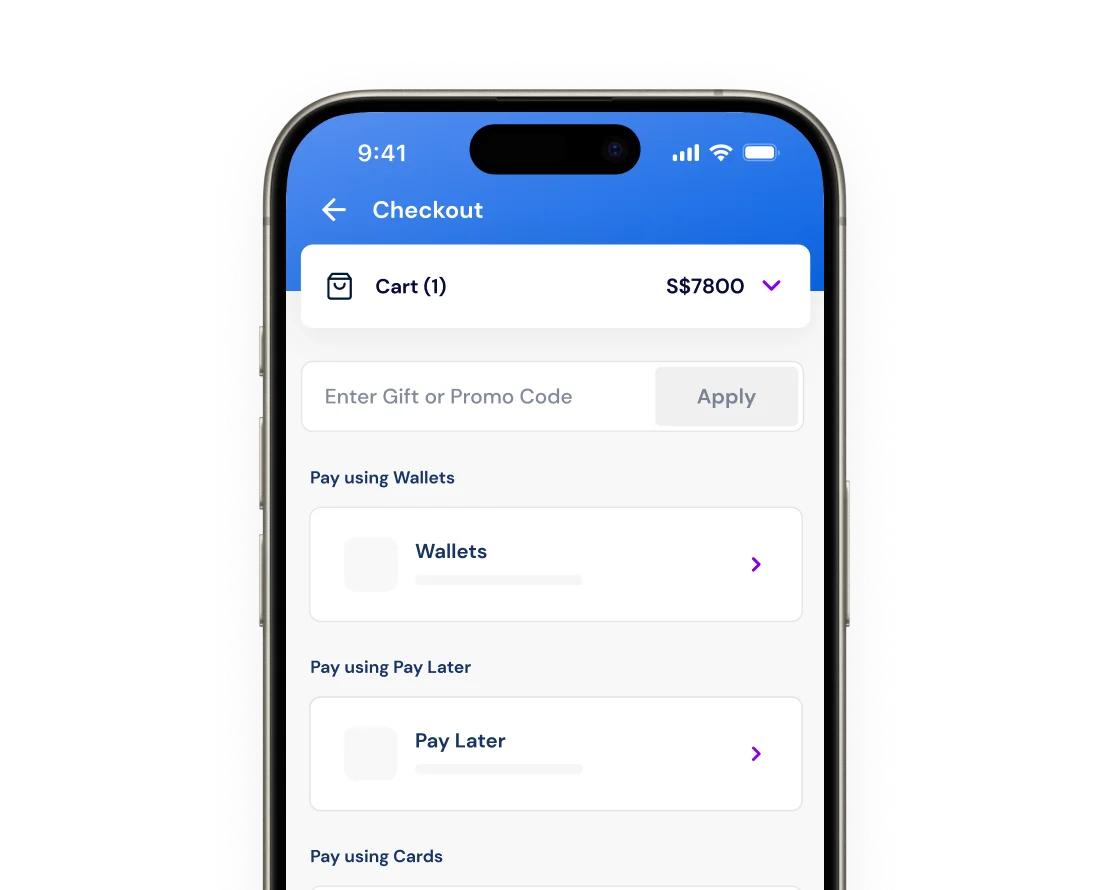
Beyond the orchestration layer itself, Juspay's value-added capabilities show up as features the V-SaaS platform can offer its enterprise clients without building anything: a unified 3D Secure authentication suite that balances security with conversion across card networks and regions, a fully tailored native checkout experience with language localization and dynamic currency conversion, a PCI-compliant network tokenization vault, and a reconciliation layer that resolves multi-processor settlement reports back to the original transactions.
These capabilities are why platforms like Agoda, IndiGo, and Zurich Insurance, each effectively a vertical platform in its own industry, run on Juspay's infrastructure.
What this unlocks commercially for V-SaaS platforms
The strategic point: payment infrastructure is no longer a cost center for V-SaaS platforms. It is a primary revenue lever and a competitive moat for enterprise deals. A V-SaaS platform that can credibly say "we support your existing acquirer, we route intelligently across your three processors, we vault cards the way your CFO wants them vaulted, and we lift your authorization rate by 5-7 points" wins enterprise deals that platforms with a single hardcoded PSP cannot get to a second meeting on.
The economics back this up. SaaS providers offering integrated payments accounted for 36% of SME acquiring revenues last year and are projected to expand to 45% by 2028, according to BCG. Payments now represent roughly 60% of total embedded fintech market value. The median payments attach rate among V-SaaS platforms doubled in a single year. For platforms that have not yet activated a payments revenue line, the gap to ones that have is widening.
Juspay's role is to remove the engineering tax that has historically prevented V-SaaS platforms from going all the way on this opportunity. The orchestration layer, the processor library, the vaulting and routing flexibility, the retry intelligence, and the conversion-grade checkout are the substrate on which a V-SaaS platform builds its own embedded payments product.
Key Takeaways
- V-SaaS is industry-specific software that increasingly monetizes through embedded payments. Toast, Mindbody, ServiceTitan, and Veeva are canonical examples. Adding financial products can lift revenue per user 2-5x.
- Enterprise V-SaaS clients require multi-processor flexibility. Large customers come with existing banking and acquirer relationships and will not move them to suit the platform.
- Each new processor integration costs weeks to months of engineering time if built in-house, with bank acquirer integrations roughly 50% costlier than PSP integrations.
- Juspay's orchestration layer collapses this into a configurable layer: 300+ pre-built integrations, no-code client onboarding, rule-based and volume-based routing, three vaulting models, and smart retries with error normalization.
- Onus routing alone saves ~USD 0.25 per USD 100 in network fees, and authorization lift of 5-7 points on a USD 500M GMV V-SaaS client is worth millions in approved volume.
- The strategic outcome: faster enterprise sales cycles, a meaningful payments revenue line, and a defensible moat that single-processor V-SaaS competitors cannot match.
Frequently Asked Questions
What is vertical SaaS and how is it different from horizontal SaaS?
Vertical SaaS is software designed for a single industry vertical (restaurants, healthcare, real estate, fitness, etc.), bundling end-to-end workflows specific to that industry. Horizontal SaaS, like Slack or Zoom, sells the same product to every industry. V-SaaS platforms increasingly monetize through embedded payments, with category leaders like Toast earning more from payments than from subscriptions.
Why do V-SaaS platforms need multi-processor payment infrastructure?
Enterprise clients bring their own banking and processor relationships and prefer to keep them. A V-SaaS platform locked into a single PSP cannot honor those relationships, which kills enterprise sales cycles. Multi-processor setups also improve authorization rates, reduce processing costs through Onus routing, and provide business-continuity protection in high-risk verticals.
How does Juspay help V-SaaS platforms onboard enterprise clients faster?
Juspay provides a library of 300+ pre-built processor integrations and a self-serve onboarding dashboard. V-SaaS clients can configure their preferred processor credentials themselves, removing the multi-week engineering project that each new integration would otherwise require. This lets V-SaaS platforms say "yes" to enterprise procurement requirements they could previously not support.
What is embedded payments 2.0 in the V-SaaS context?
Embedded Payments 1.0 was V-SaaS platforms adding a PSP widget and managed PCI compliance. Embedded Payments 2.0 is V-SaaS platforms offering enterprise clients modular, composable card vaulting and payment workflows (unified vaults, PSP vaults, client-scoped vaults, customer-acquisition payments, end-to-end payments) tailored to each client's processor mix, geography, and business model.