













A payment orchestration RFP is a procurement document that evaluates platforms which connect, route, monitor, and manage transactions across multiple payment service providers, acquirers, payment methods, and risk systems. A good one forces each supplier to prove how a capability works rather than confirm that it exists. Two vendors can both answer "yes" to the same question and operate completely different underlying capability, and only a depth-based RFP makes that difference visible before a contract is signed.
What is a payment orchestration RFP?
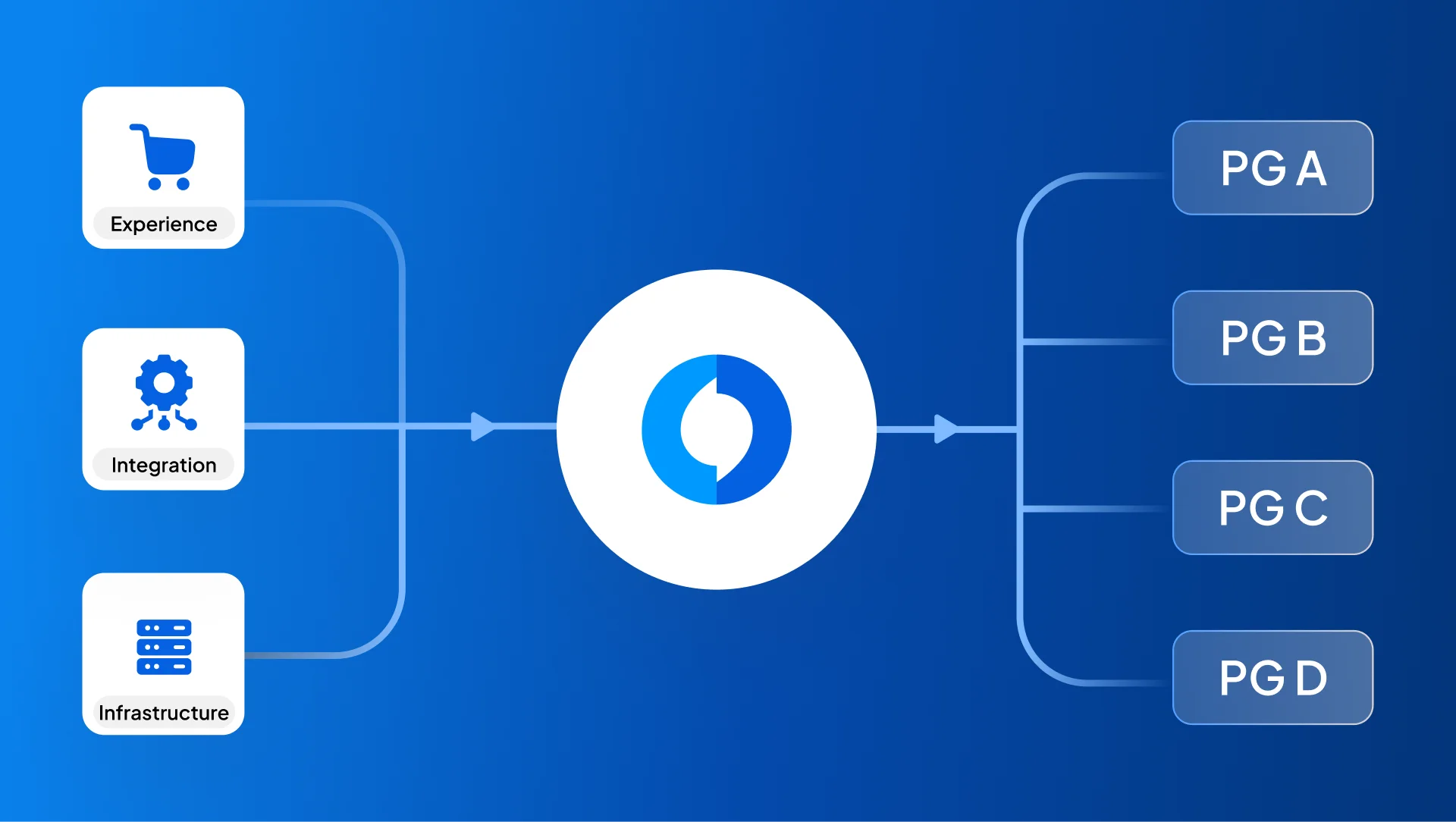
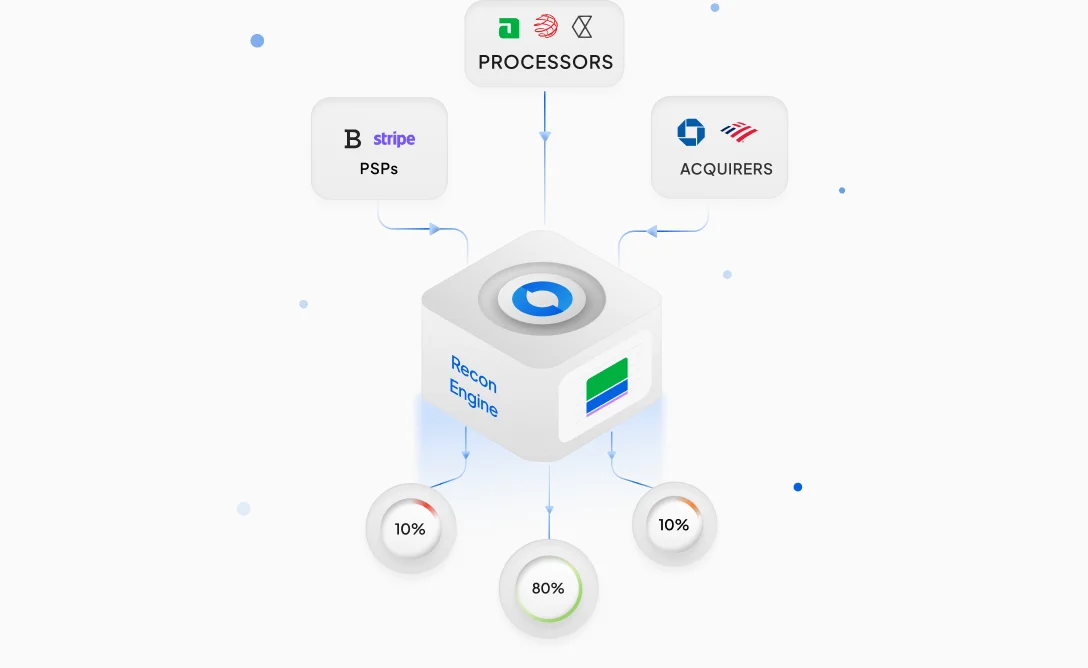
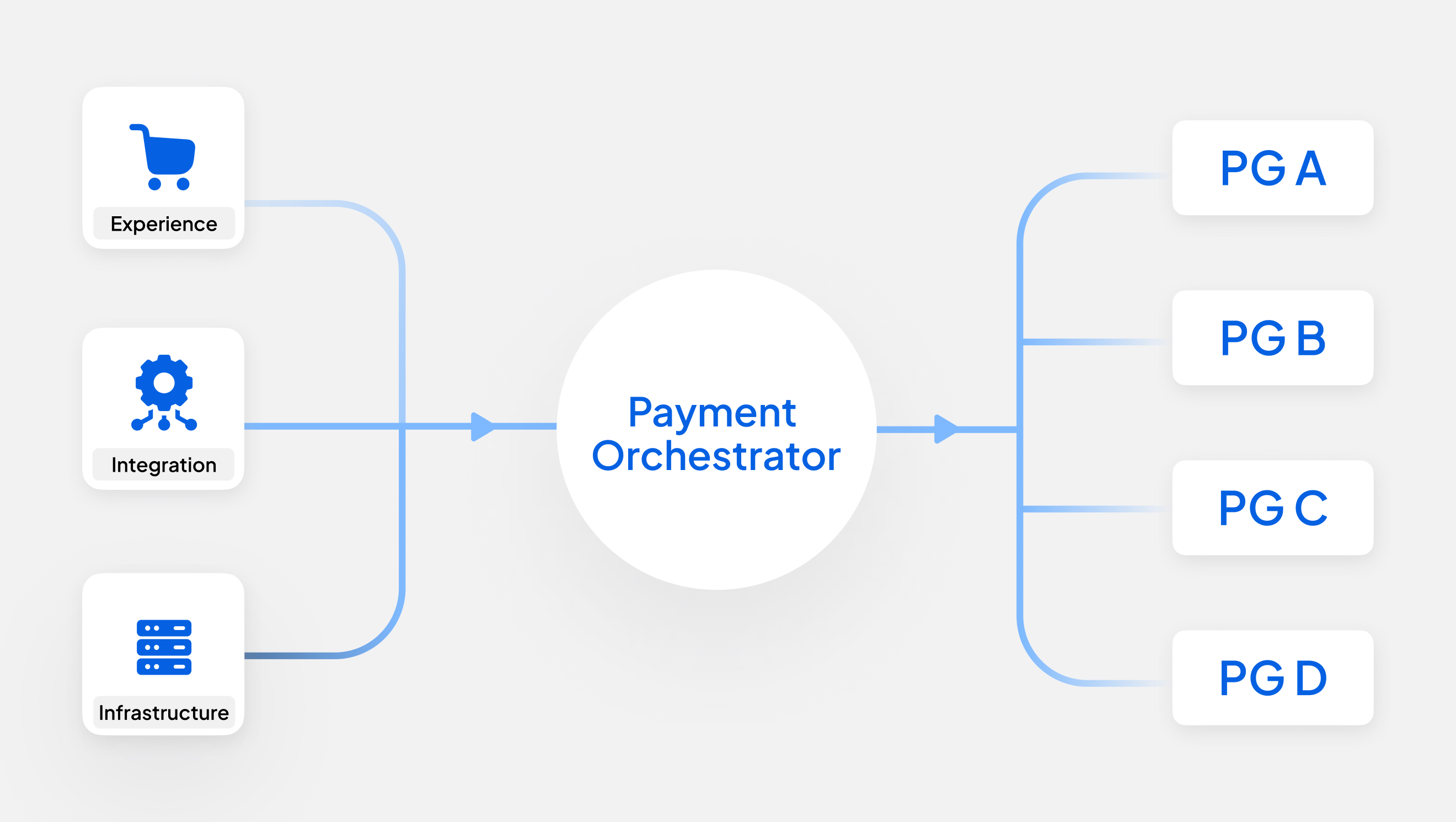
A payment orchestration RFP is a structured procurement document used to evaluate platforms that connect, route, monitor, and manage transactions across multiple payment service providers, acquirers, payment methods, fraud tools, token services, and authentication systems. Unlike a payment gateway RFP, it evaluates the control plane around payments, meaning the decision and governance layer that sits above the providers actually moving money: routing policy, retries, credential portability, checkout, transaction lifecycle management, observability, reconciliation, resilience, and the merchant's ability to change providers without rebuilding its payment stack.
A capable orchestration layer has to prove five things that sit outside its feature list: reliability, agility, adaptability to new markets, depth of routing, and delivery confidence. A vendor can list every feature a merchant asks for and still fail on all five, which is why the RFP has to test how the platform operates under the merchant's own conditions rather than under the vendor's demo conditions.
An orchestration provider may not hold or settle funds, so the RFP should state which obligations belong to the orchestrator, the merchant, the acquirer, the payment service provider, or another regulated party. Getting this wrong at the RFP stage produces a requirement matrix that no supplier can honestly complete.
The table below contrasts what a gateway-focused RFP asks for with what an orchestration RFP must cover. Orchestration widens every dimension from a single provider to a governed, multi-provider control plane.
| Capability | Gateway-focused RFP | Payment orchestration RFP |
| Provider connectivity | One provider or a limited set | Multiple PSPs, acquirers, methods, and specialist services |
| Routing | Basic gateway selection | Rules, real-time performance, cost, latency, risk, and failover |
| Credentials | Provider-specific token storage | PSP tokens, network tokens, merchant vaults, and portability |
| Transaction view | Provider-level records | Normalised lifecycle across providers |
| Optimisation | Provider-specific tuning | Cross-provider experimentation and optimisation |
| Resilience | Gateway uptime | End-to-end continuity across providers and orchestration components |
| Operations | Individual portals and reports | Unified monitoring, alerting, controls, and audit trails |
| Exit | Replace the integration | Export data, credentials, rules, and operational history |
Why do the right RFP questions matter?
The right questions matter because vague questions let weak vendors over-promise. When an RFP asks only whether a capability exists, every supplier can answer "yes", including suppliers whose implementation is shallow, static, or still on a roadmap. The merchant learns nothing that separates a mature platform from a thin one.
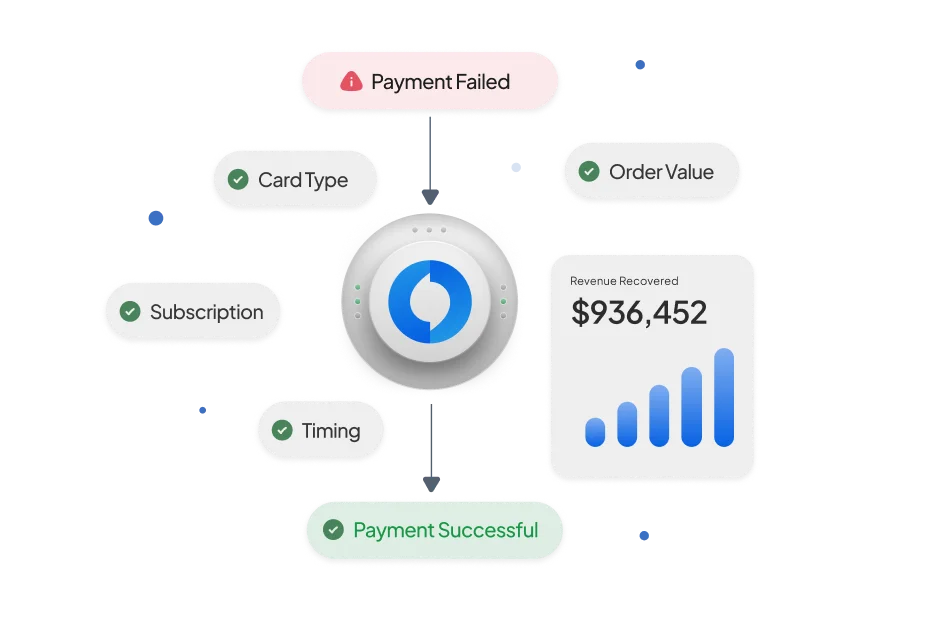
Consider a single routing question: "Do you support routing based on business parameters?" Both an established orchestrator and a new entrant may answer "yes." But one vendor may support 30 or more business parameters, parameter combinations, and intelligent routing that adapts to live performance, while the other supports only a handful of static routes configured by hand. Both suppliers have answered the question truthfully.
AI-generated procurement summaries compound the problem. A summarising tool can collapse ten "yes" answers into a tidy compliance table, but it cannot tell that one "yes" is worth far more than another. The question itself has to force the depth out.
Why do many payment orchestration RFPs fail?
Many payment orchestration RFPs fail because they ask whether a feature exists without defining the conditions under which it must work. A supplier can answer "yes" to smart routing, tokenisation, reconciliation, or multi-region hosting while interpreting each term very differently from the buyer. Four design errors appeared repeatedly across the RFP corpus reviewed:
- The desired outcome had no baseline. An RFP asked for higher authorisation rates but gave no current rates by market, provider, issuer country, method, channel, or customer type.
- Metrics used ambiguous denominators. Terms like "success rate," "approval rate," and "checkout conversion" were treated as interchangeable when they measure different things.
- Requirements mixed provider responsibilities. Settlement, fraud decisions, chargeback ownership, licensing, and funds flow were assigned to an orchestrator without defining the role of the underlying regulated providers.
- The demo was a sales presentation. Suppliers showed idealised screens instead of executing buyer-defined failure, retry, refund, and reconciliation scenarios.
The fix is to define terms, supply representative data, require evidence, and test the operating model against depth-based questions.
What follow-up questions expose real vendor depth?
Six follow-up questions, applied consistently to every material capability, expose the difference between a mature platform and a thin one. For each capability, the RFP should require the supplier to answer all six rather than a single yes or no:
- How exactly does it work? A description of the mechanism, not a marketing claim.
- What parameters are supported? The specific inputs, and whether they can be combined.
- Is it configurable by the merchant, or does it need the vendor?
- Is it static or intelligent? Fixed rules, or decisions that adapt to live signals.
- What are the implementation timelines? Time to configure and go live.
- What happens when a new payment method or market is added? Whether the capability extends automatically or requires new development.
These follow-ups turn a checklist into an evidence exercise. A vendor without real depth cannot answer them without exposing the gap.
What should be decided before the RFP is issued?
Three decisions belong to the buyer before a single requirement is drafted: the target operating model, the merchant's control boundary, and the current-state baseline. Each one drives architecture, compliance scope, implementation effort, and commercial structure, so leaving any of them to the vendor's discretion produces a requirement matrix that cannot be evaluated consistently.
Define the target operating model. State whether the buyer wants a cloud-hosted service, a private or dedicated deployment, self-hosted software, a hybrid model, backend orchestration only, or orchestration plus checkout, authentication, tokenisation, reconciliation, and cost observability as one programme. A hosted service and self-hosted software carry different responsibilities for uptime, patching, capacity, PCI DSS validation, and incident resolution. Do not leave deployment as a post-award detail.
Define the merchant's control boundary. Specify which controls must be self-service: adding or disabling a PSP, changing routing priorities, publishing a routing rule, configuring retryable decline codes, adjusting 3DS policy, exporting data, initiating refunds, managing users. For each, ask whether a change requires code, a deployment, provider approval, or professional services. Apply the "configurable by the merchant, or by the vendor?" follow-up to every item on the list.
Establish the current-state baseline. A supplier cannot design credible optimisation or migration plans without representative data: monthly and peak volumes, transactions per second, markets and currencies, current PSPs and acquirers, payment-method mix by country, authorisation and conversion metrics, decline and timeout rates, 3DS outcomes, refund and chargeback volumes, current fees, and seasonal spikes. If data cannot be shared upfront, create a controlled data room for shortlisted suppliers and state when access will be granted.
How should payment metrics be defined in the RFP?
Every outcome metric needs a formula, population, time window, exclusions, and source of truth, or suppliers will present incomparable numbers. The most common failure is treating related metrics as interchangeable, so the RFP should define each one distinctly and state what it does not measure.
Three metrics are frequently confused and must be separated:
- Checkout conversion measures the customer journey: completed payments divided by eligible checkout sessions. It reflects UX, method availability, and abandonment, not payment processing alone.
- Authorisation rate measures the acquirer decision: approved authorisations divided by attempts sent to an acquirer. It reflects routing, retries, and issuer behaviour.
- Technical success rate measures infrastructure reliability: technically completed provider responses divided by eligible attempts, excluding issuer declines where agreed. It reflects the platform and connectors, not customer or issuer choices.
A drop in checkout conversion with a healthy authorisation rate points to a UX or method problem. A healthy checkout conversion with a low technical success rate points to an infrastructure problem. Collapsing these into one "success rate" hides the signal the RFP is trying to surface.
Beyond these three, define first-attempt success, recovered-transaction rate, end-to-end latency, provider availability, reconciliation match rate, and incident recovery time, each with its own formula.
Segment performance. An overall authorisation rate can hide large losses. Require reporting and optimisation by PSP and acquirer, merchant ID and legal entity, BIN (the bank identification number, the leading digits of a card that identify the issuer) and issuer, card brand and funding type, issuer and customer country, currency, payment method, channel and device, new versus returning customer, 3DS result, transaction value band, and decline reason. Ask which dimensions are available in real time versus historical reports.
How should the RFP evaluate smart routing?
Smart routing is a governed decision system, not a single feature, and the RFP has to test six things: available signals, decision latency, merchant controls, failure containment, explainability, and measurable performance. This is where the "static or intelligent?" and "what parameters?" follow-ups do the most work.
Ask for three routing modes. Most enterprises need deterministic rules (route by country, BIN, currency, amount, method, entity, risk result, or commercial commitment); performance-aware routing (using recent provider health, authorisation performance, latency, and error patterns); and optimisation models (balancing approval probability, cost, latency, commitments, and risk). The supplier should explain how these interact: a merchant rule may need to override an optimisation model, and a regulatory restriction may need to override both. Ask directly how many business parameters the platform supports, whether they can be combined, and whether routing adapts to live signals or runs on fixed rules.
Require routing explainability. For each transaction, the platform should be able to say which providers were eligible, which were excluded and why, which signals influenced the decision, which rule or model version was active, what fallback existed, and whether a merchant override applied. If machine learning is used, request model purpose, input categories, drift monitoring, retraining governance, human override, and rollback. Do not accept "AI-powered" as evidence.
Test safe retries. Careless retries increase cost, duplicate transactions, or violate scheme expectations. Require the supplier to distinguish technical failures from issuer declines, soft from hard declines, same-provider from alternate-provider retries, and real-time retries from scheduled recovery for recurring payments. Require controls for idempotency (the guarantee that submitting the same request twice produces one result, not two charges), retry limits, timeouts, duplicate prevention, and circuit breakers.
What payment lifecycle capabilities should be included?
A complete RFP covers the full lifecycle of every supported payment type, not only the authorisation API. Lifecycle gaps are a common source of post-go-live surprises, because the authorisation call is the part every vendor demonstrates and the refund, reversal, and dispute paths are the parts they do not.
For cards, request support and evidence for authorisation and sale, capture (including partial and multiple capture), reversal and void, full and partial refunds, incremental authorisation, card-on-file and stored-credential indicators, merchant- and customer-initiated transactions, account updater (the service that refreshes stored card details when a card is reissued), dispute status, and network reference identifiers.
For account-to-account payments, wallets, bank transfers, virtual accounts, QR payments, and direct debit, define the applicable lifecycle. Many of these are asynchronous, so the RFP must cover pending states, expiry, mandate creation, customer authorisation, webhook delivery, status inquiry, reversal, refund availability, and reconciliation.
Normalise without erasing provider detail. The platform should expose a normalised status and error model so merchant systems avoid provider-specific logic, while preserving raw provider responses for investigation. Ask for canonical statuses, per-provider mapping rules, raw-response retention, webhook retry policy, out-of-order and duplicate event handling, and audit history for status changes. This requirement is easy to overlook and costly to retrofit.
How should tokenisation and credential portability be covered?
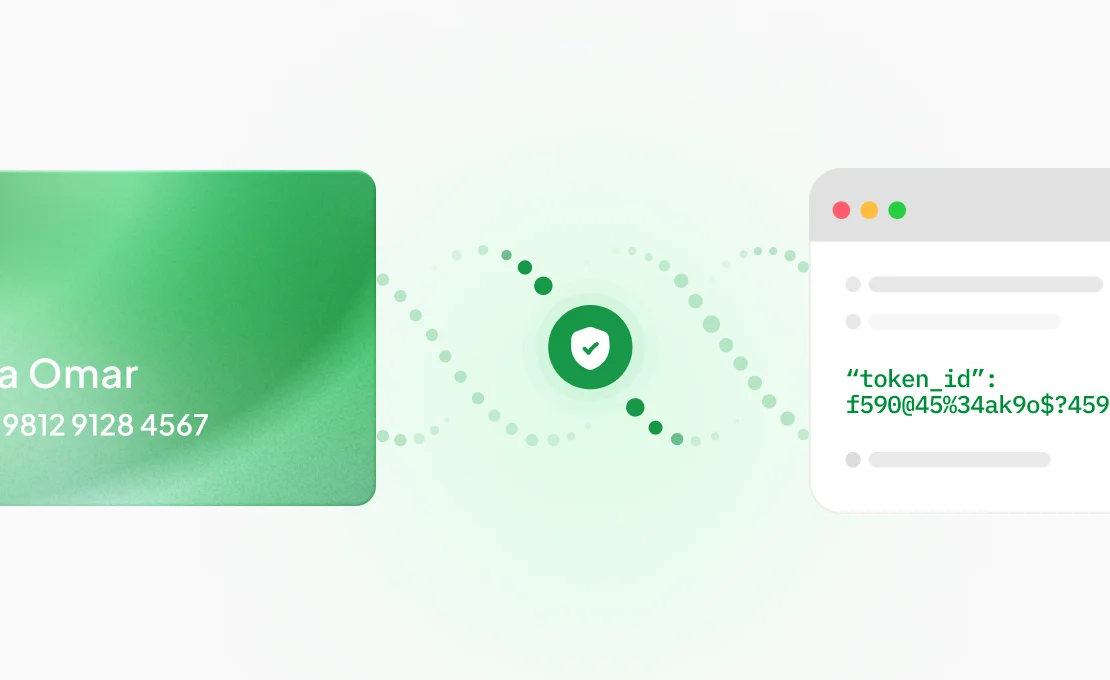
Tokenisation requirements should preserve the merchant's ability to route across providers and change its payment stack. Tokenisation that locks credentials to one provider defeats the purpose of buying orchestration at all, which makes this one of the few RFP sections where a wrong answer is unrecoverable without a customer-visible re-authentication exercise.
The RFP should distinguish PSP tokens, orchestrator vault tokens, network tokens, and merchant-controlled vaults, then ask who the token requestor is, who owns each token, where primary account numbers are stored, whether network tokens work across multiple acquirers, whether the platform can use tokens created by another requestor, and what the bulk migration and export options are.
The acceptance test should include a returning customer whose preferred provider is unavailable. The supplier should demonstrate how the stored credential is used with an eligible alternate provider without asking the customer to re-enter card details, subject to applicable rules and consent.
What should be required for checkout and payment-method orchestration?
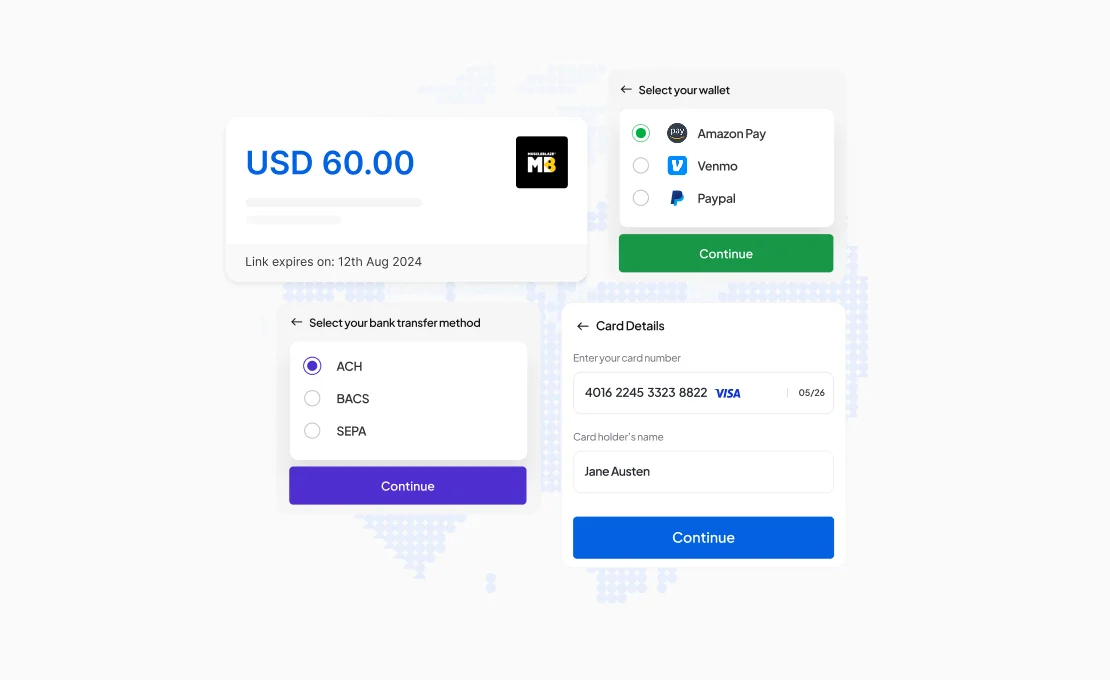
Checkout evaluation should test customer experience, merchant control, compliance scope, localisation, and failure recovery. A polished default page proves none of these. Request a comparison of hosted payment page, embedded components, iFrame, native mobile SDK, headless APIs, and merchant-hosted UI. For each, require the supplier to state PCI scope, integration effort, supported methods, upgrade responsibility, customisation limits, and fallback behaviour.
Test payment-method presentation. The platform should present methods by customer and transaction context. Ask whether the merchant can configure eligibility by country and currency, legal entity, device and channel, customer segment, transaction amount, method health, commercial priority, and risk result. Require evidence of localisation across language, currency display, address fields, consent text, and right-to-left layouts where applicable.
Include failed-payment recovery. Define what happens when a method is unavailable before selection, a provider fails after submission, authentication succeeds but authorisation times out, an asynchronous payment stays pending, a QR code or virtual account expires, or the customer returns after abandoning. Mobile app, mobile web, and desktop journeys often behave differently, so require suppliers to demonstrate each priority channel rather than one responsive screen.
How should coverage and payment-method breadth be evaluated?
Coverage needs only one or two strong questions in the RFP, but each should force the supplier to explain depth rather than recite a connector count. Listing a rail or method in a coverage table proves nothing about whether it works end to end in the merchant's markets.
For coverage, require the supplier to explain:
- Coverage breadth: the specific payment methods, rails, and providers live in each priority market, not a global total.
- Direct versus indirect coverage: whether the platform connects directly to a provider or reaches it through a third party, which affects reliability, cost, and support.
- APM support: the alternative payment methods (wallets, real-time account-to-account rails, buy now pay later, local schemes) supported in each market, with their lifecycle handled. Australia's PayTo, operated by Australian Payments Plus, is a useful test case, because it runs on payment agreements between customer and merchant, so a supplier listing it as "supported" should be asked to demonstrate mandate creation, amendment, pause, and cancellation, not just a payment initiation call.
- Timelines for adding new payment methods: how long it takes to add a method or provider the merchant needs, and whether it is configuration or new development.
The RFP should reward how quickly and reliably the platform can add and operate the specific methods a merchant needs in the markets it serves, rather than the size of the connector list. A platform with 300+ integrated providers and methods, the scale at which Juspay operates across 150 or more countries, is only relevant to a given buyer to the extent that the relevant ones are live, direct, and lifecycle-complete in that buyer's priority markets.
What observability and reporting requirements matter most?
Payment observability should let operations teams reconstruct a transaction, detect ecosystem failures, and act without waiting for a provider's support desk. The RFP should require real-time transaction search, a complete event timeline, normalised and raw provider responses, provider health by operation and method, authorisation and retry analytics, configurable alerts by rate, count, value, geography, provider, and method, role-based masking, audit logs, and data-retention controls. Ask who is expected to discover incidents first, and require automated detection, notification, severity assignment, ownership, and post-incident review.
Require cost observability. Routing cannot optimise cost if the system cannot reconcile contracted and invoiced fees. Request the ability to combine transaction records, PSP and acquirer invoices, settlement files, interchange and scheme fees, authentication and token fees, FX and cross-border charges, and minimum commitments. Define whether the desired output is reporting, invoice audit, anomaly detection, routing input, forecasting, or all of these.
How should reconciliation be specified?
Reconciliation is a data and workflow problem, and "unified reconciliation" is too broad a phrase to compare suppliers against. Define the sources to ingest (APIs, SFTP, bank files, portals), file formats and schedules, matching keys and fallback logic, one-to-many and many-to-one cases, partial captures and refunds, fees and FX and adjustments, settlement cycles, duplicate and missing records, exception queues, maker-checker controls (a two-person workflow where one user enters a change and a second approves it), and export to finance and ERP systems.
Ask whether the supplier reconciles transaction status, settlement, bank receipts, invoices, or all layers. These are different controls, and a supplier that reconciles only transaction status against its own records has not reconciled anything the finance team needs.
What architecture and reliability evidence should be requested?
Architecture requirements should expose failure domains, dependencies, scaling limits, and operational controls. A generic cloud diagram shows none of them. Require diagrams showing merchant integration points, network boundaries, the cardholder data environment (the systems that store, process, or transmit card data, and anything connected to them), data stores, queues and event flows, availability zones and regions, provider connectors, administrative access, key management, and disaster recovery. Request a failure-mode analysis for the API layer, routing engine, connector, queue, database, cache, region, cloud provider, and external PSP.
Define service levels precisely. An availability target needs a measurement method: the services and endpoints covered, measurement interval, planned-maintenance treatment, dependency exclusions, regional calculation, partial-degradation treatment, data source, reporting cadence, and service credits. Also define latency percentiles, throughput, recovery time and point objectives, and incident-response targets. An uptime percentage without a defined service boundary cannot be compared between suppliers. A five-nines claim, for instance, is only meaningful once the buyer knows which endpoints it covers and how partial degradation is treated.
What security, privacy, and compliance evidence belongs in the RFP?
Security and compliance should be accounted heavily during the RFP process. A wrong answer here creates regulatory, financial, and reputational exposure that no feature can offset. Security requirements should connect evidence to the exact service, entity, deployment, and region being purchased. The PCI Security Standards Council states that PCI DSS applies to entities that store, process, or transmit cardholder data, and to entities that can affect the security of the cardholder data environment.
Request:
- Current PCI DSS Attestation of Compliance and scope, including the version assessed against
- ISO 27001 certificate and statement of applicability where appropriate
- SOC 2 Type II report or equivalent assurance
- Penetration-test summary and remediation process
- Vulnerability-management policy and secure development lifecycle
- Encryption in transit and at rest, with key ownership and rotation
- Privileged-access controls and security logging
- Incident notification commitments
- Data retention, deletion, and business-continuity evidence
- Data protection impact assessment support
- Subprocessor list and change process
- Cyber, professional indemnity, and public liability coverage where required
Do not ask only, "Are you PCI compliant?" Ask which legal entity was assessed, which services and locations are covered, which PCI DSS version the assessment used, when it expires, and whether the proposed production stack appears in the scope.
Map data flows by purpose. For every data category, identify the controller or processor role, collection purpose, storage and processing location, transfer mechanism, retention period, encryption and key location, subprocessor access, and deletion method. This map should cover payment data, tokens, logs, analytics, support records, fraud data, and backups. "Data is hosted in region" does not explain whether support, telemetry, or failover move data elsewhere.
How should onboarding, integration, and vendor readiness be evaluated?
An RFP should evaluate the vendor and the delivery, not only the product. A capable platform delivered by a vendor that cannot onboard, integrate, or support the merchant is still a failed selection. Beyond product capabilities, require evidence on:
- Onboarding: the steps, owners, and timeline to get the merchant live, including provider certification and credential migration.
- Reliability and delivery confidence: track record of on-time delivery, reference customers of comparable scale, and how the vendor handles slippage.
- Licences and regulatory standing: the licences the vendor holds or depends on in each market, and any local-entity or partner requirements.
- Financial stability: evidence that the vendor will remain a viable long-term partner.
- Technical integration: API quality, documentation, sandbox availability, SDK support, and effort required from the merchant's engineering team.
- Support readiness: support model, coverage hours across the merchant's regions, escalation paths, and incident communication.
Evaluate implementation as staged risk reduction. Require a plan covering discovery, integration, certification, credential migration, provider onboarding, testing, traffic ramp-up, rollback, and handover, with accountable owners, dependencies, environment strategy, success and rollback thresholds, and cutover support. Ask how the merchant can keep existing integrations during transition, route a limited cohort through the new platform, compare old and new performance, revert traffic quickly, and migrate stored credentials in controlled batches without forcing returning customers to re-enter details. Do not accept a single go-live date without a dependency map.
How should commercials and total cost of ownership be compared?
Commercials should be compared as total cost of ownership rather than the orchestration transaction fee alone. Two vendors with similar per-transaction pricing can diverge sharply once change requests, feature builds, and long-term operations are included, and a headline price hides all three.
Total cost of ownership should account for:
- Setup cost: implementation, integration, certification, and credential migration.
- Transaction pricing: per attempt, successful payment, authentication, token event, refund, active credential, or volume tier, stated explicitly.
- Change request cost: what it costs to modify existing configuration, routing rules, or integrations after go-live, and whether routine changes are self-service or billable.
- New feature build cost: what it costs when the merchant needs a capability the platform does not yet offer, including whether it becomes a custom build and who owns it afterward.
- Long-term operational cost: ongoing support, data retention and export, premium support, and the cost of merchant engineering and operations to run the platform.
Request separate prices for core orchestration, checkout, authentication, tokenisation, reconciliation, cost observability, fraud integrations, payouts, implementation, new provider or method integrations, custom development, and exit assistance. The financial model should also capture minimum commitments, tier thresholds, pass-through fees, FX assumptions, indexation, failed-attempt charges, and credits for missed service levels. Ask suppliers to disclose incentives or commercial relationships with PSPs and acquirers that could influence routing advice.
What legal and exit protections should be included?
Exit requirements belong in the RFP itself, not in the contract negotiation that follows, because orchestration becomes deeply embedded in customer experience, credentials, provider integrations, and finance operations. A buyer who first raises exit terms after selecting a supplier has already lost most of its leverage.
Define data ownership, token and credential portability, export schemas and frequency, configuration and routing-rule export, audit-log export, retention and secure deletion after termination, transition assistance, continued service during migration, sub-processor obligations, termination rights, cure periods, and the costs and timelines for exit. For self-hosted software, clarify source availability, licensing after termination, security updates, and whether escrow is appropriate.
What response format makes suppliers comparable?
A structured response matrix with one atomic requirement per row is what makes suppliers comparable. Free-form proposals can add context but should not replace the matrix, because prose answers cannot be scored side by side.
Each requirement should carry a stable, permanent ID, the requirement itself, a priority (mandatory, weighted, or optional), delivery status (live, out of the box, configurable, custom, roadmap, or unsupported), deployment scope, dependencies, merchant effort, committed delivery date, required evidence, and an objective acceptance test in the same row. Pairing the requirement with its acceptance test matters, because it means a "yes" is always tied to a test that proves it. Use controlled response values rather than free-form compliance labels, and ban ambiguous answers such as "supported through partners" unless the supplier names the dependency and confirms commercial and technical availability.
The table below is a deliberately short sample; a production RFP would expand each domain.
| Requirement | Evidence required | Example acceptance test |
| Route eligible card authorisations across at least two configured acquirers | Rule screenshots, API flow, live connection evidence | Turn off the main acquirer and complete a valid payment using the backup path |
| Prevent unsafe retries and duplicate charges | Retry policy, error taxonomy, idempotency design | Pretend the system timed out while the provider was processing the payment, and show that no duplicate authorisation is created |
| Explain each routing decision | Transaction trace and rule or model version | Check the allowed options, exclusions, data signals, and the chosen route for a test transaction |
| Use a portable stored credential across eligible providers | Token architecture and ownership model | Process a returning customer using a different provider without making them type their card details again |
| Separate authentication policy from authorisation routing | 3DS architecture and data fields | Verify the identity once, and send the payment authorisation to an allowed acquirer |
| Detect and alert on provider degradation | Alert configuration and incident workflow | Trigger a fake spike in errors to measure how fast the system spots the problem and notifies us |
| Reconcile transactions, settlement, and fees | Sample input files and exception workflow | Feed the system a test file missing a settlement, with incorrect fees, and a duplicate record to see if the system catches the errors |
| Provide assurance for the proposed production stack | Current scoped attestations and data-flow diagram | Check that the company details, location, service, and software environment match what is covered by your certificates |
| Meet service-level and incident communication requirements | SLA, sample incident report, escalation model | Run a practice drill for a massive, severity-one system failure to check how quickly you provide updates and restore the service |
| Export merchant data and support transition | Export schema and exit plan | Create a full export of all transactions, payment tokens or references, rules, user accounts, and security logs (audit history) |
What principles should guide supplier evaluation?
Evaluation should reward proven depth and penalise uncertainty. A supplier's "yes" without evidence should never carry the same weight as a capability demonstrated live in the merchant's proposed region and operating model. Rather than prescribing a single scoring formula, four principles keep evaluation honest:
- Weight evidence over assertion. A live demonstration in the proposed context beats an out-of-the-box claim, which beats a configurable dependency, which beats a roadmap commitment.
- Apply mandatory gates separately. A critical gap in security, regulatory fit, funds flow, or resilience should not be offset by high scores on optional features.
- Score depth, not presence. Where two suppliers both meet a requirement, the one that proves richer parameters, intelligent behaviour, and faster change should score higher. This is where the six depth-based follow-ups feed directly into scoring.
- Prioritise proven regional capability over unverified claims about markets the vendor has not operated in.
The exact weighting belongs to each merchant's priorities, provided the model rewards demonstrated capability over confident answers.
What should the final RFP package contain?
A complete payment orchestration RFP package should contain an executive brief and objectives; current-state architecture and operating model; an anonymised baseline data pack; a scope and responsibility matrix; a metric dictionary; the functional requirement matrix with depth-based follow-ups; regional schedules; architecture and non-functional requirements; a security, privacy, and compliance questionnaire; onboarding, integration, and migration requirements; a support, SLA, and disaster-recovery schedule; a commercial and total-cost-of-ownership template; legal and exit requirements; a buyer-owned demo and proof-of-concept script; an evidence index; evaluation principles and mandatory gates; and clarification, version-control, and timeline rules.
The package should be demanding without repeating itself. Duplicate questions produce inconsistent answers and make evaluation harder.
Key takeaways
- A payment orchestration RFP should reveal true vendor depth. Two suppliers can both answer "yes" while offering very different capability, and six depth-based follow-ups force the difference into the open.
- Evaluate orchestration beyond features: reliability, agility, adaptability to new markets, depth of routing, and delivery confidence.
- Define every metric distinctly, and keep checkout conversion, authorisation rate, and technical success rate separate.
- Make security and compliance a major section and should be accounted heavily.
- Compare commercials as total cost of ownership, including change requests, new feature builds, and long-term operations.
- Evaluate the vendor and the delivery as well as the product: onboarding, integration, licences, financial stability, and support readiness.
- Draft exit protections into the RFP itself, before selection, while the buyer still has leverage.
- Structure the RFP so depth is machine-verifiable, and keep the judgement of "deep enough" with human reviewers.
Frequently asked questions
What is the goal of a payment orchestration RFP?
The goal is to reveal each vendor's true depth of capability. A well-written RFP forces suppliers to prove how a capability works, covering its parameters, configurability, intelligence, and timelines, so two vendors giving the same "yes" can still be told apart on real capability.
Why do two vendors give the same RFP answer but differ so much?
Because a yes/no question hides depth. Asked "do you support routing on business parameters?", one vendor may support 30 or more parameters, combinations, and intelligent routing that adapts to live performance, while another supports only a few static rules. Both answer "yes." Depth-based follow-ups and acceptance tests expose the gap.
How long does a payment orchestration RFP process take?
Enterprise orchestration RFP cycles typically run several months from issue to signature, because the process includes clarification rounds, a buyer-owned demo, security and legal review, and reference checks. The timeline is driven less by document length than by how quickly the buyer can supply baseline data and how many internal functions must sign off.
Should an enterprise issue an RFI before a payment orchestration RFP?
An RFI is worth issuing when the buyer is still mapping the market or is unsure which capabilities are realistic to demand. It gathers coverage, deployment, and commercial-model information at low effort. Once the buyer knows its target operating model and control boundary, move to the RFP, because an RFI cannot test depth.
How much of an orchestration RFP should cover security and compliance?
Security and compliance should be accounted heavily during the RFP process. They should connect evidence to the exact entity, service, deployment, and region purchased. Ask which legal entity was assessed, which PCI DSS version was used, and whether the production stack is in scope, rather than only "are you PCI compliant?"
What is the total cost of ownership in a payment orchestration RFP?
Total cost of ownership is the full economic impact of a platform beyond its transaction fee: setup cost, transaction pricing, change-request cost, new-feature-build cost, and long-term operational cost. Two vendors with similar per-transaction pricing can diverge sharply once change requests and feature builds are included.
What should a merchant ask about payment-method coverage?
One or two strong questions are enough if they force depth: coverage breadth by market rather than a global connector count, direct versus indirect coverage, alternative payment method support per market, and timelines for adding a new method. Listing a rail in a coverage table proves nothing without an end-to-end demonstration.
How does Juspay support payment orchestration RFP requirements?
Juspay orchestrates payments across 150 or more countries and processes more than 300 million transactions daily, roughly USD 1 trillion in annualised volume, at 99.999 per cent uptime. Its capabilities span connectivity to 300 or more PSPs and payment methods, routing across 30 or more business parameters with intelligent optimisation, tokenisation, authentication, checkout, observability, and reconciliation, all designed to be demonstrated against buyer-defined acceptance tests.